Your Tap Water Has Been to More Places Than You Think
Municipal water passes through chemistry, aging infrastructure, and microbial ecosystems before it reaches you — and the treatment plant is only the beginning.
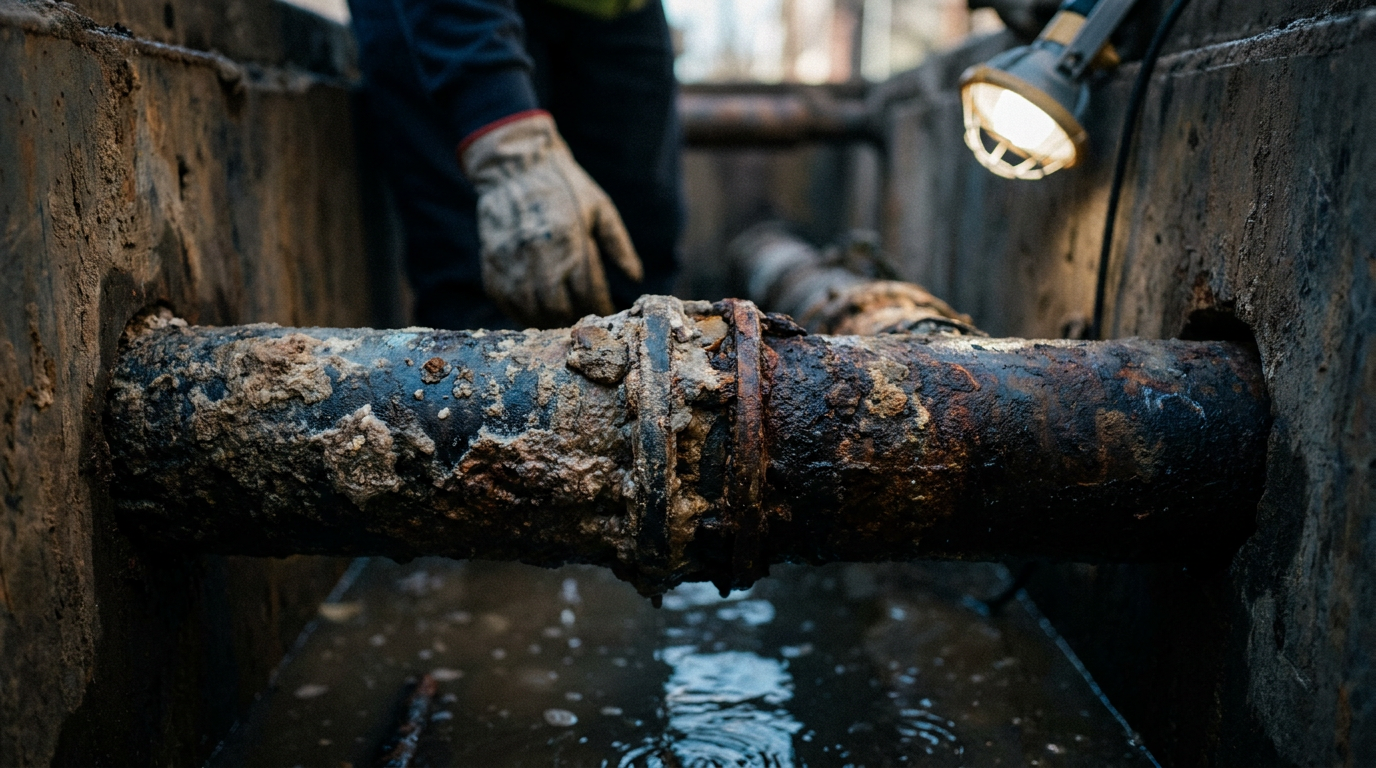
Turn on the tap and what comes out feels like an endpoint. Clean, pressurized, reliable — water that has, you assume, already been dealt with. But the glass of water on your counter is the product of a journey that began somewhere upstream, possibly days ago, and passed through a chain of physical, chemical, and biological transformations so layered that water scientists sometimes say the treatment plant is less a finishing line than a starting gun.
Most people have a rough mental map: water comes from a river or reservoir, gets cleaned at a facility, travels through pipes, arrives at the faucet. That map is accurate the way a tourist sketch of a city is accurate. It captures the shape but loses almost everything interesting. The real story is a system in constant negotiation — between the chemistry of source water and the chemistry of treatment, between the age of infrastructure and the biology it accidentally harbors, between what engineers designed and what microbes discovered.
Understanding that journey doesn't require a degree in environmental engineering. It requires paying attention to the fact that water is not a passive substance being moved through neutral pipes. It is reactive. It dissolves. It carries. It interacts with every surface it touches, every chemical added to it, every hour it spends sitting in a main waiting for demand. What arrives at your tap reflects all of it.
The science of drinking water sits at an intersection most people never think about: environmental chemistry, microbiology, materials science, and infrastructure engineering. Each of those disciplines has something to say about the water in your glass. Taken together, they describe a system that works remarkably well given its complexity — and that carries a set of vulnerabilities that are worth understanding clearly.
Where Water Starts, and What It Already Contains
Before water reaches a treatment plant, it has already collected a biography. Surface water drawn from rivers and reservoirs carries dissolved organic matter from decomposing plant material, agricultural runoff, sediment, algae metabolites, and a variable load of pathogens that shifts with rainfall, temperature, and land use upstream. Groundwater pumped from aquifers carries its own profile: generally lower in microbial load but often higher in dissolved minerals, and sometimes contaminated with naturally occurring arsenic, fluoride, or radium depending on the geology, or with nitrates, solvents, and pharmaceuticals depending on what has been spread or dumped nearby. The treatment challenge begins not with a clean slate but with a specific, messy chemistry that varies by watershed, season, and weather.
Algal blooms have become a particular pressure point as warming temperatures and nutrient runoff from fertilized land encourage cyanobacterial growth in reservoirs. Some cyanobacteria produce toxins — microcystins, cylindrospermopsin — that can pass through conventional filtration if concentrations spike fast enough. They also produce taste-and-odor compounds like geosmin and 2-methylisoborneol that treatment plants struggle to remove entirely, which is why tap water sometimes develops an earthy or musty quality after a warm summer. The bloom is over miles away and days ago, but its chemistry is still traveling toward your kitchen.
The Treatment Plant's Careful Chemistry
Conventional water treatment is one of the more consequential engineering achievements of the last century and a half, responsible for the near-elimination of cholera, typhoid, and dysentery[1] in populations that gained access to it. The basic steps — coagulation, sedimentation, filtration, disinfection — are well established. But each step involves chemistry that creates its own downstream effects, and the tension between those effects is a live area of research and regulatory negotiation.
Chlorination, the most widely used disinfection method, is highly effective at killing pathogens. It also reacts with dissolved organic matter in the water to form a class of compounds called disinfection byproducts — trihalomethanes and haloacetic acids being the most studied[3]. These form not just in the plant but throughout the distribution system as residual chlorine continues reacting with any organic material it encounters in the pipes. Regulators set legal limits on their concentrations, and most systems stay within them, but the limits themselves are the product of ongoing scientific debate about long-term low-dose exposure. Some utilities have shifted toward chloramine — a chlorine-ammonia compound — as an alternative disinfectant that produces fewer trihalomethanes. Chloramine has its own complications: it is more corrosive to certain pipe materials, less effective against some pathogens, and it produces a different set of byproducts, including some that are not yet fully characterized.
“Disinfection doesn't end at the treatment plant — residual chlorine continues reacting with pipe chemistry for miles, producing new compounds the whole way to your tap.”
Activated carbon filtration, increasingly common in advanced treatment, is highly effective at removing organic contaminants, taste-and-odor compounds, and some disinfection byproduct precursors. Ozonation, used by some utilities either before or after filtration, breaks down complex organics and kills pathogens without leaving the same chlorine residual — but ozone-treated water still needs a secondary disinfectant added before it enters the distribution system, because without it, microbial regrowth in the pipes becomes a serious concern. Every treatment choice is a trade-off, not a solution, and the water leaving the plant is optimized for safety at that moment, not for what happens next.
A Hundred Miles of Pipe, and What Lives Inside Them
The distribution system — the network of mains, valves, storage tanks, and service lines that carries treated water from the plant to individual taps — is one of the largest pieces of buried infrastructure in any city, and one of the least examined. In older American cities, cast iron mains laid in the late 1800s are still in service. Cement-lined pipes, asbestos cement pipes, unlined iron, galvanized steel, polyvinyl chloride, copper, and polyethylene all coexist in a single city's network, sometimes connected to each other through joints and fittings of entirely different ages and materials. Water moves through this system under pressure, at speeds that vary with demand, sitting in dead-end branches for hours before being used.
That sitting matters more than most people realize. Stagnation allows the disinfectant residual to decay. When residual chlorine drops low enough, a community of microorganisms attached to pipe surfaces — the biofilm — becomes more active. Distribution system biofilms are not inherently pathogenic; many are dominated by harmless environmental bacteria that establish themselves during routine operations. But biofilms can also shelter opportunistic pathogens like Legionella pneumophila[2], the bacterium responsible for Legionnaires' disease, which thrives in warm, slow-moving water and can survive within the protective architecture of an established biofilm even when bulk water chlorine levels appear adequate. Legionella risk is highest not in the mains themselves but in building plumbing — hot water tanks, cooling towers, showerheads, decorative fountains — where warm temperatures and stagnation create ideal conditions.
“The pipe is not a neutral conduit. It is a surface, and every surface in contact with water becomes, over time, a biology experiment.”
Pipe material also shapes chemistry. Iron pipes corrode, releasing iron and manganese that affect taste and can give water a brownish tint when a main is flushed or flow patterns change. Lead service lines — the small pipes connecting street mains to individual homes, installed widely before 1986 — are a persistent contamination source, not because lead leaches constantly but because it leaches in response to specific conditions: water chemistry, pH, temperature, stagnation time, and the presence or absence of a protective mineral scale on the pipe interior. The Flint, Michigan crisis was not simply a story of old pipes and poor decisions. It was a story of what happens when water chemistry changes — in Flint's case, a switch to a more corrosive source water without proper corrosion control — and the pipe responds accordingly.
The Last Hundred Feet: Your Building's Plumbing
After traveling through the distribution system, water enters building plumbing — and here the journey becomes almost entirely invisible to regulators. Municipal water quality monitoring ends at the point of entry to private property. What happens inside the building is governed by plumbing codes, building age, maintenance practices, and the material choices of whoever did the original installation, often decades ago. The water utility has no view of this last segment of the journey, even though it may be the segment with the most direct contact with what you drink.
Older homes with copper pipes soldered with lead-based solder — common before 1986 — can contribute lead even if the service line itself is not lead. Brass fittings, which are widely used in fixtures and valves, historically contained significant lead content and can still leach measurable amounts, particularly in the first draw of water after stagnation. The practice of running the cold tap for thirty seconds to two minutes before using water for drinking or cooking is not superstition. It is a practical response to the fact that water sitting in household plumbing — especially in a hot, stagnant section near a water heater — has been picking up whatever the pipe and fixture chemistry offers, and flushing that water out before use reduces exposure.
Hot water is a particular complication. Heating changes water chemistry, increases the rate of mineral scale formation, and — if a water heater is set too low — creates the warm, slow-moving conditions that Legionella prefers. Water heaters set below 60 degrees Celsius (140 Fahrenheit) are a known risk factor for Legionella colonization in residential plumbing, particularly in larger systems with long runs of pipe. This is less of a concern in a single-family home than in an apartment building or hotel with complex recirculating hot water systems, but the principle is the same: temperature management in plumbing is not just about comfort.
Emerging Contaminants and the Moving Target of Safe
Water treatment was designed around the contaminants that were understood and measurable when the systems were built. That knowledge has grown substantially, and it has revealed a category of compounds that pass through conventional treatment largely intact. PFAS — per- and polyfluoroalkyl substances, sometimes called forever chemicals because of their resistance to environmental breakdown — have been detected in drinking water systems across the United States and in much of the world. They migrate into source water from firefighting foam used at military bases and airports, from industrial discharge, from landfill leachate. Conventional coagulation, sedimentation, and chlorination do not remove them effectively. Activated carbon can capture some, and reverse osmosis can remove most, but both are expensive additions that most utilities are still working to implement at scale. The EPA set enforceable limits on several PFAS compounds in 2024[4], which represents real regulatory progress — and also an acknowledgment that millions of people were drinking water above those limits while the regulatory process caught up to the science.
Pharmaceuticals and personal care products present a similar pattern: detected in surface water and groundwater at low concentrations, incompletely removed by standard treatment, present in finished drinking water at trace levels whose long-term health implications are not fully understood. Microplastics have been found in tap water in multiple countries. Each of these is a reminder that the definition of safe is not fixed — it is a function of what we are currently able to detect, what we currently understand about exposure effects, and what regulatory systems have had the time and political will to address.
What the System Actually Delivers
“Safe drinking water is not a state — it is a process, maintained daily against chemistry, biology, and aging infrastructure, across a system that most people never see.”
None of this is an argument that tap water is dangerous. For most people in most places with regulated municipal systems, it is genuinely safe, subject to ongoing monitoring, and far better than what a majority of the world's population has access to. The point is something subtler: the glass of water you pour is not the product of a single act of treatment. It is the accumulated result of source water chemistry, treatment choices, distribution system materials and biology, building plumbing age and condition, and the temperature and stagnation history of the water sitting in the pipes between the wall and your faucet. Understanding that chain does not require distrust of the system. It requires a more honest picture of what the system actually is — not a purification machine with a clean output, but a long, dynamic, partially aging infrastructure doing its best to deliver something safe through a gauntlet of chemistry it cannot entirely control.
References
- A Review on the 40th Anniversary of the First Regulation of Drinking Water Disinfection By-products (pmc.ncbi.nlm.nih.gov)
Establishes water disinfection by chlorination as a major public health achievement responsible for disease elimination. - Dynamics of drinking water biofilm formation associated with Legionella spp. colonization (pmc.ncbi.nlm.nih.gov)
Documents how Legionella pneumophila rapidly colonizes drinking water biofilms in building plumbing systems. - Haloacetic Acids Found as Water Disinfection Byproducts (Selected) (ncbi.nlm.nih.gov)
Explains that haloacetic acids form as byproducts when chlorine-based disinfectants react with organic molecules in source water. - PFAS National Primary Drinking Water Regulation (federalregister.gov)
Establishes the EPA's 2024 enforceable limits on PFAS compounds in drinking water.
About Sable Pike
Sable Pike writes about habitat loss, ecosystem strain, species decline, climate disruption, and the quiet unraveling of natural systems people once assumed were permanent — and the way that unraveling reaches into economies, politics, and daily life. Her work brings emotional weight to ecological change without sacrificing scientific rigor.
More like this
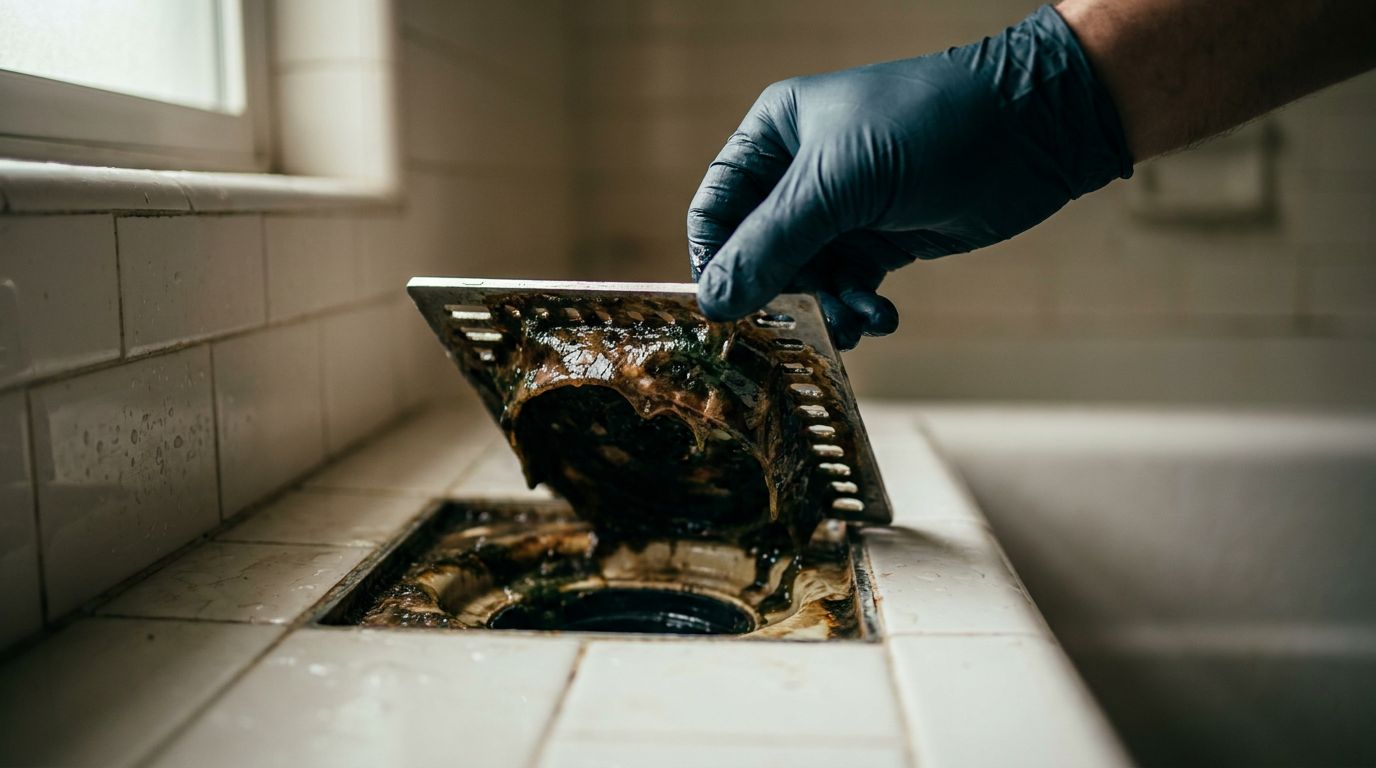
The Slime You Scrubbed Off the Drain Came Back. That's the Point.
New research shows that household cleaning kills the bacteria inside a biofilm while leaving its scaffold intact — which means the colony doesn't die, it just takes a short nap.
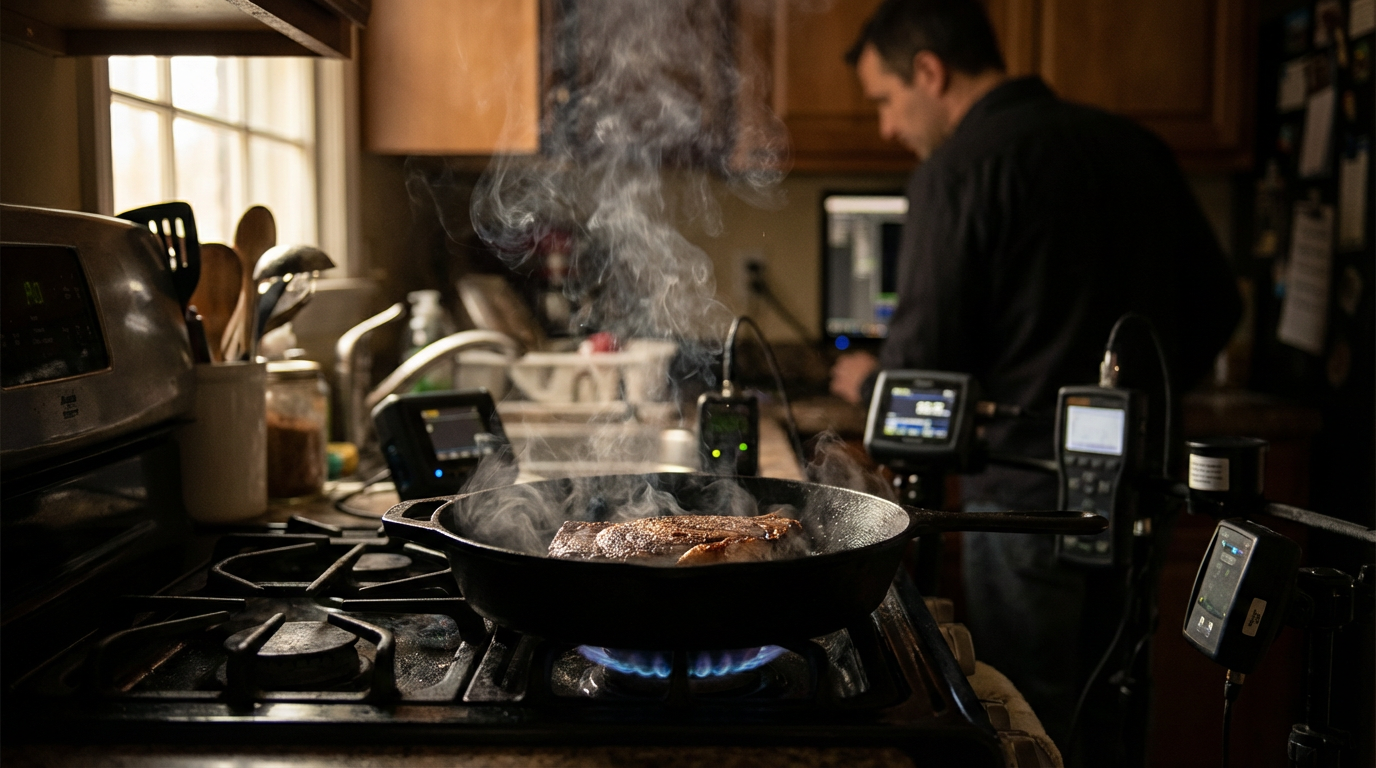
The Atmosphere in Your Kitchen Is More Violent Than You Think
Indoor air quality researchers are discovering that a single pan of sautéed onions can spike ultrafine particle concentrations to levels that would trigger outdoor air quality alerts — and the chemistry happening three feet above your stove is stranger and more consequential than anyone expected.
Your Brain Now Contains a Spoonful of Plastic. We Don't Know What It's Doing.
A landmark study found microplastics concentrating in human brain tissue at startling levels — and the question of what they're doing there may be the most important unanswered problem in modern medicine.