Your Brain Now Contains a Spoonful of Plastic. We Don't Know What It's Doing.
A landmark study found microplastics concentrating in human brain tissue at startling levels — and the question of what they're doing there may be the most important unanswered problem in modern medicine.
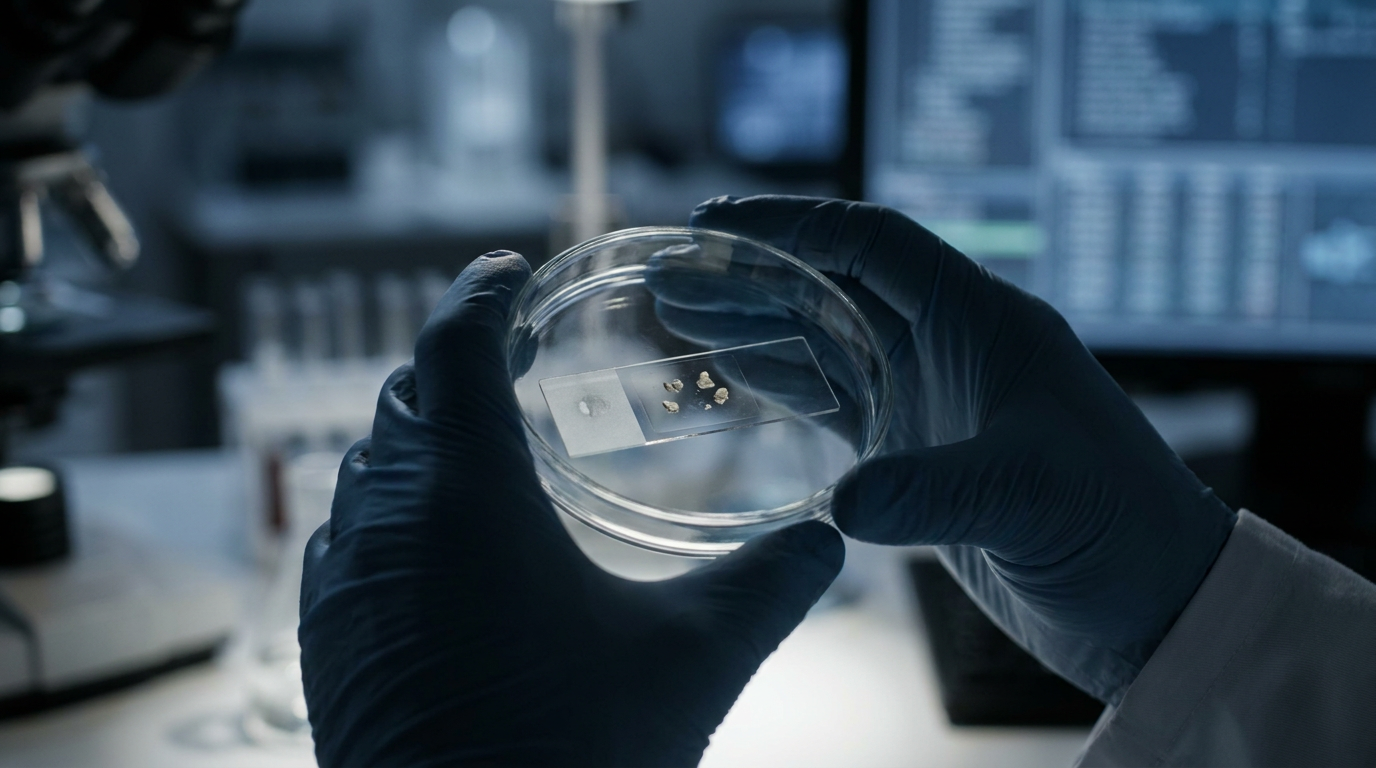
The brain you are using to read this sentence contains plastic. Not metaphorically, not as a future risk projection, not as a speculative worst case. Actual polymer fragments, some measured in nanometers, are embedded in human neural tissue right now — in your brain, almost certainly, and in the brains of the people around you. They were found in the brains of people who died in their thirties. They were found at concentrations nobody expected.
A 2024 study from the University of New Mexico[1] published in Nature Medicine[1] delivered findings that quietly rearranged the field. Researchers analyzed postmortem tissue samples and found microplastics in human brains at concentrations roughly seven to thirty times higher than in the liver or kidney — organs already well-documented as microplastic accumulation sites. The dominant polymer was polyethylene, the plastic in bags, bottles, and packaging so ordinary that most people touch it dozens of times before noon. And the concentrations were rising: brain samples from 2024 contained roughly fifty percent more microplastic than samples from 2016, just eight years earlier. The accumulation is not hypothetical. It is measurable, dateable, and accelerating.
What makes this finding unusual, even by the standards of emerging environmental health research, is the combination of location and ignorance. Scientists have been tracking microplastics in human tissue for years — in lungs, in blood, in placentas, in fetal meconium. Each discovery prompted concern and investigation. The brain is different. The brain sits behind one of the most selective barriers in biology, the blood-brain barrier, a tightly regulated interface that blocks most pathogens, toxins, and foreign molecules from reaching neural tissue. Something is getting through anyway. And the science of what it does once it arrives is, at the moment, almost entirely open.
That gap between a documented physical presence and an understood biological effect is exactly where the discomfort lives. Toxicology is built on mechanisms: you identify a substance, establish how it enters the body, trace what it does at the cellular level, and work toward safe exposure thresholds. With microplastics in the brain, researchers have cleared only the first step. The substance is there. Everything after that is active, contested, and unresolved.
How Plastic Crosses the Most Guarded Border in Biology
The blood-brain barrier is not a wall. It is a dynamic, highly selective system of specialized endothelial cells, tight junction proteins, and transport mechanisms that collectively decide what gets access to the brain's environment. It keeps out most bacteria, many immune cells, and a wide range of chemical compounds — which is why drug delivery to the brain is notoriously difficult in pharmaceutical development. For decades, the assumption was that particles above a certain size simply could not cross. That assumption has been eroding.
Nanoplastics — the smallest end of the microplastic size spectrum, typically defined as particles under one micron — appear to be small enough to interact with the barrier's transport machinery in ways that larger fragments cannot. Some research in cell culture and animal models suggests that particles at the nanoscale can hitch onto transcytosis pathways[2], the same mechanisms neurons use to shuttle certain molecules across the barrier in both directions. Others may exploit inflammatory breaches: when the barrier is transiently compromised by infection, stress, or aging, its selectivity decreases. Animal studies examining nanoplastic neurological exposure have found particles in brain tissue after oral and inhalation exposure, and some have documented downstream changes in oxidative stress markers and inflammatory signaling. The pathways remain incompletely mapped in humans, but the directional evidence is consistent enough that researchers have largely stopped debating whether particles enter the brain and started asking how much, through what route, and with what consequence.
“The blood-brain barrier kept out most of what we worried about. It does not appear to be keeping out this.”
What Neural Tissue Might Do With a Foreign Object That Never Leaves
The brain's immune system is run by microglia, a class of specialized cells that surveil neural tissue, respond to damage, clear debris, and regulate inflammation. They are, among other things, the brain's version of macrophages — cells that engulf and attempt to neutralize foreign material. The problem with persistent, indigestible polymer fragments is that microglia cannot fully break them down. What happens in analogous situations elsewhere in the body is instructive: when macrophages in other tissues encounter particles they cannot clear — certain silica crystals, asbestos fibers, some nanomaterials — they can become chronically activated, releasing inflammatory cytokines in a sustained, low-level cascade. That chronic neuroinflammatory state, if it occurs, would be significant. It is already implicated as a contributing mechanism in neurodegenerative diseases including Alzheimer's, Parkinson's, and ALS, though causation in those diseases is complex and multifactorial.
Beyond inflammation, there are physical disruption questions. Neurons operate through extraordinarily precise electrochemical signaling, and the microenvironment of synaptic clefts and axonal sheaths is finely calibrated. Whether nanoscale fragments embedded near synaptic structures alter ion channel behavior, interfere with neurotransmitter diffusion, or disrupt the myelin sheathing of axons are all live questions that existing research has barely begun to test in human-relevant systems. In vitro studies on neuronal cell lines exposed to nanoplastics have documented dose-dependent cytotoxicity, oxidative stress induction, and mitochondrial disruption at concentrations that are, depending on the study, not wildly distant from what accumulation over decades might produce. Those are cell culture results, not human outcomes, and the distance between a petri dish finding and a clinical effect is enormous. But they identify mechanisms worth taking seriously.
Then there is the chemical dimension. Plastics are not inert materials. They are manufactured with plasticizers, flame retardants, UV stabilizers, and colorants — many of which are bioactive. As plastic fragments age and degrade, they can leach these additives into surrounding tissue. Phthalates, bisphenols, and organophosphate flame retardants have all been detected leaching from plastic in biological contexts, and several have documented endocrine-disrupting and neurotoxic properties. A microplastic particle in brain tissue is not just a foreign object. It may be a slow-release depot for compounds with known biological activity. This is the aspect of the exposure that some researchers find most alarming, partly because the chemical payload varies by plastic type, age, and source, making systematic study difficult. It is also, in a sense, a hidden second exposure — one that depends on the first.
The Measurement Problem That Haunts the Field
One of the underappreciated complications in microplastic brain research is how recently scientists developed tools adequate to detect what was already there. Most early tissue studies were limited to particles above a few micrometers because the analytical techniques — typically Fourier transform infrared spectroscopy and Raman spectroscopy applied to digested tissue samples — could not reliably resolve smaller fragments without contamination artifacts. The New Mexico team used a newer combination of pyrolysis-gas chromatography mass spectrometry[1] alongside microscopic imaging methods that pushed detection capability into the sub-micron range. The result was not just the discovery of more plastic than expected; it was the discovery that earlier studies had been systematically underestimating the load. Every figure from the pre-2020 literature is now suspect in the direction of being too low.
“Earlier studies weren't finding less plastic because the plastic wasn't there. The tools just weren't good enough to see it.”
This creates a calibration problem that extends to exposure modeling. If the detected concentrations in brain tissue are substantially higher than anyone estimated even five years ago, the dose-response assumptions underlying risk frameworks need to be rebuilt from more current baselines. Regulatory bodies in the US and EU have been cautious about setting microplastic-specific safety thresholds partly because the data kept shifting as methods improved. That caution is scientifically defensible. It is also, from a public health communication standpoint, indistinguishable from paralysis. The science is moving, but the policy and public understanding have not kept up with it.
Why the Brain Accumulates More Than Other Organs
The finding that brain concentrations exceed those in the liver and kidney was unexpected enough that researchers have offered several competing hypotheses. One centers on lipid affinity: nanoplastics, particularly those with certain surface chemistries, may preferentially partition into lipid-rich tissue. The brain is roughly sixty percent fat by dry weight — one of the most lipid-dense organs in the body — which could make it a thermodynamic sink for particles with hydrophobic surface properties. Another hypothesis involves clearance rates: the liver and kidney are high-throughput filtration and elimination organs. Even if they accumulate particles, they also have physiological mechanisms for processing and exporting waste. The brain, behind its barrier and with its relatively enclosed fluid environment, may accumulate particles with fewer routes of egress. The cerebrospinal fluid is recycled, but not through pathways optimized for particle elimination.
There is also the glymphatic system, a relatively recently characterized network of fluid channels that clear metabolic waste from the brain primarily during sleep. Research on glymphatic function and neurological waste clearance has grown significantly since its detailed characterization in the early 2010s[3], and some researchers have proposed that synthetic nanoparticles could either impair glymphatic flow or, counterintuitively, be routed through it in ways that spread material more broadly through brain tissue than would otherwise occur. The glymphatic connection is speculative at this stage, but it is the kind of mechanistic bridge that makes the brain's unusual accumulation pattern worth investigating carefully — because it suggests the brain is not just a passive recipient of what crosses the barrier, but may play an active if unintended role in its own contamination. This connects to a broader pattern visible in body-system research: as we've learned from work on the body's internal signaling networks, the systems we assumed were independent keep turning out to be deeply entangled.
Living Inside a Slow Experiment
Mass plastic production began in earnest in the 1950s. Nanoplastic exposure at population scale is, in historical terms, a very recent phenomenon. The people with the highest measured brain concentrations in the New Mexico data were those who died most recently — a cohort whose lifetimes overlapped almost entirely with the plastic age. We do not have a comparison population without significant plastic exposure. There is no clean control group.
This is one of the features that makes microplastic neurotoxicology genuinely hard to study epidemiologically, as opposed to just politically difficult or underfunded. Teasing apart the effects of brain-resident microplastics from the effects of every other environmental and lifestyle exposure in an aging, neurologically complex population is a methodological challenge that will take decades of carefully designed longitudinal research to address. In the meantime, the exposure is accumulating. Research linking environmental contaminant burden to neurological outcomes has historically worked on long timescales — the lead-brain connection took generations to fully establish and act on. Microplastics, if they turn out to matter neurologically, may follow a similar arc of slow recognition.
“We don't have a comparison population. Everyone alive today has been inside this experiment since birth.”
What is available now, and what the New Mexico findings make harder to defer, is the question of research priority. The brain is not just another organ in the accumulation ledger. It is the substrate of cognition, memory, emotional regulation, personality, and consciousness — the aspects of human experience most difficult to measure, most sensitive to disruption, and most consequential to protect. If it turns out that decades of microplastic accumulation in neural tissue are neurologically neutral, that would be a meaningful and reassuring finding. But that finding does not exist yet. What exists is a documented, quantified, rising presence of foreign polymer material in the most consequential tissue in the body, and a science that is still, at this early stage, mostly asking the right questions. That is not nothing. It is the exact moment when attention is most justified and most commonly withheld — when the signal is clear enough to alarm and not yet clear enough to act on in ways that would require disrupting normal life. The plastic is already there. The reckoning is still being assembled.
References
- Bioaccumulation of microplastics in decedent human brains (nature.com)
Provides the 2024 Nature Medicine study data showing microplastics in human brains at 7–30 times higher concentrations than liver or kidney, with polyethylene as dominant polymer. - Micro- and Nanoplastics Breach the Blood–Brain Barrier (BBB): Biomolecular Corona’s Role Revealed (pmc.ncbi.nlm.nih.gov)
Demonstrates that nanoscale particles can cross the blood-brain barrier via transcytosis pathways, supporting the article's explanation of how plastics reach brain tissue. - Sleep Drives Metabolite Clearance from the Adult Brain (pmc.ncbi.nlm.nih.gov)
About Vera Sloane
Vera Sloane writes about emerging technology, synthetic media, AI interfaces, robotics, digital environments, and the strange ways the future slips into ordinary life before most people have language for it. Her work focuses on near-future drift, where innovation stops feeling hypothetical and starts rearranging daily behavior, expectation, and mood.
More like this

Chronic Loneliness Rewires the Brain — And the Damage Is Not Metaphorical
Prolonged social isolation doesn't just feel bad; it triggers a cascade of stress signaling and neuroinflammation that measurably reshapes the aging brain.

What Happens to Your Brain During One Sleepless Night—And Why Recovery Sleep Doesn't Fully Erase It
Brain scans after total sleep deprivation show measurable aging — but the reversal hiding inside one recovery night reveals something stranger about what chronic poor sleep quietly accumulates.

Your Body Clock Is a Better Dementia Predictor Than Your Sleep Hours
A major study found that people with fragmented circadian rhythms had 2.4 times the dementia risk — and the mechanism points to something sleep duration alone can't fix.