Polyethylene
Polyethylene is the specific synthetic polymer found in everyday packaging and containers, now detected as microplastic fragments in human brain tissue, highlighting concerns about long-term exposure to plastic residues in the body.
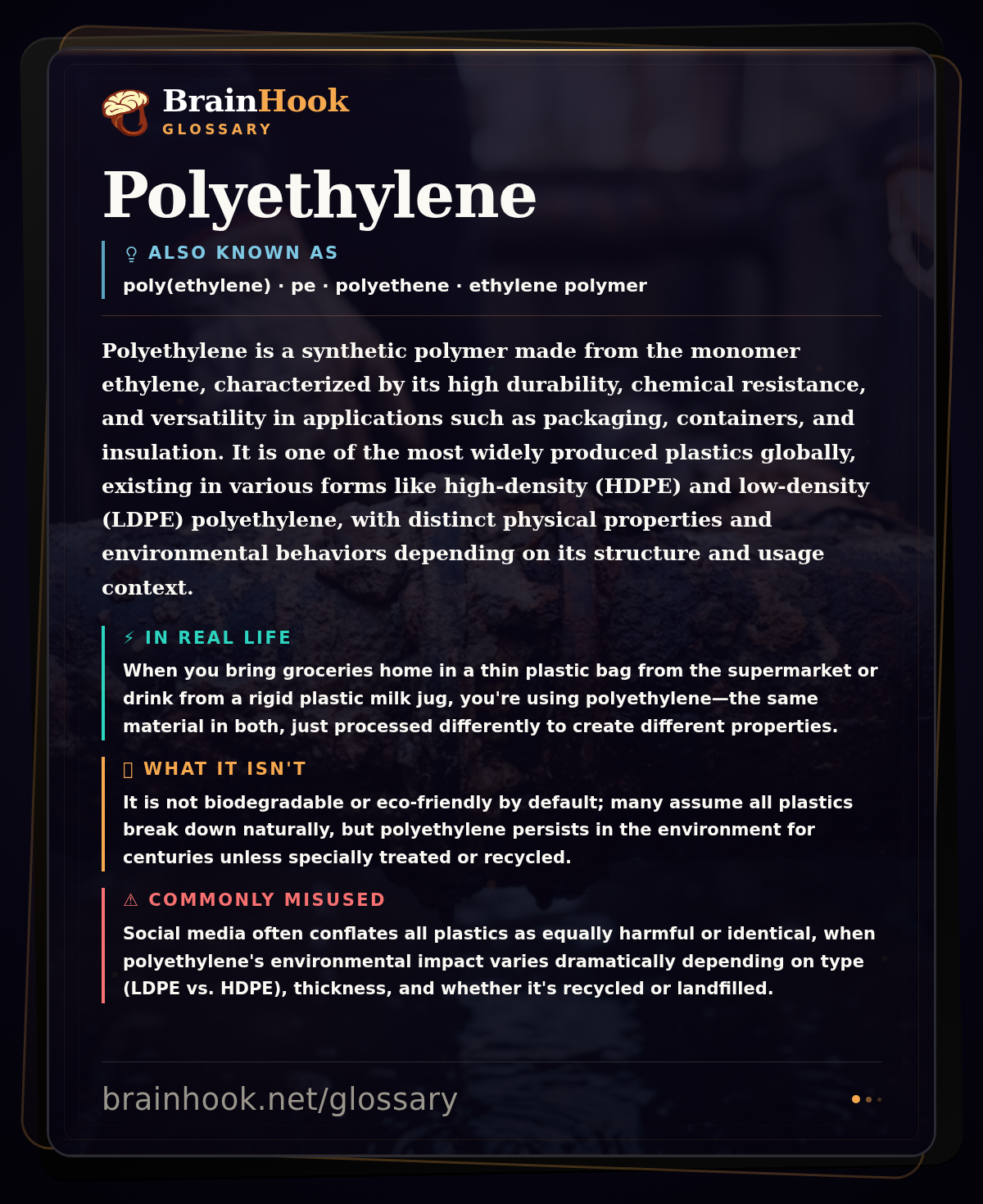
Polyethylene is a synthetic polymer made from the monomer ethylene, characterized by its high durability, chemical resistance, and versatility in applications such as packaging, containers, and insulation. It is one of the most widely produced plastics globally, existing in various forms like high-density (HDPE) and low-density (LDPE) polyethylene, with distinct physical properties and environmental behaviors depending on its structure and usage context.
What this means in real life
When you bring groceries home in a thin plastic bag from the supermarket or drink from a rigid plastic milk jug, you're using polyethylene—the same material in both, just processed differently to create different properties.
What it isn’t
It is not biodegradable or eco-friendly by default; many assume all plastics break down naturally, but polyethylene persists in the environment for centuries unless specially treated or recycled.
Commonly misused online
Social media often conflates all plastics as equally harmful or identical, when polyethylene's environmental impact varies dramatically depending on type (LDPE vs. HDPE), thickness, and whether it's recycled or landfilled.