The Pentagon Released 162 UAP Files. The Unresolved Ones Are the Interesting Part.
The May 2025 file release is historic, but the official language used to explain every unresolved case quietly reveals something more useful than any alien hypothesis.
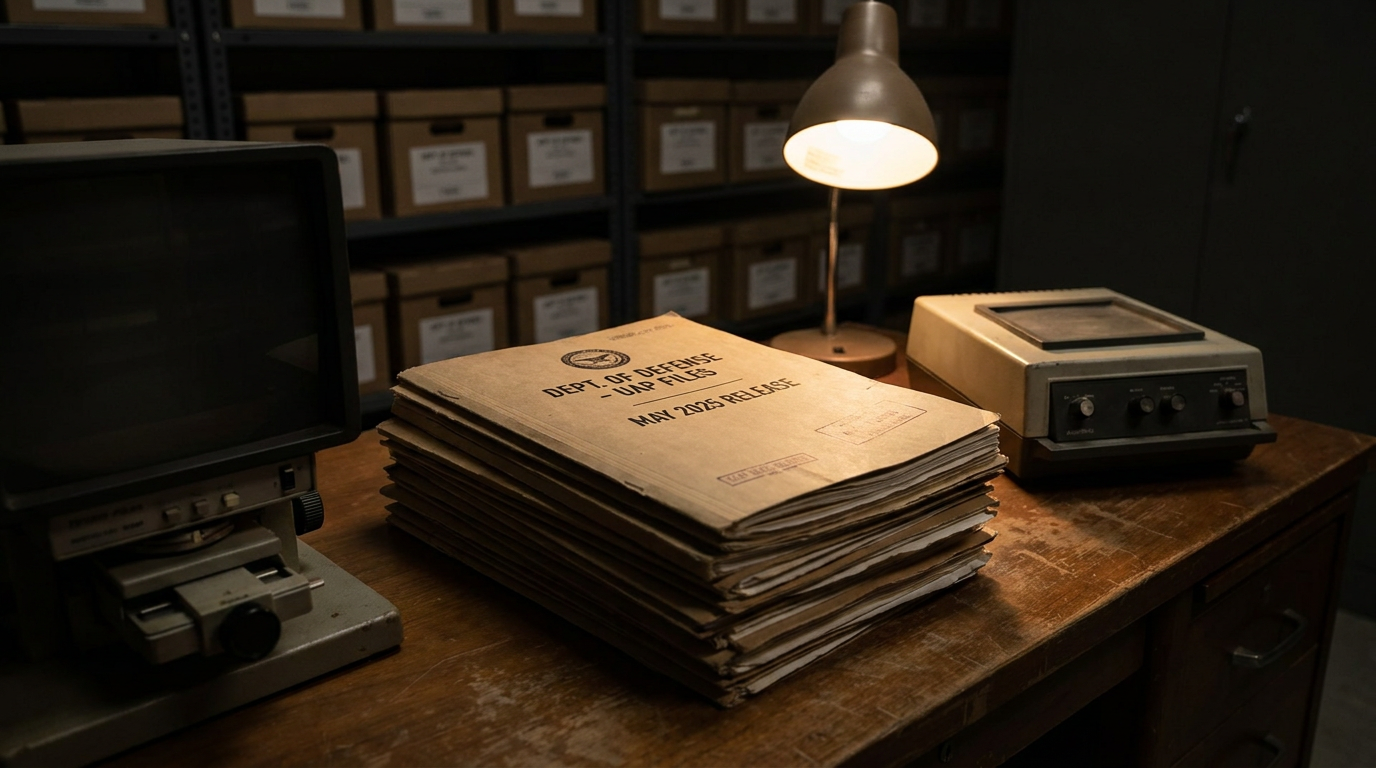
On a Tuesday in May 2025, the Department of Defense released what it described as a historic disclosure package: 162 files spanning decades[1] of UAP incidents, including declassified infrared footage, military witness reports, radar logs, and a handful of documents touching on anomalies detected during Apollo-era operations. The release had been anticipated for months, pressured into existence by a combination of congressional oversight requirements[2] and the sustained public attention that followed the 2021 preliminary assessment[2]. It was, by any measure, the most substantive official release of UAP material the U.S. government had produced. It resolved nothing.
That is not a criticism. Or rather, it is not only a criticism. The failure to resolve is itself informative, and the specific language used to explain why certain cases remain open tells you something precise and underappreciated about the limits of military sensor infrastructure. When the DoD says a case is "unresolved due to insufficient sensor correlation," that phrase is doing a lot of work. It is not saying the object was extraordinary. It is saying the data geometry — angles, altitudes, sensor modes, timing — was not adequate to produce a classification. That distinction matters enormously, and most coverage of the release blurred right past it.
The 162 files vary dramatically in evidential quality. Some are little more than administrative summaries of incidents already publicly known — the 2004 Nimitz encounter, the 2015 Roosevelt footage — repackaged with minimal additional context. Others are genuinely new to the public record: brief infrared clips that have not previously circulated, witness statements collected by investigators who were clearly trying to be rigorous, and at least two radar reconstructions from incidents over restricted airspace that have not been named in any prior official document. It is that second category, the genuinely new material, where the evidence problem becomes most visible.
What the files collectively show is not a pattern of extraordinary objects. What they show is a pattern of degraded detection events — moments where something triggered a sensor or a human observer under conditions that made clean characterization impossible. That is the actual texture of the mystery here. Not suppressed proof, not revealed aliens, but the hard problem of trying to classify an unknown object using instruments designed for known threats in environments that are almost never ideal.
What "Unresolved" Actually Means in a Military Sensor Context
Military sensor systems are extraordinarily capable within their design parameters and notably fragile outside them. Airborne infrared systems are optimized for specific threat signatures — the heat output of known aircraft engines, the exhaust plumes of ballistic missiles, the thermal contrast of a surface target. When an object does not match those profiles, the system does not flag it as extraordinary. It flags it as ambiguous, which is an entirely different classification. Ambiguous returns get filtered, deprioritized, or logged without full resolution data. In several of the newly released files, that is exactly what happened: an infrared sensor detected a heat source that did not match any catalogued signature, the system recorded the event at reduced fidelity, and the human operator noted the anomaly without being able to lock a track.
“When the DoD says a case is unresolved due to insufficient sensor correlation, it is not saying the object was extraordinary — it is saying the data geometry was not adequate to produce a classification.”
Radar presents similar problems. The released files include two reconstructed radar tracks from incidents where an object was detected moving in a way that exceeded expected performance for known aerial platforms. Those reconstructions are careful to note the error bars on velocity and altitude estimates, and those error bars are substantial. Radar return quality degrades with range, aspect angle, and atmospheric conditions. An object that appears to be moving at an implausible speed in a radar reconstruction might be moving at that speed, or it might be a multipath reflection, an artifact of the tracker software's interpolation routine, or a genuine object whose trajectory was reconstructed from too few clean returns to support the resulting velocity estimate. The files do not disambiguate. They record the anomaly and note that disambiguation was not possible with available data.
None of this is a debunking. It is a description of the actual problem. The files are not hiding a clean answer beneath bureaucratic language. They are documenting genuine classification failures — events where something happened and the systems available to characterize it were not adequate to the task. That is a real and interesting problem. It suggests that the UAP detection infrastructure, even with significant recent investment, is still built around recognizing known categories rather than characterizing genuinely novel ones.
The Apollo Material Is More Ambiguous Than Advertised
The Apollo-related documents in the release generated the loudest coverage and deserve the most careful treatment. Several outlets described them as confirming anomalous detections during lunar missions. The files themselves are considerably more restrained. What they contain are administrative records referencing anomalous readings logged during specific mission phases, cross-referenced with engineering notes that were, at the time, attributed to instrument calibration issues, debris, and in one case a possible interaction with outgassed material from the spacecraft itself. The new release adds witness report summaries — structured interviews apparently conducted decades after the missions — that describe crew observations not fully captured in the original mission audio transcripts.
Witness memory over a multi-decade gap is not a reliable instrument. That is not a dismissal of the astronauts involved — it is a statement about human memory under conditions of high cognitive load, elapsed time, and the inevitable influence of subsequent cultural context. What an astronaut remembers seeing in 1969, recalled in a structured interview sometime in the following decades, has passed through a great deal of interpretive processing. The files do not resolve whether the original observations were anomalous detections of external objects, instrument artifacts, or perceptual events under the unusual conditions of space flight. They establish that something was noted and that the notation was never formally closed. That is not the same as evidence of an extraordinary object.
“The files are not hiding a clean answer beneath bureaucratic language — they are documenting genuine classification failures, events where something happened and the systems available to characterize it were not adequate to the task.”
The Witness Reports: Useful Data, Bounded Interpretation
Among the most genuinely useful material in the 162-file release are the structured military witness reports. These are not the informal accounts that circulate online. They are formatted, dated, cross-referenced statements collected by investigators who were applying at least some methodological discipline — asking about viewing conditions, duration, angular size, reference objects, and the physiological state of the observer at the time. The reports reveal that many of the incidents that have been described publicly in dramatic terms were significantly more ambiguous in the original observation. Objects described in secondary sources as "performing impossible maneuvers" are, in the primary witness reports, often described with considerably more hedging: unusual apparent acceleration, movement that was difficult to track, behavior that did not match expected aircraft profiles.
That hedging is not weakness. It is accuracy. A trained military observer reporting that an object moved in a way that was "inconsistent with known aircraft" is offering a real data point — one that should be taken seriously and investigated rigorously. But the gap between that careful original statement and the version that reaches public discourse is often enormous. The files allow, for the first time in some cases, a comparison between what was actually reported and what was eventually claimed about the same event. In several instances, that comparison is deflating. In a few, it is the opposite: the original report is stranger and more specific than the public summary suggested, because the public summary had been simplified into a more manageable narrative.
Why the Unresolved Cases Still Matter
The cases that remain genuinely unresolved after the release — meaning the cases where the available evidence does not point toward any plausible mundane explanation — are a small subset of the 162. Estimates from analysts who have reviewed the full release put the number somewhere between eight and fifteen cases where the sensor data, witness accounts, and contextual information collectively resist ordinary classification. That is not nothing. But it is also not a coherent pattern pointing toward a single explanation. The unresolved cases involve different sensor platforms, different geographic locations, different atmospheric conditions, and different object behaviors. What they share is not a consistent profile. What they share is a consistent data problem: not enough high-quality, multi-modal detection to support a firm classification.
That is the argument for taking them seriously rather than shelving them. If the unresolved cases had a consistent profile — same size, same thermal signature, same maneuver envelope — that would suggest a coherent phenomenon worth characterizing. The fact that they do not have a consistent profile is itself informative. It suggests either that the category "UAP" is capturing genuinely diverse phenomena that have been grouped by their ambiguity rather than their nature, or that the classification failures are themselves diverse, driven by different sensor limitations in different operational contexts. Either interpretation supports investment in better detection infrastructure rather than speculation about what the objects might be.
“The unresolved cases do not share a consistent profile — they share a consistent data problem, and that distinction is what the coverage almost universally missed.”
The Disclosure Gap Between What Was Released and What Was Promised
There is a legitimate frustration running through the UAP research community about the May 2025 release, and it is not the frustration of believers who wanted confirmation. It is the frustration of people who expected the release to include the underlying sensor data — the raw files, the telemetry logs, the unprocessed infrared footage — and instead received curated summaries and edited clips. The difference matters. A curated summary tells you what analysts decided was significant. Raw data tells you what the instrument actually captured, including the artifacts, the noise floor, the calibration drift, and the portions of the detection event that did not make the summary because they were inconclusive or contradictory.
The DoD's explanation for releasing processed rather than raw material rests on legitimate operational security concerns — raw sensor data can reveal the technical capabilities and limitations of classified detection systems to adversaries who know how to read it. That is a real constraint. It is also a constraint that makes independent verification of the released material essentially impossible. Researchers examining the curated clips cannot determine whether what they are seeing represents the full capture or a selection from a longer, more ambiguous sequence. That is not a conspiracy. It is a structural problem in the architecture of official disclosure, and it means the 162 files, however welcome, are not the same thing as the evidence.
What Comes Next Is the Actual Test
The real measure of whether the May 2025 release means anything is what happens to the detection infrastructure in the years following it. The All-domain Anomaly Resolution Office[3] has a mandate that is, on paper, serious: to detect, identify, and attribute UAPs using rigorous multi-modal sensor methods rather than single-platform, single-observer reports. If that mandate is funded and executed with genuine methodological discipline — dedicated sensor networks, standardized reporting protocols, multi-modal correlation requirements before a case is designated as unresolved — then the current archive of unresolved cases becomes a baseline against which new detections can be compared. If the mandate atrophies back into administrative file-keeping, the 162 files become a historical curiosity rather than an investigative foundation.
The honest state of the evidence after the release is this: there are a small number of cases involving trained observers, multiple sensor platforms, and behavioral characteristics that do not resolve cleanly into any known category. There are a much larger number of cases where the evidence quality is simply not adequate to support any firm conclusion. The release has made both categories public, which is genuinely useful. What it has not done — and what no disclosure package built from legacy data ever could do — is tell you what was actually in the sky. That answer, if it exists, requires better instruments pointed in the right directions under controlled conditions, with the raw data preserved and independently verifiable. The files are the record of a question. The question has not changed.
References
- 162 files spanning decades (war.gov)
Hosts the May 2025 Department of Defense release of 162 declassified UAP files spanning decades of incidents. - congressional oversight requirements (dni.gov)
Provides the 2021 preliminary assessment that generated congressional oversight requirements leading to the May 2025 file release. - ESTABLISHMENT OF THE ALL DOMAIN ANOMALY RESOLUTION OFFICE (media.defense.gov)
Provides the official DoD office responsible for investigating and resolving unidentified anomaly cases referenced throughout the article.
About Rowan Ellery
Rowan Ellery writes about anomalies, unexplained sightings, strange signals, and the uneasy border between observation, misinterpretation, and genuine mystery. Their work focuses on keeping curiosity alive without letting evidence dissolve into folklore.
More like this
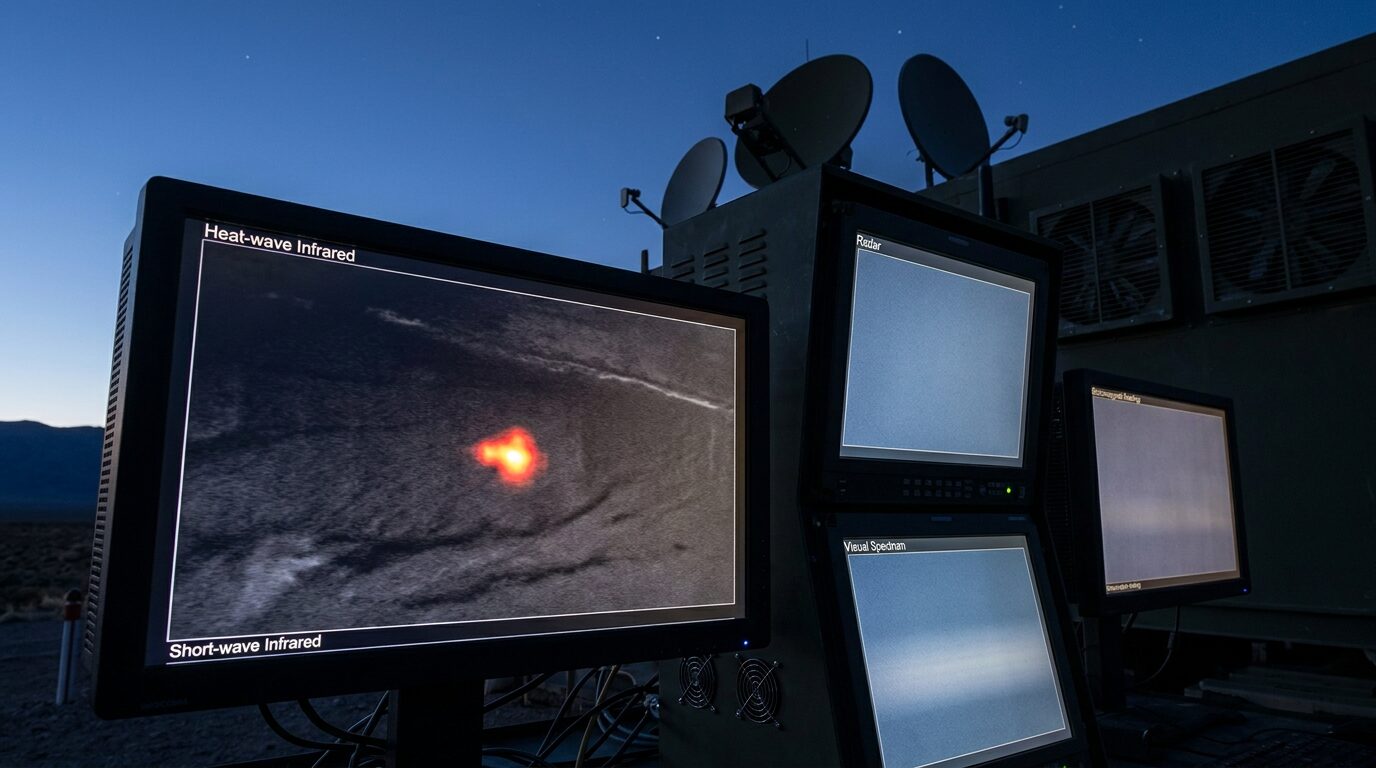
The Pentagon's New UAP Files Have a Sensor Problem No One Is Talking About
The May 2025 PURSUE disclosure is historic — but the cases that stayed unexplained share a quiet technical flaw that changes what 'unresolved' actually means.
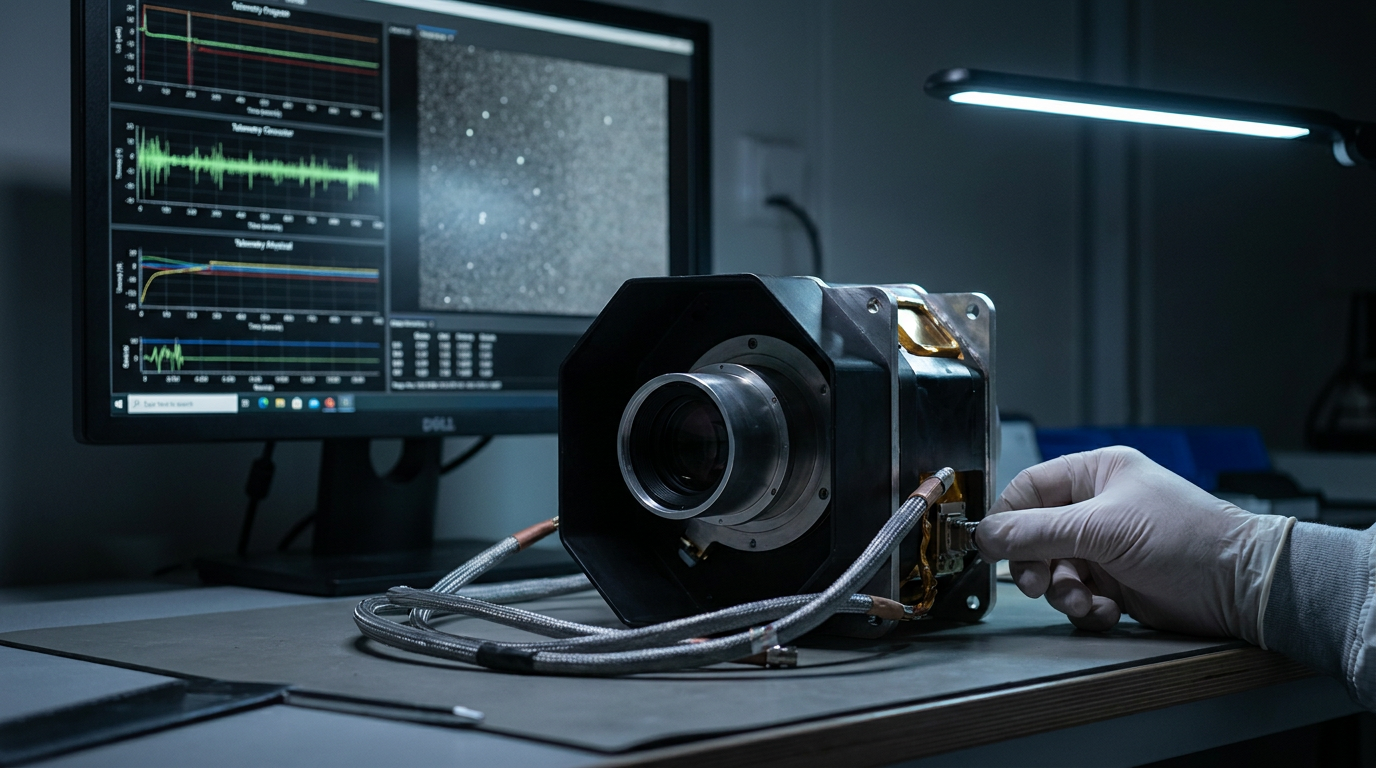
The Pentagon's Infrared Footage Has a Star Tracker Problem No One Is Naming
A sensor distortion accidentally catalogued during the November 2025 solar storm turns out to be exactly the kind of artifact that makes infrared UAP footage look most dramatic — and most unreliable.

The Government Said UAPs Aren't a Threat. It Also Can't Explain 3% of Them.
AARO's 2025 report resolves the vast majority of UAP sightings with ordinary explanations — but the cases that survive that process expose a structural gap in how the U.S. tracks anything moving through its airspace.