The Government Said UAPs Aren't a Threat. It Also Can't Explain 3% of Them.
AARO's 2025 report resolves the vast majority of UAP sightings with ordinary explanations — but the cases that survive that process expose a structural gap in how the U.S. tracks anything moving through its airspace.
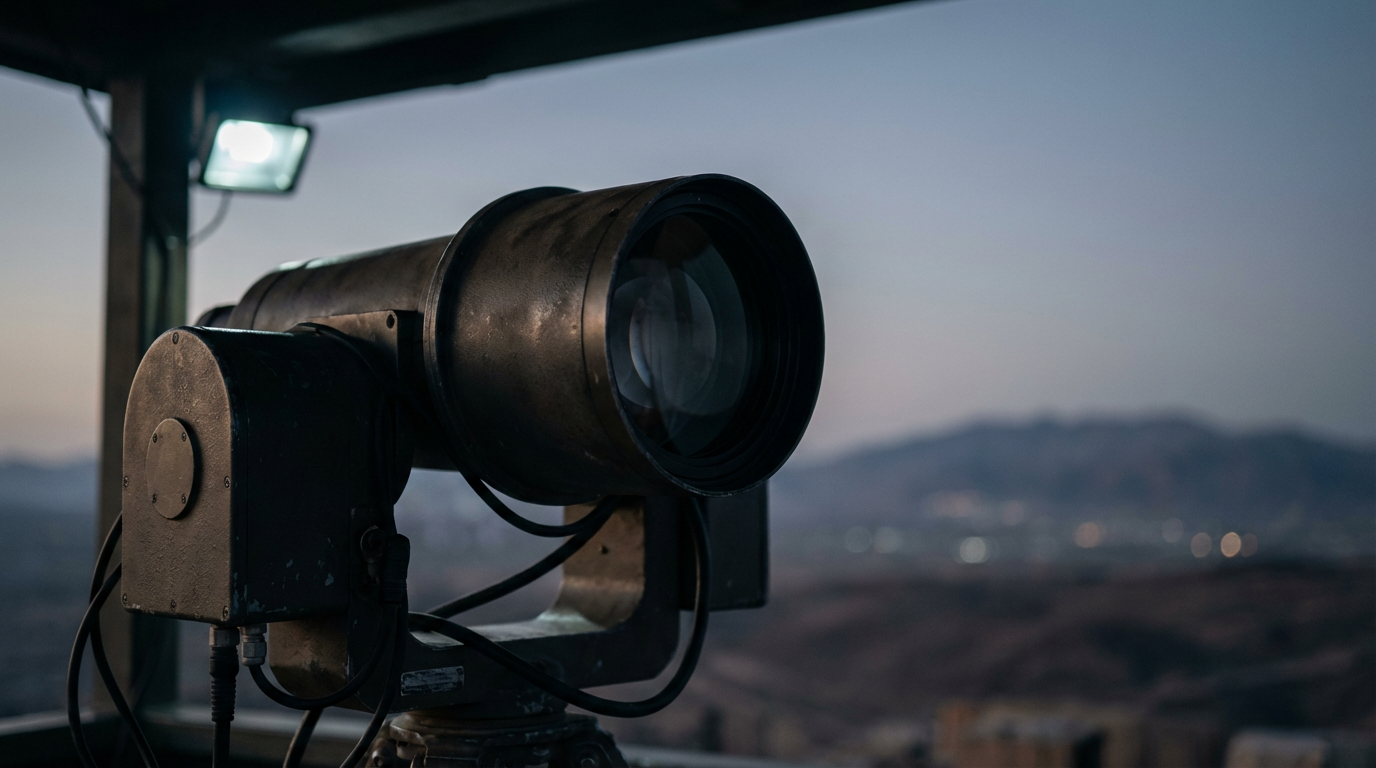
In May 2025, the All-domain Anomaly Resolution Office released its latest annual report[1] on unidentified anomalous phenomena, and the headline most outlets chose was reassuring: the government has no evidence that UAPs represent a foreign threat, and no evidence of non-human intelligence. Both are accurate summaries. Neither is the interesting part.
The interesting part is quieter. Of the cases AARO reviewed, roughly 3% remained genuinely unresolved — not explained away, not filed under probable cause, just open. That is a small percentage by any measure. Applied to the volume of reports now flowing into AARO from military pilots, ground personnel, and sensor systems across multiple domains, it is not a small number of events. And the reason those cases stayed open is not because they are exotic. It is because the data collected on them was insufficient to support any conclusion at all.
That distinction matters. An unexplained case and an inexplicable case are not the same thing. Unexplained means the evidence ran out before an answer could be reached. Inexplicable would mean the evidence was rich, the analysis was thorough, and physics still had nothing to offer. Almost none of the 3% are the second kind. But treating them as merely unexplained — as if that were a minor administrative footnote — misses what they actually reveal about the infrastructure doing the watching.
The AARO report, read carefully, is less a document about UAPs than a document about sensors, reporting chains, and the structural conditions under which something moving through U.S.-monitored airspace can remain unclassifiable. The 97% that got resolved tells you what the system can handle. The 3% that didn't tells you where the system breaks.
What Resolution Actually Means
AARO's resolution process is worth understanding before attaching weight to its outputs. When a case is resolved, it means analysts identified a probable or confirmed cause — a weather balloon, a commercial drone, an atmospheric distortion event, orbital debris on a particular trajectory, a bird caught in a radar return at the wrong angle. The evidentiary bar varies. Some resolved cases are confirmed through multiple independent data streams. Others are resolved through pattern matching: the object's behavior, altitude, and return profile closely resemble a known category, no conflicting data argues otherwise, and the case is closed as probable. That is reasonable analytical practice, but it means the resolution column contains both certainties and likelihoods, and the report does not always distinguish between them clearly.
The unresolved 3% are cases that couldn't clear even the pattern-matching threshold. Either the data was too fragmented — a single sensor hit, no corroborating video, a witness account without instrument backup — or the object's behavior was inconsistent with the most likely candidate explanations and no better candidate was available. In some instances, the detection itself is uncertain: radar returns that appeared briefly and didn't persist long enough for tracking algorithms to lock onto a trajectory, infrared signatures that didn't correlate with known thermal profiles, visual reports from trained observers whose accounts generated no corresponding instrument record.
“The 97% that got resolved tells you what the system can handle. The 3% that didn't tells you where the system breaks.”
This last category — the witness-with-no-instrument-corroboration case — is especially common in the unresolved pool and especially difficult to work with. Experienced military pilots are not poor observers. They are trained to track moving objects under high-stress conditions, to estimate speed and altitude, and to distinguish between sensor artifacts and real-world phenomena. Their accounts carry evidential weight. But witness testimony, however credible the witness, is not instrument data. It cannot be reanalyzed. It cannot be cross-referenced against a timestamp and a geolocation with sub-meter precision. When it stands alone, it creates a case that can be neither confirmed nor dismissed.
The Sensor Grid and Its Gaps
The U.S. military operates one of the most sophisticated sensor networks ever built. Radar systems cover vast swaths of domestic and international airspace. Infrared satellites track heat signatures globally. Fighter aircraft carry targeting pods capable of resolving objects at significant range. Warships carry layered detection systems designed to catch threats across multiple spectral bands. This infrastructure is genuinely impressive, and it is why AARO can resolve 97% of what gets reported to it. It is also why the remaining 3% is so structurally revealing.
The sensor grid was built to detect threats of particular types: aircraft with recognizable radar cross-sections, missiles with predictable thermal plumes, vessels with characteristic electromagnetic signatures. It is optimized for the adversary threat models that existed when each system was designed and funded. Objects that are very small, very slow, or made of materials with low radar reflectivity can move through airspace that appears well-monitored without generating a reliable return. Objects that briefly exceed the speed or altitude envelope of known platforms can trigger detection systems designed to filter out anomalies as noise rather than flag them as data. The grid has been tuned, reasonably, for the things it expects to find. It is less reliable at finding the things it doesn't.
Atmospheric conditions compound this. Radar ducting — a phenomenon in which temperature inversions bend radar beams in ways that create false returns or mask real ones[2] — has been implicated in a number of historical UAP cases and remains an active area of concern for analysts trying to interpret low-altitude detections over water[3]. Infrared sensors can be fooled by thermal layering, by solar reflections off unusual surfaces, and by the heat signatures of natural phenomena like methane seeps or electrical discharge events that are rare enough to fall outside standard comparison libraries. The sensor is not lying. It is returning data that requires interpretation, and the interpretation tools sometimes run out of known categories.
“The grid has been tuned, reasonably, for the things it expects to find. It is less reliable at finding the things it doesn't.”
Why Small Numbers Can Mean Large Gaps
Three percent sounds like a rounding error. To treat it as one is to misunderstand how classification problems work in sensor-based surveillance. Every detection system has a false negative rate — a proportion of real events that the system fails to register or registers incorrectly. The unresolved cases in the AARO report are not necessarily false negatives in this technical sense, but they represent the visible edge of a detection problem that extends in both directions. If 3% of reported cases can't be resolved, that tells you something about the cases that were reported. It tells you less about the events that were never reported because they weren't detected at all.
Reporting itself is a filtered process. A pilot who sees something unusual and cannot identify it faces a set of institutional incentives that have historically discouraged formal reporting. AARO has worked to reduce that stigma, and the volume of reports received has increased significantly since the office was established, suggesting the reporting culture is genuinely shifting. But the base rate problem remains: the population of events that enter AARO's analysis is the population that made it through every filter between the original observation and the official record. Events that were misidentified at the point of observation, events that no one was watching, events that generated sensor data that was later attributed to instrument drift before anyone flagged it — none of those are in the 97% or the 3%. They are not in the report at all.
This is not a conspiracy observation. It is a signal-processing observation. No surveillance network captures everything in its coverage area. Every network has edge conditions where detection becomes unreliable. The value of the unresolved cases is that they mark — imprecisely but genuinely — where those edge conditions are. An analyst paying attention to what the 3% has in common — low-altitude maritime environments, specific radar bands, certain lighting conditions, certain reporting contexts — is getting a partial map of the blind spots.
What the Mundane Explanations Don't Cover
The resolved cases are worth taking seriously on their own terms. The breakdown of identified causes in the AARO report tracks closely with what researchers in observational psychology and perceptual science have long understood about how humans misread unexpected aerial phenomena. Balloons at altitude behave strangely to a fast-moving observer. Planets near the horizon, distorted by atmospheric refraction, have generated credible UFO reports from trained military personnel for decades. Lens flares in targeting pod footage have a documented history of being misread as structured craft[4]. The ordinary explanations are not condescending. They reflect genuinely difficult observational conditions, not observer failure.
But ordinary explanations have a boundary. Applied past that boundary, they become a different kind of problem — a reflexive attribution that closes cases through category assignment rather than evidence. AARO appears aware of this risk. The report's methodology distinguishes between confirmed resolution and probable resolution, and the existence of a formal unresolved category suggests the office is not simply assigning mundane causes until everything fits. That restraint is important. It means the 3% represents cases where the analysts themselves concluded that reaching for a mundane explanation without supporting data would be worse than leaving the case open.
What Gets Lost in the Translation to Headlines
The AARO report generates two types of coverage every year. The first reaches for the reassuring: no alien spacecraft, no non-human intelligence, no evidence of a cover-up. The second reaches for the dramatic: the government admits it can't explain X cases, the mystery deepens. Both framings miss the actual story, which is quieter and more structurally important than either.
The report is a real-time audit of a surveillance system under unusual observational pressure. Military pilots, naval crews, and ground personnel are now encouraged to report anomalous observations through a formal channel staffed by analysts with access to sensor archives, weather records, and classified flight data. That infrastructure is young and still developing. The fact that it resolves 97% of cases is a genuine accomplishment. The 3% it cannot resolve is not a failure — it is a signal that the system is operating close to its limits in certain specific conditions, and that those conditions deserve targeted attention.
“Uncertainty is not a confession. It is a category — and in this case, it is a category with a shape.”
What would actually advance the field is not better headlines. It is better sensors in the documented gap conditions, a higher standard for what counts as resolved versus probable, and a continued commitment to letting cases stay open when the evidence doesn't close them. The unresolved 3% is not a mystery in the dramatic sense. It is a data-quality problem wearing a mystery's face — and data-quality problems, unlike genuine mysteries, are actually solvable. The question is whether the political will exists to treat them as what they are: an engineering challenge dressed in uncomfortable clothing, pointing quietly at the limits of what any sensor network, however sophisticated, can see.
References
- Department Of Defense Releases The Annual Report On Unidentified Anomalous Phen (war.gov)
Provides AARO's May 2025 annual report stating the government found no evidence UAPs represent a foreign threat or non-human intelligence. - Anomalous propagation (en.wikipedia.org)
Defines radar ducting as temperature inversions that bend radar beams to create false returns or mask real ones, a phenomenon AARO analysts cite in historical UAP cases. - Marine Atmospheric Ducting Statistics Based on 2 Years of Coastal Surveillance Radar Observations (journals.ametsoc.org)
Peer-reviewed source on atmospheric effects on low-altitude radar detections over water, cited as an active area of concern for interpreting ambiguous sensor data. - Pentagon UFO videos (en.wikipedia.org)
Provides documented examples of infrared targeting pod footage that can generate ambiguous returns, supporting the article's discussion of sensor interpretation challenges.
About Rowan Ellery
Rowan Ellery writes about anomalies, unexplained sightings, strange signals, and the uneasy border between observation, misinterpretation, and genuine mystery. Their work focuses on keeping curiosity alive without letting evidence dissolve into folklore.
More like this
The Pentagon Built a UAP Sensor. It Found Mostly Balloons. That's Not the Whole Story.
The Pentagon's new UAP sensor system quietly entered field testing — and what it's already revealing is less about what's up there than about how badly we've been trying to look.
The Pentagon's New UAP Files Have a Sensor Problem No One Is Talking About
The May 2025 PURSUE disclosure is historic — but the cases that stayed unexplained share a quiet technical flaw that changes what 'unresolved' actually means.
The Pentagon Released 162 UAP Files. The Unresolved Ones Are the Interesting Part.
The May 2025 file release is historic, but the official language used to explain every unresolved case quietly reveals something more useful than any alien hypothesis.