The Pentagon's Infrared Footage Has a Star Tracker Problem No One Is Naming
A sensor distortion accidentally catalogued during the November 2025 solar storm turns out to be exactly the kind of artifact that makes infrared UAP footage look most dramatic — and most unreliable.
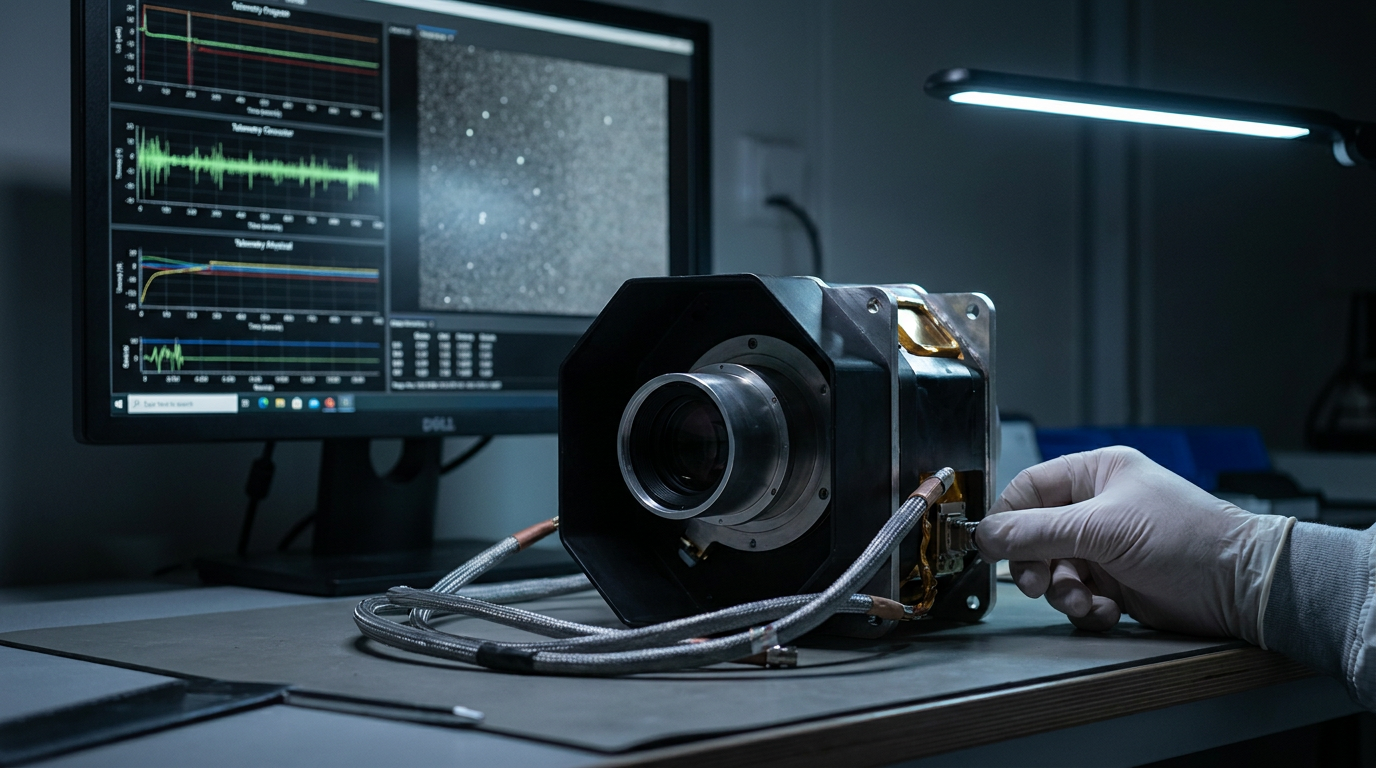
In November 2025, ESA's Swarm constellation[3] — three satellites originally deployed to map Earth's magnetic field — passed through the tail end of a significant geomagnetic storm. The instruments were performing routine measurements. Nobody was looking for anything strange. What the mission engineers found afterward, buried in the telemetry and star tracker logs, was not a magnetic anomaly. It was an optical one: a systematic pattern of positional drift in the star tracker units, caused by energetic particle bombardment during the storm's peak. The stars were still there. The sensors just could not agree on exactly where.
Star trackers are not exotic equipment. They are the unsung navigational backbone of almost every serious satellite and surveillance platform operating today. They work by comparing a real-time image of the star field against an onboard catalog, calculating attitude — pitch, roll, yaw[3] — with extraordinary precision. When a star tracker is healthy and calibrated, it is accurate to fractions of an arcsecond. When it is being hit by a solar particle flux that temporarily saturates its sensor array, it can quietly introduce positional errors that neither flag themselves in the data stream nor show up on any onboard alert. The system does not know it is wrong. It reports normally.
This would be a minor footnote in space engineering literature if it were not for what the PURSUE disclosure files[2] contain. The Pentagon's May 2025 release — the most substantial UAP document package produced since the original AARO report framework — included seventeen infrared clip sequences flagged as unresolved after multi-stage analysis. Several of those clips share a specific signature: objects that appear to maintain anomalous bearing stability at range, whose apparent trajectories resist correlation with known aircraft, weather phenomena, or orbital debris. They look, on the face of the footage, like something holding position against the wind. Or accelerating without a visible propulsion signature. The footage is striking. It is also captured on platforms whose attitude data is derived, at least in part, from star tracker systems operating in environments where solar activity was elevated.
Nobody in the public commentary around the PURSUE release named this directly. The discussion moved quickly to the objects. The sensors recording the objects received considerably less attention. That is the wrong order of operations.
What Star Tracker Drift Actually Does to an Infrared Image
To understand the problem, you have to understand how infrared footage from airborne or space-based platforms is stabilized. Raw sensor output does not come pre-anchored to the world. A camera mounted on a moving aircraft, or a satellite in low orbit, is constantly shifting. What keeps the image coherent — what makes it possible to track a target across a clip — is an attitude reference system that continuously corrects for that motion. Star trackers feed into this system. If the attitude reference drifts, the image stabilization drifts with it. The correction applied to keep the frame steady is itself slightly wrong, and the wrongness is directional and smooth, not random. It looks, in the resulting footage, less like noise and more like motion.
“The wrongness is directional and smooth, not random. It looks less like noise and more like motion.”
This is not a new observation in the abstract. Instrument engineers have understood star tracker vulnerability to energetic particle events since at least the early 2000s, when several Earth observation missions reported anomalous attitude data during periods of elevated solar activity. What the Swarm mission's November 2025 data added was unusually clean documentation of the drift profile under a mid-level geomagnetic storm — specifically, how the drift behaves in the minutes after peak particle flux, when the sensor array is partially recovering but still partially saturated. The drift is not constant. It oscillates slightly as the tracker cycles through its calibration attempts. In a stabilized infrared clip, that oscillation would manifest as a target that appears to change direction or speed in small, periodic increments. Which is, notably, a description that appears in the witness annotations attached to at least three of the PURSUE files flagged as most anomalous.
The Swarm data does not prove that those PURSUE clips are explained by this mechanism. Swarm is a satellite; several of the PURSUE clips were captured from airborne platforms with different sensor configurations and different exposure to the solar environment. But the Swarm data establishes, with unusual precision, what this class of artifact looks like in practice. And what it looks like is uncomfortable in its familiarity.
The Solar Context the PURSUE Analysis Did Not Surface
Several of the seventeen unresolved PURSUE clips carry timestamp metadata placing the captures within windows of elevated geomagnetic activity as tracked by NOAA's Space Weather Prediction Center[1]. This is not a conspiracy. The PURSUE analysis team's published methodology notes that environmental conditions were considered as part of the screening process. What the methodology does not specify is whether star tracker drift under elevated particle flux was modeled as a potential image stabilization artifact — distinct from simple atmospheric distortion or lens flare, which the analysis does address. These are not the same problem. Atmospheric distortion affects the signal passing through the air column between the sensor and the target. Star tracker drift affects the reference frame the sensor uses to interpret its own position. They produce different signatures, require different corrections, and are caught by different validation steps.
The absence of a specific mention does not mean the analysis ignored it. Government technical reports routinely omit methodology detail that analysts consider standard practice. It is entirely possible that the sensor attitude logs for those captures were reviewed by engineers who found nothing outside normal parameters — because, as the Swarm case illustrated, star tracker drift during particle bombardment does not necessarily appear as an anomaly in the attitude log itself. The tracker believes it is correct. The log records that belief faithfully. Only a cross-reference against independent positional data — a second tracker, an inertial measurement unit, a ground station correlation — would surface the discrepancy, and that cross-reference requires someone to specifically look for it.
“The tracker believes it is correct. The log records that belief faithfully.”
Why This Does Not Simply Explain the Footage Away
It is worth being careful here, because this kind of technical argument is frequently hijacked in both directions. The reflexive skeptic wants star tracker drift to close the case. The reflexive believer wants any technical complication to be dismissed as motivated debunking. Neither response is useful, and neither is warranted by the actual state of the evidence.
Star tracker drift is a candidate explanation for some of the anomalous motion characteristics in some of the flagged clips. It is not a candidate explanation for all of them. The PURSUE release includes cases where the solar context was quiet, where multiple independent sensor platforms appear to have registered the same event, and where the instrumentation chain does not run through a star tracker in the relevant configuration at all. For those cases, the Swarm finding changes nothing. For the specific subset of clips that overlap with elevated geomagnetic activity and rely on star tracker attitude data for their image stabilization — and that subset exists — the Swarm finding introduces a plausible mechanism that the public analysis has not formally addressed.
Plausible mechanism is not resolved case. What the Swarm data provides is a calibration reference: here is what this artifact looks like, here is the drift profile, here is the oscillation frequency. If the PURSUE analysts applied this specific test to the at-risk clips and found no match, that result should be published, because it would meaningfully strengthen the case that those clips are genuinely anomalous. If the test was not applied, applying it now would either resolve the clips as explained or genuinely sharpen the remaining mystery. Both outcomes are worth having.
The Institutional Silence Around Sensor Artifact Disclosure
There is an uncomfortable institutional dynamic embedded in this problem. The military and intelligence platforms that captured the most significant PURSUE footage operate sensor systems whose technical specifications are classified. The attitude reference architecture — how the star trackers are configured, how they interact with the inertial measurement units, how the image stabilization pipeline processes their output — is not publicly documented. This is legitimate operational security. It is also, incidentally, a structure that makes independent technical review of the sensor artifact question essentially impossible without cooperation from the operators.
The AARO framework was designed in part to address exactly this kind of institutional opacity, creating a pathway for classified technical analysis to be assessed without requiring full public disclosure. But the PURSUE release, substantial as it is, does not include the sensor validation methodology at the level of granularity that would allow the star tracker question to be answered from the outside. What is publicly available is footage, metadata, and a summary analysis that addresses several artifact categories without specifically naming the solar particle interaction pathway that the Swarm mission has now documented in unusual detail.
This is not evidence of concealment. Bureaucratic methodology gaps are overwhelmingly the product of resource constraints, siloed expertise, and the difficulty of anticipating which instrument-specific failure modes will become relevant to a particular investigation. The more interesting question is whether the Swarm finding, now in the public literature, will prompt a formal reanalysis request. The appropriate response to a newly documented artifact class that plausibly overlaps with unresolved cases is to check. Not to announce the cases solved. Not to dismiss the artifact as irrelevant. To check.
What Unresolved Actually Means After This
“Unresolved is not a stable category. It is a function of which tests have been run.”
Unresolved is not a stable category. It is a function of which tests have been run, which artifact classes have been formally modeled, and which instrumentation vulnerabilities have been characterized well enough to test against. Before the Swarm mission documented the November 2025 drift profile, the star tracker question for the PURSUE clips was technically askable but practically unanchored — there was no clean reference case to compare against. After Swarm, there is. The evidence base for asking the question properly has improved. That is what progress in anomaly investigation actually looks like: not a dramatic revelation, but a new calibration point that changes what the next question should be.
Several of the PURSUE clips will survive this scrutiny. The ones that do — the cases captured in geomagnetically quiet periods, corroborated across independent platforms, inconsistent with every sensor artifact class that has been formally characterized — will matter more after the star tracker question has been formally addressed than they do now. Right now, the unresolved label sits across all seventeen cases with equal weight. A targeted artifact test would not eliminate mystery from the PURSUE files. It would concentrate it. Whatever remains after that test would be stranger, better documented, and considerably harder to dismiss. That is a more useful kind of unresolved than the one we currently have.
References
- Homepage | NOAA / NWS Space Weather Prediction Center (swpc.noaa.gov)
Provides geomagnetic activity tracking data that the article uses to identify which PURSUE clips were captured during elevated solar activity windows. - PURSUE disclosure files (war.gov)
Provides the May 2025 Pentagon UAP document package containing seventeen infrared clips flagged as unresolved, several showing anomalous bearing stability and trajectory characteristics. - Swarm detects rare proton spike during solar storm (esa.int)
Documents November 2025 geomagnetic storm where Swarm's star trackers detected high-energy proton spikes, establishing the physical basis for sensor drift during particle bombardment.
About Rowan Ellery
Rowan Ellery writes about anomalies, unexplained sightings, strange signals, and the uneasy border between observation, misinterpretation, and genuine mystery. Their work focuses on keeping curiosity alive without letting evidence dissolve into folklore.
More like this
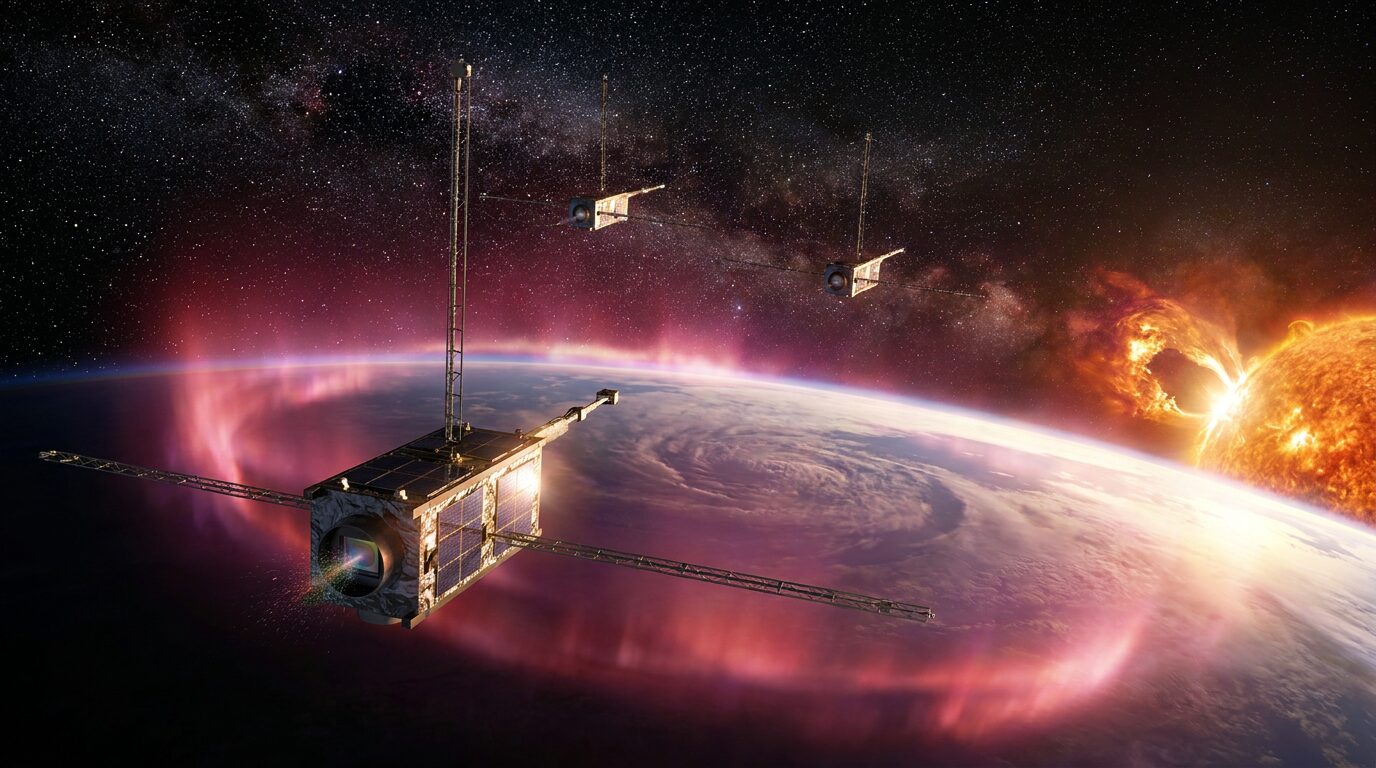
A Satellite's Camera Caught What Its Sensors Missed During the Solar Storm
During a triple-CME solar storm in November, ESA's Swarm satellite detected a high-energy proton surge not with its magnetic sensors — but with the cameras it uses to find its own location in space.
The Pentagon Released 162 UAP Files. The Unresolved Ones Are the Interesting Part.
The May 2025 file release is historic, but the official language used to explain every unresolved case quietly reveals something more useful than any alien hypothesis.
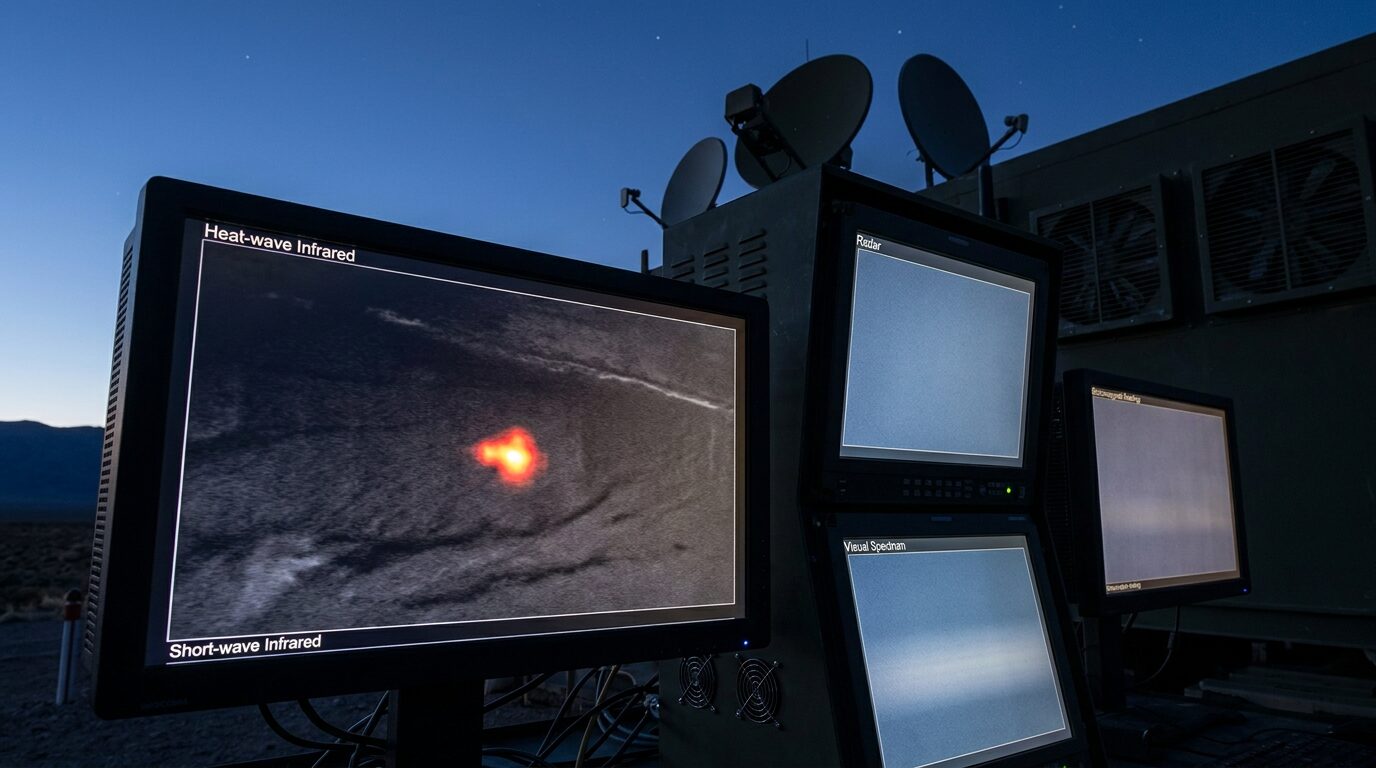
The Pentagon's New UAP Files Have a Sensor Problem No One Is Talking About
The May 2025 PURSUE disclosure is historic — but the cases that stayed unexplained share a quiet technical flaw that changes what 'unresolved' actually means.