Dead Stars Seeded Your Bones — Here's the Exact Chain of Events
Isotope ratios locked inside ancient meteorites let scientists trace the calcium in your skeleton back through a chain of stellar collapse, shockwave dispersal, and slow planetary assembly — link by precise link.
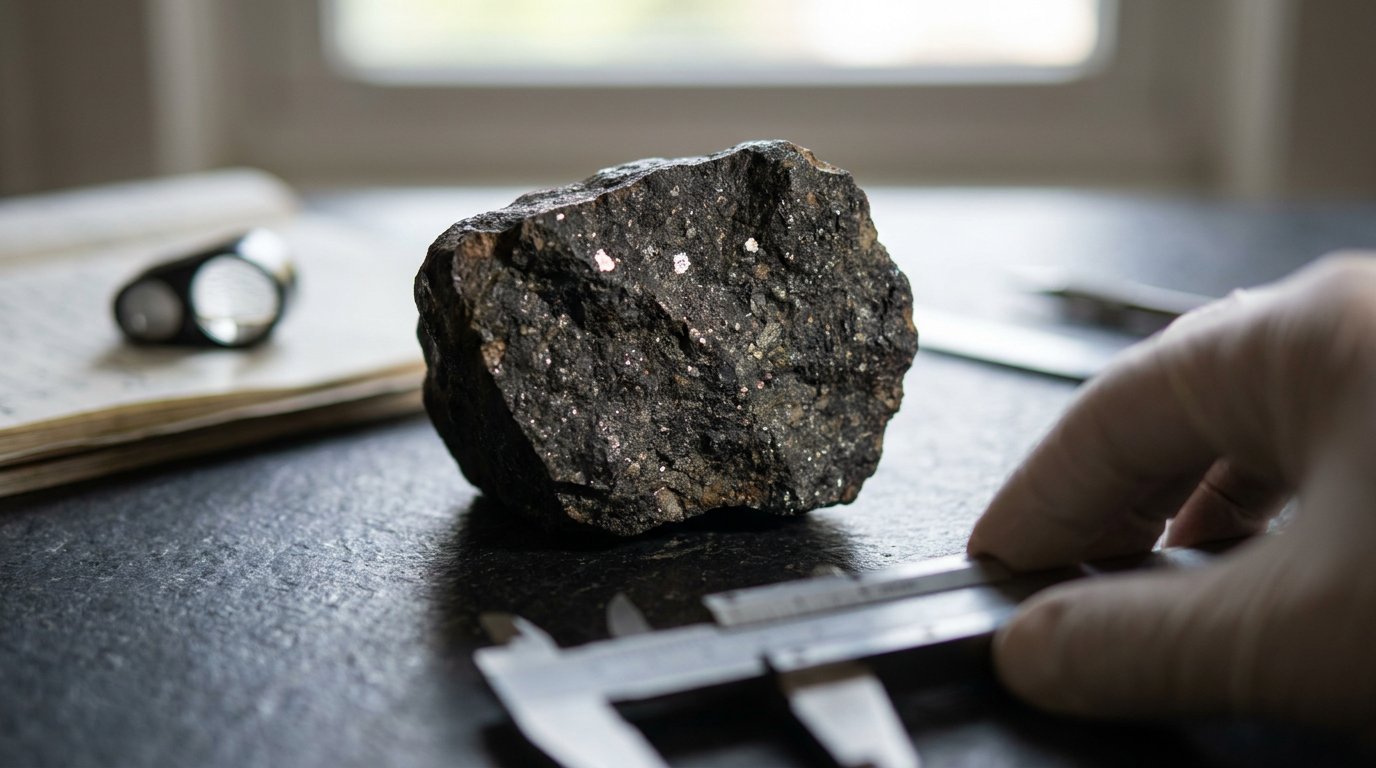
Pick up a piece of chalk. It is mostly calcium carbonate — marine organisms compressed into stone over millions of years. But the calcium itself is older than Earth by more than a billion years. It was forged in the collapsing core of a massive star, scattered by the detonation that followed, and eventually gathered into the dust cloud that condensed into our solar system. The chalk feels inert, a dry classroom relic. In reality it is evidence of a violence so remote and enormous that the human mind has to approach it sideways, through chemistry and ratios and the patient testimony of space rocks.
The calcium in your skeleton carries the same inheritance. Every 206 grams of it contains isotopes — calcium-40, calcium-44, calcium-48 among others — whose relative abundances are a fingerprint of the nuclear processes that created them. Those ratios do not reset. They are preserved across billions of years of transport through interstellar space, accretion into planetesimals, differentiation inside early planets, geological cycling, biological uptake, and finally the quiet work of your own skeleton remodeling itself. The chain from dead star to living bone is long, but it is not broken, and scientists have been piecing it together for decades using some of the oldest solid objects in existence: primitive meteorites that predate the Earth itself.
This kind of forensics sits at the intersection of nuclear astrophysics, cosmochemistry, and geology. It is slow, exacting work, involving mass spectrometers that can distinguish isotopes differing by a single neutron, and chondrites — unmelted stony meteorites — whose mineralogy has barely changed in 4.56 billion years. What those meteorites preserve is a record of the solar system's starting composition: what the collapsing nebula brought with it, including material freshly contributed by nearby stellar explosions. Read carefully, they tell you not just where your calcium came from in a poetic sense, but in a precise, traceable, nuclear sense.
The story starts, as most deep-time stories do, with a death.
What a Star Does When It Runs Out of Options
A star of roughly eight to twenty solar masses spends most of its life fusing hydrogen into helium in its core — a process that takes millions of years for the most massive examples, longer for the smaller ones. When the hydrogen is exhausted, it moves to helium, then carbon, then progressively heavier elements, each fusion stage shorter and less energetically efficient than the last. Silicon burning, the final stage, lasts about a day[4]. At the end of that day, the core is iron. Iron cannot be fused to release energy — it absorbs energy rather than releasing it. The fusion machine stalls. In less than a second, a core containing roughly 1.4 solar masses collapses to a ball roughly twenty kilometers across. The infalling outer layers rebound off that incompressible core and blow outward in one of the most energetic events the universe produces: a core-collapse supernova.
The energy released in those few seconds exceeds what the sun will radiate in its entire ten-billion-year life. And embedded in that outward blast is a suite of elements that the star built over its lifetime — carbon, oxygen, neon, silicon, sulfur, calcium, iron — plus elements synthesized in the extreme neutron flux of the explosion itself. Calcium is particularly well produced in the oxygen and silicon burning shells just outside the core, and the shock wave that rips through those shells during collapse contributes additional calcium through explosive nucleosynthesis. The supernova ejecta carry all of it outward into the surrounding interstellar medium at velocities of thousands of kilometers per second.
“Silicon burning lasts about a day. At the end of that day, the core is iron, and everything that follows happens in under a second.”
What disperses into the interstellar medium is not just raw calcium. It is specific isotopes of calcium in ratios that depend on the progenitor star's mass, metallicity, and the detailed physics of the explosion. Calcium-40 is the dominant product of oxygen burning. Calcium-44 has a distinctive origin: it is produced in part from the radioactive decay of titanium-44, which is itself synthesized in the innermost ejecta of the supernova, very close to the mass cut between the collapsing core and the material that escapes. This matters because the abundance ratio of calcium-44 relative to calcium-40 is a signature of how much material came from those innermost layers — and that is sensitive to the explosion geometry, the progenitor mass, and how much nickel-56 was produced alongside it.
The Meteorite as Time Capsule
Carbonaceous chondrites are the closest thing science has to sealed packages from the early solar system. They are unprocessed — they never melted, so they never underwent the kind of planetary differentiation that would have reset their chemistry. Their mineralogy, their isotope ratios, their tiny presolar grains are essentially unchanged from the moment they accreted. When cosmochemists analyze them, they are reading the starting conditions of the solar system, including the inventory of elements and isotopes the collapsing solar nebula inherited from previous stellar generations.
Inside some of these meteorites, researchers have found presolar grains — microscopic inclusions of silicon carbide, graphite, and oxide minerals that condensed in the outflows of specific ancient stars and were incorporated into the solar nebula without being homogenized. These grains carry isotope signatures so anomalous relative to the rest of the solar system that they could only have formed in a different stellar environment. Some carry silicon isotope ratios diagnostic of AGB stars — red giants in the final phase of thermal pulsing. Others carry signatures consistent with supernova ejecta. A few silicon carbide grains contain elevated levels of calcium-44 that can only be explained by in-situ decay of titanium-44, confirming they condensed very close to a supernova core in the immediate aftermath of the explosion.
“Some of the grains inside these meteorites are older than the sun. They formed in other stars and survived the birth of an entire solar system without dissolving.”
The calcium isotope record in chondrites also carries a subtler signal: evidence of short-lived radionuclides that were present in the early solar system and have since completely decayed. Aluminum-26, which decays to magnesium-26 with a half-life of about 720,000 years, is the most famous example — its decay products are found distributed through early solar system minerals in a way that implies a fresh injection of nucleosynthetic material just before or during the solar nebula's collapse. Whether that injection came from a nearby AGB star or a core-collapse supernova is still debated, but the presence of calcium-44 excesses correlated with titanium-44 decay products in some inclusions points at least partly toward supernova contribution. The solar system did not assemble from well-mixed ancient gas. It was seeded, close to the time of formation, by fresh stellar debris.
The Nebula Collapses, and the Calcium Goes to Work
Once dispersed into the interstellar medium, supernova ejecta do not simply float in isolation. They mix with ambient gas over timescales of millions of years, cooling and eventually becoming part of the molecular clouds from which new stars and planetary systems form. The solar nebula — the rotating disk of gas and dust that gave rise to the sun and its planets — was not chemically pristine. It was an aggregate of material from hundreds or thousands of stellar generations, each contributing its nuclear waste to the communal inventory. Calcium arrived in that nebula already carrying the isotope ratios stamped on it by the fusion and detonation processes of its parent stars.
As the nebula collapsed under its own gravity roughly 4.57 billion years ago, solid material began condensing out of the hot inner disk. The earliest solids — calcium-aluminum-rich inclusions, known as CAIs[3], found in carbonaceous chondrites — formed within the first million years and preserve the oldest known calcium-bearing minerals in the solar system. Hibonite, grossite, melilite: these minerals are the first solid record of solar system calcium, and their isotope ratios are measured with extraordinary precision today because they are the anchors against which the rest of solar system history is calibrated.
From that initial condensation, calcium followed the larger story of planetary assembly. It accreted into planetesimals, then into the proto-Earth, where it partitioned during differentiation: some went into the silicate mantle and crust, some into early oceans as soluble calcium ions liberated by volcanic degassing and rock weathering. It cycled through the young ocean, incorporated into the shells and skeletons of early marine life, buried as carbonate sediment, subducted, released again by volcanism, and recirculated. The calcium on Earth has been through this loop many times. By the time multicellular life evolved sophisticated mineralized tissues — shells, bones, teeth — it was drawing on calcium that had already experienced billions of years of planetary recycling.
From Ocean Chemistry to Your Femur
Bone is not a static structure. It is metabolically active tissue — a reservoir that the body draws on to regulate blood calcium levels, constantly remodeled by cells called osteoblasts and osteoclasts. The calcium in an adult skeleton turns over continuously; estimates suggest the entire skeleton is effectively replaced over a period of roughly a decade in young adults, more slowly in older ones. Each calcium ion that enters your bone arrived through your gut from food — dairy, leafy vegetables, fortified grains — and before that, from soil, and before that, from bedrock dissolving under acidic groundwater, and before that, from the slow deep-time cycling of the planetary crust.
None of those intermediate steps — gut absorption, soil chemistry, rock weathering — alter the nuclear identity of the calcium isotopes. The ratio of calcium-44 to calcium-40, adjusted for the mass-dependent fractionation that biological and geochemical processes introduce, still carries information about the nucleosynthetic history of that calcium. Researchers in isotope geochemistry use precisely these ratios to trace calcium cycling through ecosystems, through food webs, through individual organisms. The technique is sensitive enough to distinguish calcium sourced from different geological formations, or to track how diet changes leave a record in bone mineral over time. The method works because the deep history is preserved in the ratios.
Reading the Chain Backward
The chain from supernova to skeleton is not reconstructed from a single measurement or a single discipline. It is assembled from nuclear physics models of stellar interiors, from laboratory measurements of presolar grain isotope ratios, from cosmochemical analysis of CAIs and bulk chondrites, from geochemical studies of calcium cycling through the crust and ocean, and from biological measurements of calcium uptake and fractionation in living tissue. Each link is independently constrained. The convergence of all of them is what makes the story more than poetic speculation — it is a scientific reconstruction with quantifiable uncertainties at every step.
What remains genuinely open is the precise mix of stellar sources that contributed to the solar system's calcium inventory. The dominant contribution almost certainly came from multiple generations of core-collapse supernovae over the roughly nine billion years that elapsed between the Big Bang and the solar system's formation — a period during which the Milky Way was actively enriching itself in heavy elements. But the exact proportions from different progenitor masses, from Type Ia supernovae, from AGB stars, from neutron star mergers — these are still subjects of active modeling and observation. Surveys of stellar populations at different metallicities, combined with galactic chemical evolution models, are slowly narrowing the constraints.
“The convergence of nuclear physics, meteorite chemistry, and isotope geochemistry is what makes this more than poetic — it is a reconstruction with quantifiable uncertainties at every link.”
Calcium-48 is a particularly interesting outlier in this accounting. It is the most neutron-rich stable calcium isotope[1], produced primarily in neutron-rich environments — likely core-collapse supernovae with specific explosion conditions, possibly also neutron star mergers. Its abundance in the solar system is anomalously high relative to what standard galactic chemical evolution models predict from supernovae alone, and this discrepancy is one of the active puzzles in cosmochemistry. The calcium in your bones contains calcium-48 in amounts that may reflect the debris of neutron star collisions — events that also produce gold, platinum, and the heaviest elements — billions of years before the sun existed.
What the Archive Holds
There is a version of this story that stays comfortably poetic: we are made of stars, yes, beautiful, next slide. But the isotope ratios refuse to stay vague. They insist on specificity. They point at particular nucleosynthetic processes, particular stellar environments, particular moments in the history of the galaxy. The calcium-44 excess in a presolar silicon carbide grain is not a metaphor — it is a measurement, made in a mass spectrometer, of a decay product from a radionuclide that formed inside a collapsing stellar core and was carried outward by a shockwave traveling at a fraction of the speed of light. That grain survived the birth of the solar system. It survived four and a half billion years of planetary history. And the calcium it carries — the same element, with the same nuclear fingerprint — is now distributed through living bone in organisms that can read the record and reconstruct what happened.
The universe does not announce its history. It stores it — in isotope ratios, in mineral inclusions, in the scarred surfaces of ancient rocks, in the faint chemical gradients preserved across geological time. The calcium in your skeleton is not a symbol of cosmic connection. It is a physical artifact of specific events: stellar ignition, silicon burning, core collapse, shockwave dispersal, nebular condensation, planetary accretion, crustal cycling, biological uptake. Every one of those events left a trace, and the traces are still there, locked into the chemistry of your bones, patient as any other archive, waiting for instruments precise enough to read them.
References
- Calcium-48 isotopic anomalies in bulk chondrites and achondrites: Evidence for a uniform isotopic reservoir in the inner protoplanetary disk (sciencedirect.com)
Establishes calcium-48 as the most neutron-rich stable calcium isotope, supporting the article's discussion of calcium isotope fingerprints. - Presolar Grains as Probes of Supernova Nucleosynthesis (link.springer.com)
Provides evidence that calcium-44 excesses in presolar grains result from in-situ decay of titanium-44, confirming supernova origin near the core. - Calcium–aluminium-rich inclusion (en.wikipedia.org)
Establishes that calcium-aluminum-rich inclusions (CAIs) are the oldest solar system solids, forming within the first million years and preserving earliest calcium isotope ratios. - Silicon-burning process (en.wikipedia.org)
Confirms that silicon burning is the final fusion stage in massive stars and lasts approximately one day before core collapse.
About Mira Solen
Mira Solen writes about deep time, cosmic history, extinct stars, ancient impacts, and the long memory stored in rock, dust, and light. Her work specializes in making the oldest stories in the universe feel vivid, physical, and strangely near.
More like this

The Dust on Your Windowsill Contains Debris From Dead Solar Systems
Buried inside ordinary interstellar dust are microscopic grains that formed in dying stars before our Sun existed — and the isotope ratios locked inside them are a chemical diary of explosions billions of years old.
The Universe's First Stars Were 10,000 Times the Size of the Sun. We Just Found the Ash.
A nitrogen fingerprint in an ancient galaxy suggests the universe's first stars were so massive that no modern physics textbook accounted for them — and their collapse seeded everything that came after.
Ghosts of the First Stars: What Ancient, Metal-Poor Suns Are Telling Us About the Universe's Earliest Chemistry
A small population of stars in the Milky Way's outer halo carries chemical signatures from before the universe knew how to make iron — and what spectrometers are finding in them is forcing a rethink of how fast the early cosmos grew complex.