Why Wildfire Smoke Gets Worse Days After the Fire Dies
The gases released by wildfires keep chemically transforming into fine particles for days after a fire ends — which is why smoke crosses continents and poisons air far from any flame.
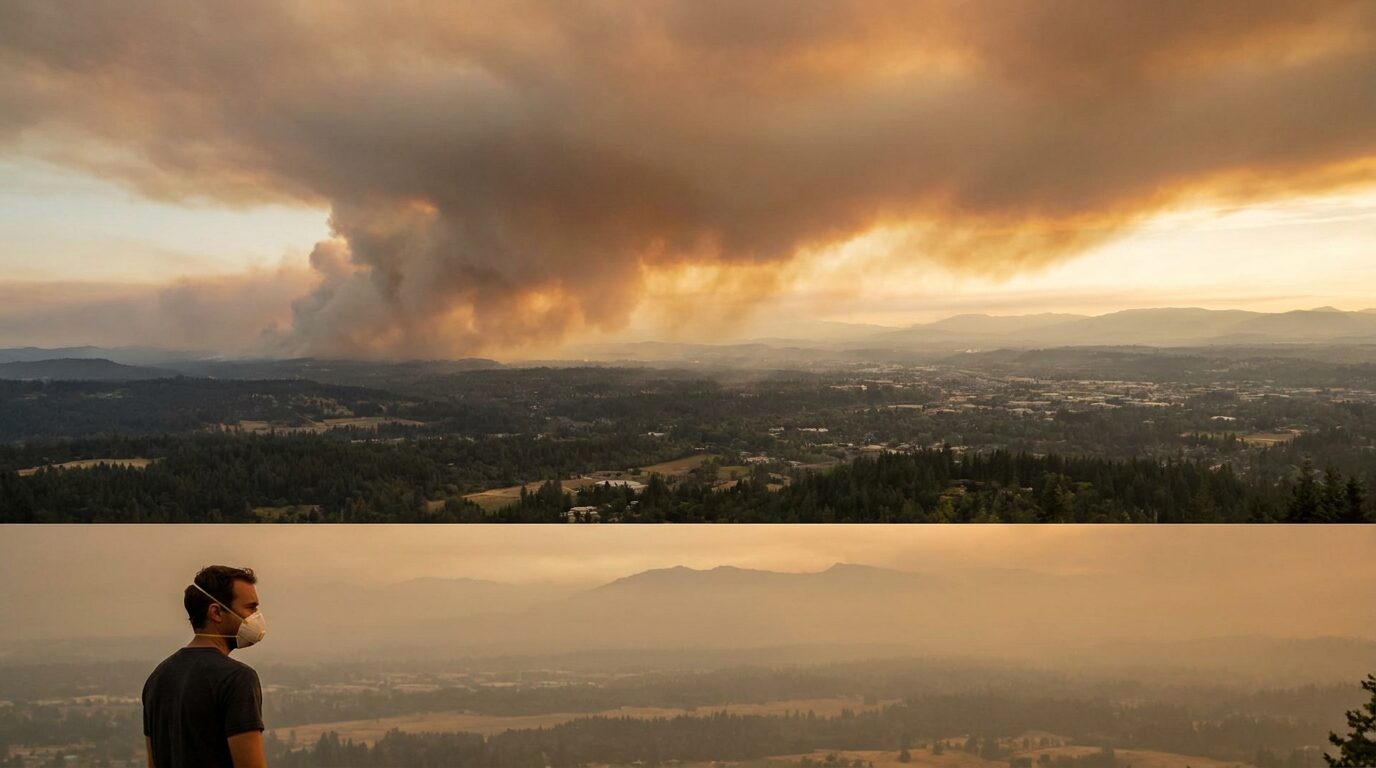
The fire is out. The containment lines held. The satellite images show no active heat signatures where the burn scar is still cooling. And yet the air, hundreds of miles away, carries that particular sulfurous, acrid thinness — the sensation of breathing something that was never meant to be breathed. People check their air quality apps. The numbers are bad. They have been bad for days. The fire, by any official measure, is done. The smoke is not.
This is the piece of wildfire pollution that has been consistently underestimated: not the initial plume, dramatic and visible as it is, but the chemical aftermath — the ongoing transformation of gases released during combustion into fine particulate matter that lingers, travels, and accumulates far downwind. A January 2026 study from the American Chemical Society found that wildfires release substantially more air-polluting gases than previous measurement frameworks captured, and that those gases continue converting into fine particles long after the flames are extinguished. The implication is significant: current models for wildfire air quality impact are likely missing a large share of the actual harm.
The Chemistry That Keeps Burning
Combustion is not a single event. It is a cascade. When a wildfire moves through a landscape — consuming grass, shrub, duff, tree resin, bark, soil organic matter — it releases not just carbon dioxide and visible soot but a volatile mixture of organic compounds that immediately begin reacting with oxygen, sunlight, and other atmospheric chemicals. Some of those reactions are fast. Others unfold over hours and days. The products of the slower reactions are what atmospheric scientists call secondary particulate matter: particles that were not emitted directly from the fire but were built, molecule by molecule, from gases that were.[1] These secondary particles are often in the ultrafine size range — small enough to penetrate deep into lung tissue, small enough to cross into the bloodstream, and small enough to remain suspended in the atmosphere across distances that bear no obvious relationship to where the fire burned.
The difficulty for monitoring systems is that most air quality measurements are designed to capture what is already a particle at the point of emission, or what becomes a particle quickly and locally. The slower, long-distance transformations have been harder to track, and the gases that drive them have been harder to quantify — partly because they are chemically diverse, partly because their behavior changes depending on temperature, humidity, and the composition of the atmosphere they move through. What the ACS study adds to the existing picture is evidence that the gap between what fires emit and what monitoring captures is not a minor rounding error. It is a systematic undercount of the gases that become tomorrow's hazardous air.
“The fire is done. The chemistry is not.”
Smoke as a Traveling System
Wildfire smoke has always crossed distances that feel almost implausible. Smoke from boreal forest fires in Canada has been measured degrading air quality in Chicago, New York, and Atlanta. Pacific coast fires have pushed haze across the Rockies and into the Great Plains. What the new chemistry research clarifies is that these plumes are not just passively drifting — they are actively changing during transit. A plume that leaves a fire front as a mixture of gases and initial particles arrives downwind as something chemically different: heavier in fine particulate, altered in composition, potentially more toxic in some respects because the secondary transformation products include compounds that were not present in the original emission. Distance does not dilute this smoke in the way you might expect. It partially transforms it.
This matters enormously for the populations most at risk from poor air quality: people with asthma, chronic obstructive pulmonary disease, cardiovascular disease, and compromised immune systems; elderly people; children whose lungs are still developing; outdoor workers with no option to move indoors. For these groups, the difference between an accurate air quality forecast and an underestimate is not academic. It is a decision about whether to medicate, whether to send a child to school, whether to leave the windows closed. When monitoring systems miss the secondary particle load because they were not designed to track the precursor gases that generate it, those decisions get made on incomplete information.
A Measurement Problem Built Into the System
Air quality science has a long and genuine track record of improvement. Outdoor air pollution death rates in the United States dropped dramatically across the latter half of the twentieth century, reflecting real gains in emissions controls and monitoring capacity. But wildfire smoke represents a distinct and increasingly dominant challenge that legacy measurement infrastructure was not built to handle. Traditional industrial air pollution comes from point sources — smokestacks, tailpipes, industrial exhausts — with relatively predictable chemical profiles. Wildfire combustion is ecologically chaotic: it burns dozens of fuel types simultaneously at variable temperatures, producing a chemical signature that shifts depending on what is burning, how dry it is, how hot the fire runs, and what phase of combustion is occurring at any given moment. A smoldering peat fire, a crown fire running through old-growth conifers, and a grassland burn produce chemically distinct smoke. No single monitoring framework captures all of them well.
The ACS finding points toward a specific gap: the volatile organic compounds released during burning that do not immediately register as particles but that undergo what chemists call secondary organic aerosol formation once they are airborne. These are the gases that sunlight, ozone, and atmospheric radicals continue processing into fine particulate matter for hours and days after emission. Because they are gases at the point of release, ground-level particle monitors do not count them. Because they transform slowly, their contribution to air quality degradation may not peak at the fire itself but somewhere downwind, hours or a day later, in a city that has no active fire anywhere near it.
What This Looks Like on the Ground
There is a particular quality to multi-day smoke exposure that anyone who has lived through a bad wildfire season in the American West, or in parts of Australia, or in Southeast Asia during agricultural burn season, will recognize. The sky turns a specific brownish-orange. The mountains disappear. Eyes water without reason. The throat develops a persistent rawness that is not quite soreness but signals something wrong. People who thought they were managing fine report sudden fatigue, headaches, a cognitive flatness. Children with asthma begin needing their rescue inhalers. Emergency departments see the spike three to five days into a smoke event, not on day one.
That delayed health impact is consistent with what the chemistry predicts. If secondary particle formation peaks downwind and over time rather than at the fire front, then the worst air quality exposure for many communities may occur not when the fire is most visually dramatic but in the quieter days after, when the fire has moved on or been contained and the public and institutional attention has partly shifted elsewhere. The smoke that lingers is doing chemistry the whole time.
“Secondary particle formation may peak downwind and over time rather than at the fire front — which means the worst exposure often arrives quietly, days after the fire has moved on.”
The Larger Ecological Frame
Wildfire frequency and intensity are not independent variables. They are outputs of a climate system under stress: decades of fire suppression that accumulated fuel loads, beetle infestations and drought that killed millions of acres of standing timber, the tallest and oldest trees dying first in heat-stressed forests, hotter and longer summer fire seasons driven by rising temperatures, and drying of soils and vegetation that turns ordinary landscapes into extraordinary fuels. The fires themselves are symptoms of ecological pressure. And the smoke those fires produce is becoming a chronic feature of life across large parts of the inhabited world rather than a seasonal disruption.
Ocean systems are absorbing much of the additional heat driving these conditions. Upper ocean heat content has increased significantly over the past several decades[2], with heat accumulating faster in upper layers than deeper ones — a thermal loading that intensifies evaporation, alters atmospheric circulation, and shifts the precipitation patterns that determine how wet or dry a landscape stays through summer. Drier landscapes burn more readily. More intense fires release more gases. More gases transform into more secondary particles. The air quality crisis that begins in a forest ends in a city's emergency room, and the chain connecting them runs through physics, chemistry, ecology, and atmospheric dynamics simultaneously.
What the January 2026 ACS research adds to this picture is a quantitative correction to one of the chain's least-counted links. The gases were always there. The transformation was always happening. The particles were always arriving downwind. The measurement framework simply was not built to see them clearly. Building one that does — one that tracks precursor emissions through their atmospheric journey rather than only counting what arrives already formed — is not a technical curiosity. It is the precondition for giving people accurate information about the air they are actually breathing, in a world where the fires are getting larger, more frequent, and harder to contain.
References
- Chemical Transformations of Infiltrated Wildfire Smoke on Indoor-Relevant Surfaces (pmc.ncbi.nlm.nih.gov)
Defines secondary particulate matter as particles formed from gases after emission, supporting the article's explanation of post-fire chemical transformation. - Climate Change: Ocean Heat Content (climate.gov)
Provides evidence that upper ocean heat content has increased significantly in recent decades, supporting the article's claim about thermal loading intensifying wildfire conditions.
About Sable Pike
Sable Pike writes about habitat loss, ecosystem strain, species decline, climate disruption, and the quiet unraveling of natural systems people once assumed were permanent — and the way that unraveling reaches into economies, politics, and daily life. Her work brings emotional weight to ecological change without sacrificing scientific rigor.
More like this
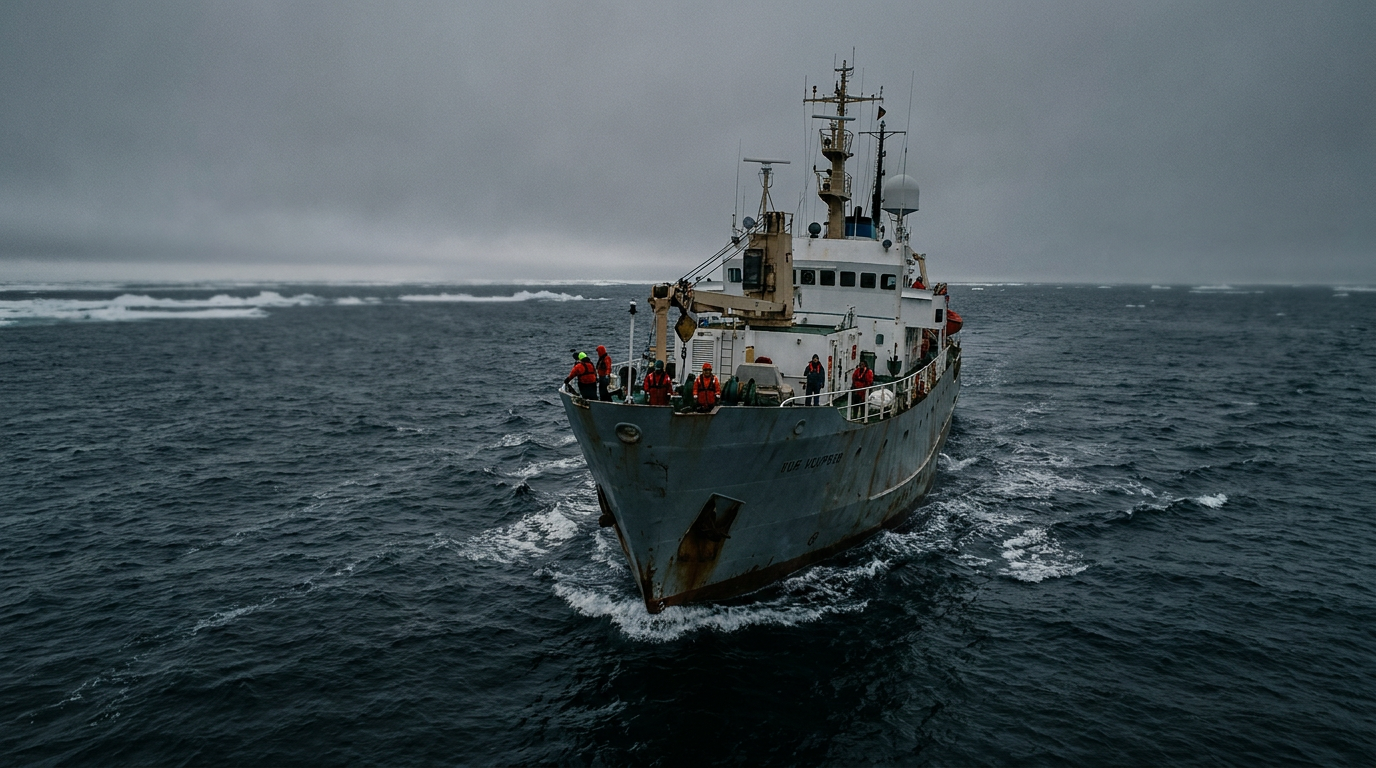
Scientists Measured How Much Extra Heat the Ocean Holds. Then They Had to Find a Comparison Big Enough.
A new study put a number on the ocean's heat surplus that makes annual energy statistics look like pocket change — and the rate is still climbing.
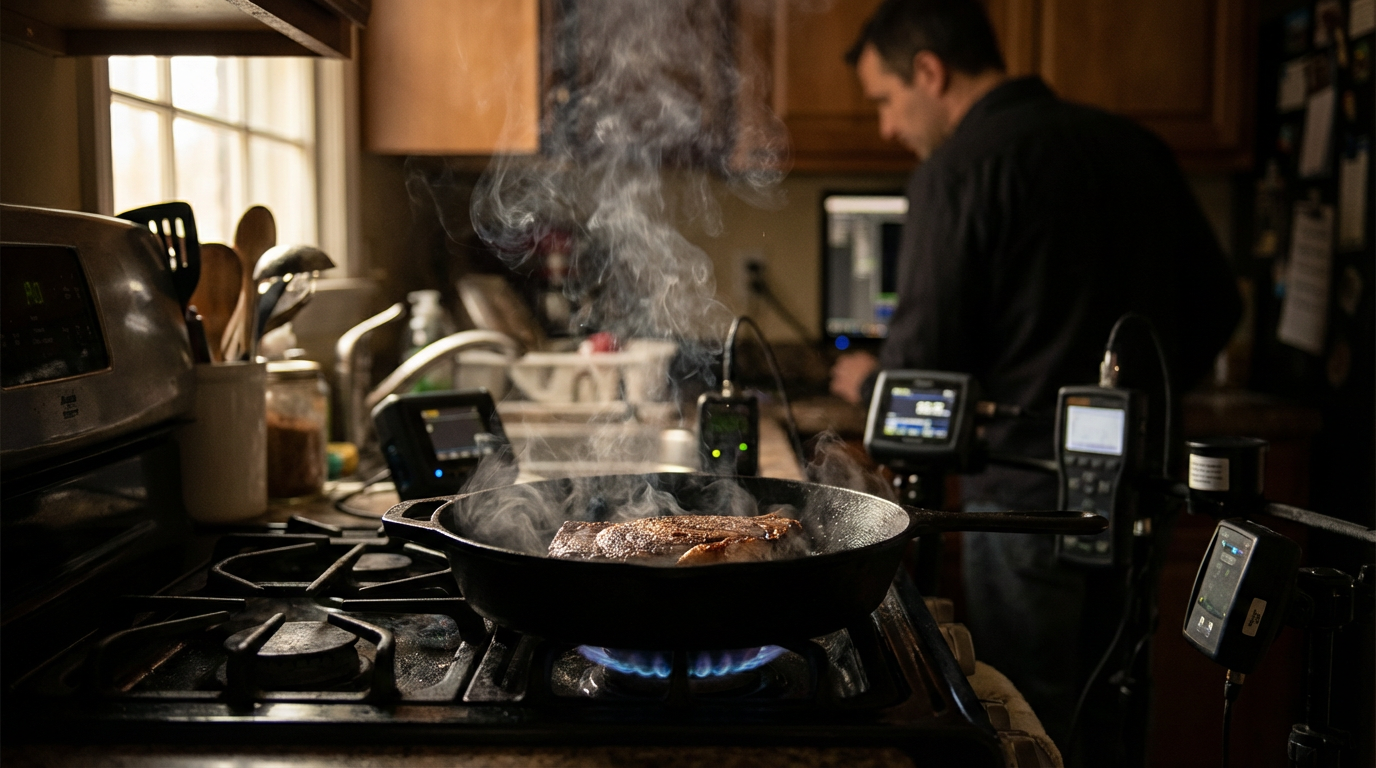
The Atmosphere in Your Kitchen Is More Violent Than You Think
Indoor air quality researchers are discovering that a single pan of sautéed onions can spike ultrafine particle concentrations to levels that would trigger outdoor air quality alerts — and the chemistry happening three feet above your stove is stranger and more consequential than anyone expected.
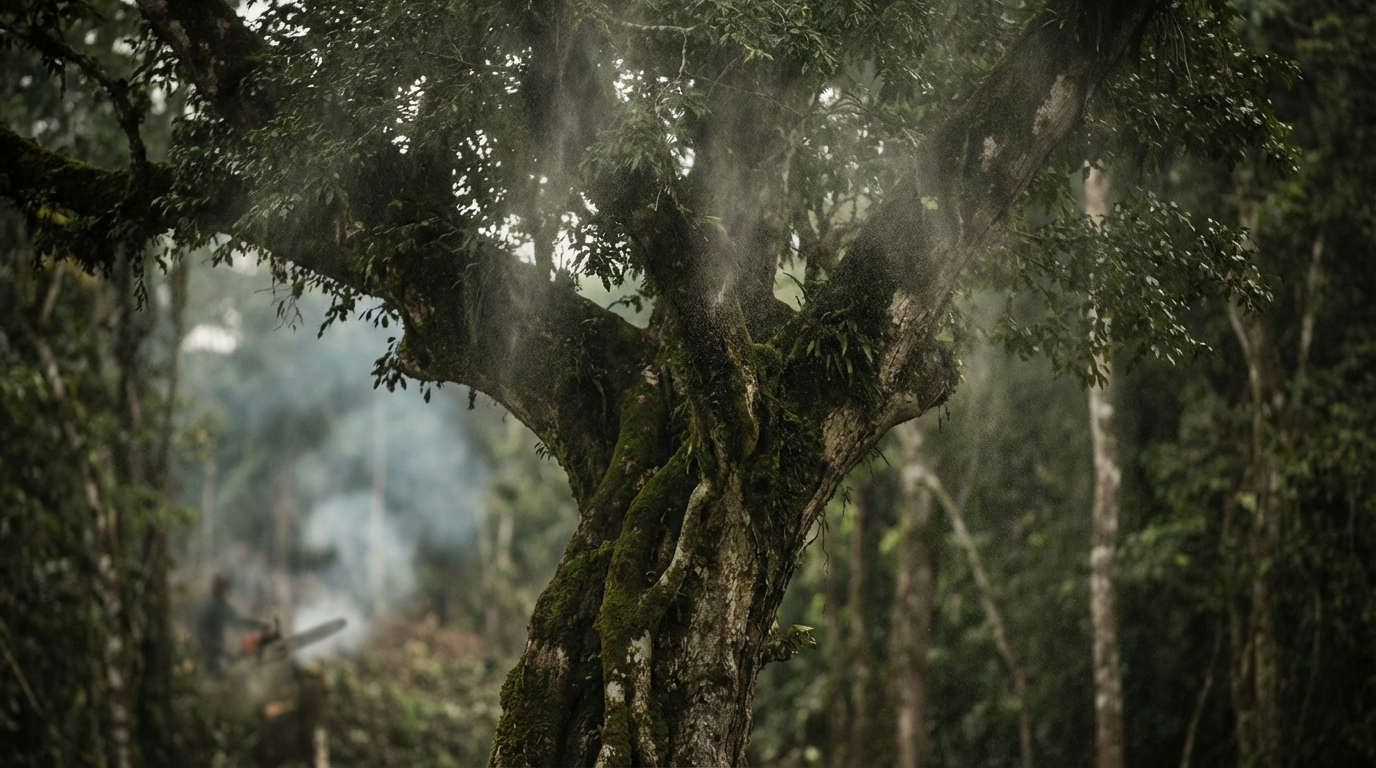
The Amazon Makes Its Own Rain. Deforestation Is Breaking That.
The Amazon recycles its own rainfall through vast airborne moisture corridors — and new data shows that eastern deforestation is already strangling the forests furthest downstream.