Volatile Organic Compounds
VOCs are carbon-based chemicals that evaporate easily into the air, including those naturally released by plants, microbes, and human breath that form an invisible, shifting cloud of hundreds of molecules.
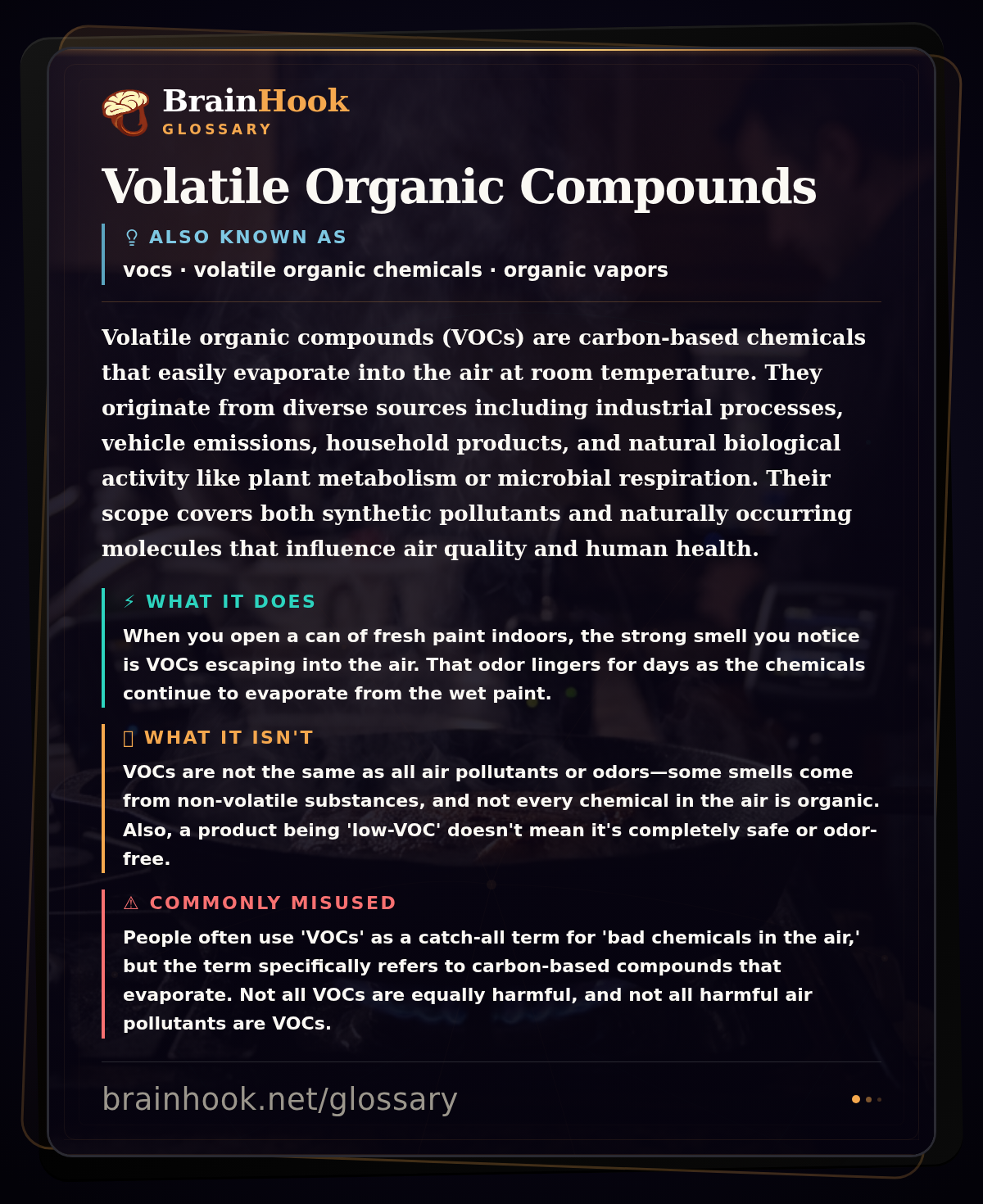
Volatile organic compounds (VOCs) are carbon-based chemicals that easily evaporate into the air at room temperature. They originate from diverse sources including industrial processes, vehicle emissions, household products, and natural biological activity like plant metabolism or microbial respiration. Their scope covers both synthetic pollutants and naturally occurring molecules that influence air quality and human health.
What this means in real life
When you open a can of fresh paint indoors, the strong smell you notice is VOCs escaping into the air. That odor lingers for days as the chemicals continue to evaporate from the wet paint.
What it isn’t
VOCs are not the same as all air pollutants or odors—some smells come from non-volatile substances, and not every chemical in the air is organic. Also, a product being 'low-VOC' doesn't mean it's completely safe or odor-free.
Commonly misused online
People often use 'VOCs' as a catch-all term for 'bad chemicals in the air,' but the term specifically refers to carbon-based compounds that evaporate. Not all VOCs are equally harmful, and not all harmful air pollutants are VOCs.