The Tallest Trees Are Dying First. That's Not a Coincidence.
A study of nearly 2 million California trees found that the largest trees die at twice the rate of small ones during drought — and the hydraulic physics behind that pattern reveal how forests begin to unravel long before they look like they're in trouble.
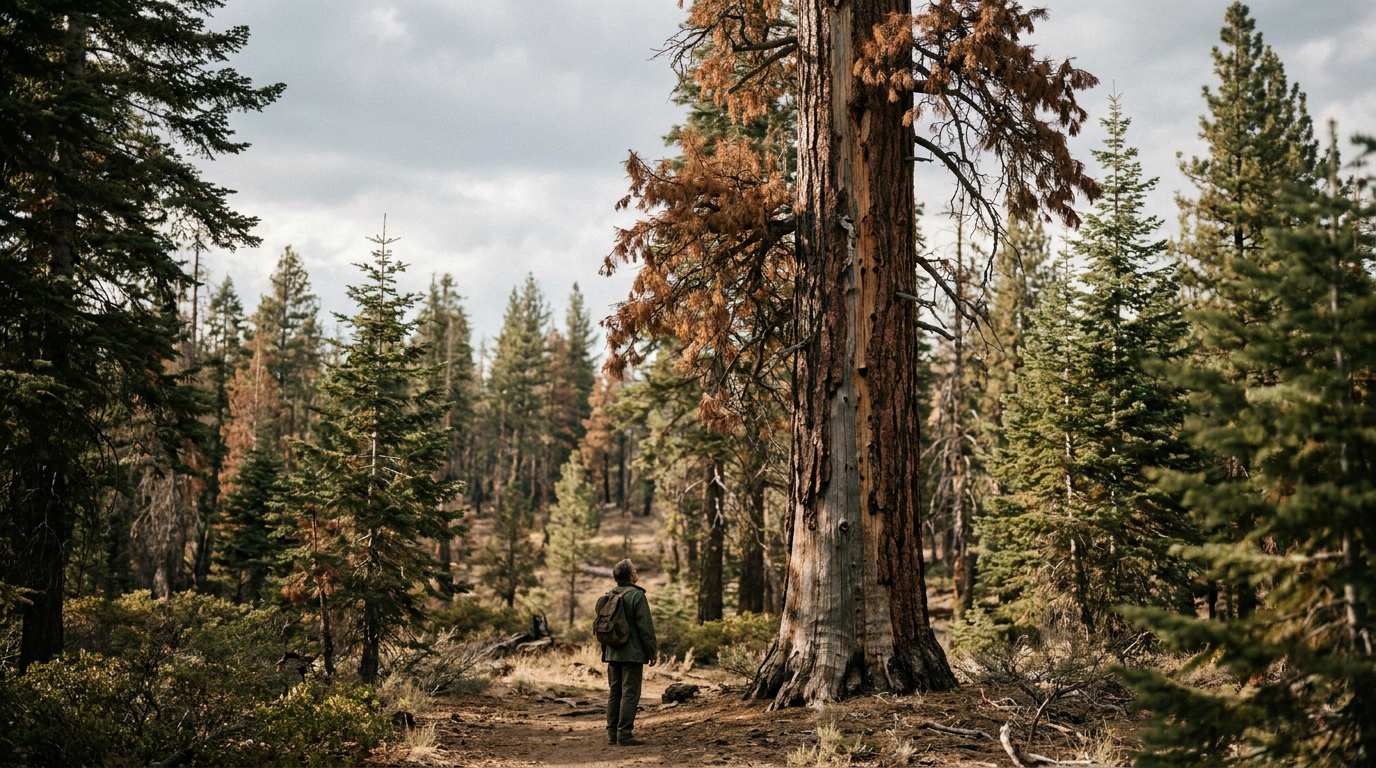
Drive through the Sierra Nevada after a hard drought year and the damage reads, at first, as random. Patches of rust-brown needles scattered through the green. A dead ponderosa here, a standing ghost of a sugar pine there. The eye wants to attribute it to bad luck, to disease, to some localized weakness. But look longer, and a pattern begins to emerge. The trees that have died are not the small ones crowded at the forest edge, not the young ones still finding their footing in thin soil. The dead trees are the biggest ones. The oldest ones. The ones that have been there the longest and seen the most.
That observation, which any careful hiker might have made, has now been confirmed at a scale that strips away any doubt about coincidence. A study tracking nearly two million individual trees across California[1] through successive severe drought years found that large trees — the canopy giants, the oldest individuals in any given stand — died at approximately twice the rate of their smaller neighbors. The pattern held across species, across elevation, across forest type. Size, which had always seemed like biological advantage, turned out to be a liability when the water ran out.
The mechanism behind this is not mysterious once you understand how water actually moves inside a tree. But it does require setting aside the intuition that bigger means stronger. In a drought-stressed forest, the hydraulic physics of height become a trap, and the trees most invested in that height — the ones that spent centuries building upward toward light — are the ones least able to survive when the soil goes dry. What appears on the surface as random loss turns out to be a systematic dismantling of the forest's upper architecture.
That architecture matters more than most people realize. The tallest trees in any forest are not simply the largest members of a community. They are ecological anchors, shaping the light environment for everything beneath them, influencing local humidity, providing nesting and roosting habitat for species that depend entirely on old-growth structure, storing disproportionate amounts of carbon[2] in their massive trunks and root systems. When they go, they do not simply leave a gap. They leave behind a different kind of forest.
The Physics of Pulling Water Upward
To understand why large trees are more vulnerable, you have to think about what a tree is actually doing every day. Water enters through the roots, travels up through a network of microscopic channels in the wood called xylem, and eventually exits through tiny pores in the leaves called stomata, pulled upward by the evaporative demand of dry air. This whole system operates under tension — the water column is literally being stretched upward by the difference in water potential between wet soil and dry air. It is an elegant system, finely tuned over millions of years of evolution, and it works well under most conditions.
But physics imposes a cost that scales with height. The taller the tree, the greater the gravitational resistance the water column must overcome. A tree that is forty meters tall needs to maintain significantly more tension in its water transport system than a tree that is ten meters tall, just to move the same water to the same place relative to its own leaves. Under normal rainfall, this is manageable. Trees have evolved buffer systems — they can partially close their stomata to limit water loss, they can draw on stored water in the sapwood, they can shed leaves early. But under sustained, severe drought, those buffers deplete faster in tall trees than in short ones, because the system was already operating closer to its physical limits.
“The trees that have spent centuries building upward toward light are the ones least able to survive when the soil goes dry.”
When the tension in the water column becomes too great, the system fails catastrophically. Air bubbles enter the xylem channels in a process called cavitation[3], which blocks the flow of water the way an air embolism blocks blood flow. Once enough cavitation has occurred, a tree cannot supply water to its canopy, the needles or leaves die, and the tree cannot photosynthesize enough to sustain itself. The relationship between height and cavitation risk is not linear — it accelerates as trees get taller and as drought becomes more severe, which is exactly what researchers see when they map mortality against size. The physics are unforgiving and they do not reward seniority.
What Two Million Trees Look Like from Above
The scale of the California study is what makes it difficult to argue with. Individual tree deaths are noisy data — any one tree might die from beetle infestation, from root disease, from wind throw, from a hundred localized factors that have nothing to do with regional drought. But when you track mortality patterns across nearly two million trees during the same drought event, individual noise averages out, and the signal underneath becomes clear. The large trees were dying at roughly double the rate of small trees[1]. That ratio was consistent enough across the dataset to point directly at a shared mechanism rather than a collection of bad individual luck.
The study drew on a combination of aerial survey data, lidar-derived measurements of tree height, and ground-based validation — the kind of methodological layering that lets researchers distinguish standing dead trees from live ones across enormous areas of difficult terrain. California's drought years during the period of study were severe by any historical measure, with precipitation deficits compounded by record heat that accelerated evaporative demand. The trees were not just receiving less water from below. They were losing water faster from above, as a hotter atmosphere pulled more aggressively at every leaf surface. Both forces pressed hardest on the trees with the most height to defend.
Bark beetles complicated the picture, as they always do in western forest mortality events. Drought-stressed trees produce less resin, which is their primary defense against beetle boring. Large trees have more bark surface area to defend, and when their hydraulic systems are already compromised, they are less able to mount a resin response to beetle attack. In many of the deaths recorded in the study, beetles were the proximate cause — the organism that actually killed the tree — but drought was the predisposing condition that made the tree killable. Separating these factors cleanly is difficult, but the size-mortality relationship persisted even in analyses that tried to control for beetle activity, suggesting the hydraulic vulnerability was doing real independent work.
Losing the Canopy Giants Is Losing the Forest's Memory
“Old trees are not just old. They are the accumulated decisions of centuries of adaptation, stored in living wood.”
The ecological consequences of losing large, old trees are harder to summarize than the hydraulic mechanism, because they reach into so many different parts of the system. Old trees are not just old. They are the accumulated decisions of centuries of adaptation, stored in living wood. Their root systems run deep into geological layers that younger trees have not yet reached. Their canopies create microhabitats — cavities, broken tops, massive limbs — that certain species of birds, bats, and small mammals cannot find anywhere else. Their death, when it comes, releases a pulse of stored carbon back into the atmosphere, partly offsetting what a living tree spent decades sequestering.
The loss of canopy cover also changes conditions on the forest floor in ways that compound over time. More direct sunlight reaches the ground, increasing surface temperature and reducing soil moisture retention. Understory species adapted to deep shade experience thermal stress. Seedling survival rates shift, because the same drought conditions that killed the overstory tree now bake the soil directly below it. In some forest types, the death of dominant old trees triggers a transition rather than a simple gap — the recovering forest may reorganize around different species or different structural patterns than what existed before, particularly if drought events continue to recur before recovery can establish.
There is also something important happening at the landscape scale. Large old trees are not uniformly distributed across a forest — they tend to cluster in certain sites, certain aspects, certain drainages where growing conditions were favorable over long periods. When drought selectively removes those individuals, the spatial structure of old-growth character in a forest shifts. What remains may look like a forest, may function as one in many respects, but the particular ecological texture associated with ancient trees — the dense, furrowed bark, the broken crowns, the cavities, the massive snag structures left by early mortality events — takes centuries to rebuild, even if conditions allow it to rebuild at all.
The Forest Unravels from the Top Down
What the California study describes, in aggregate, is a process that ecologists sometimes frame as top-down structural simplification. The forest does not collapse all at once. It loses its upper layer first, because that layer is the most hydraulically exposed, the most physically committed to height, the most energetically expensive to maintain when water is scarce. What remains is a younger, shorter, structurally simpler forest — one that may be more drought-resilient at the individual-tree level but is ecologically impoverished compared to what existed before. The species that depended on old-growth structure do not wait for recovery. They are gone already, or reduced to remnant populations in refugia, before the first seedling grows tall enough to fill the space.
“The forest does not collapse all at once. It loses its upper layer first, because that layer is the most physically committed to height, the most expensive to maintain when water is scarce.”
This matters for how we think about forest management, fire risk, and climate adaptation. Much of the current conversation about western forest health focuses on understory fuel loads — the accumulated brush and small-diameter wood that drives catastrophic fire behavior. That focus is legitimate. But the simultaneous loss of large old trees from drought represents a different kind of vulnerability, one that fire management alone cannot address. A forest thinned of its fuel load but also losing its oldest trees to hydraulic failure is not a forest trending toward resilience. It is a forest being restructured by two intersecting forces, one managed and one not.
What Future Droughts Will Find
Climate projections for California and much of the American West consistently point toward hotter, longer droughts — not necessarily less precipitation in total, but more extreme swings, more intense dry periods, and higher baseline temperatures that increase evaporative demand year-round. The hydraulic stress that drove the mortality patterns in this study does not require a once-in-a-century drought to operate. It requires drought conditions severe enough and prolonged enough to push tall trees past the margins of their adaptive buffers. As those droughts become more frequent, the windows for recovery between mortality events shorten, and the large trees lost in one event cannot be replaced before the next one arrives.
It takes roughly three to five centuries to grow a sugar pine to old-growth dimensions in the Sierra Nevada. The trees dying now in California's forests were established during conditions that no longer exist and may not exist again. They survived the Medieval Climate Anomaly, the Little Ice Age, centuries of indigenous land management, and the disruptions of European colonization. What they could not survive was a run of years when the air was hot enough, the soil dry enough, and the water deficit deep enough to exceed what the physics of their own height would allow. The forest did not fail them. The math did.
The quiet that follows is not the quiet of a forest at rest. It is the quiet of a forest trying to remember what it was, with fewer and fewer old voices left to carry that memory forward.
References
- Tree height explains mortality risk during an intense drought (nature.com)
Provides the nearly two million California tree dataset showing large trees died at roughly double the rate of small trees during severe drought. - Large Trees Dominate Carbon Storage in Forests East of the Cascade Crest in the United States Pacific Northwest (frontiersin.org)
Establishes that large-diameter trees store disproportionally massive amounts of carbon in forest ecosystems. - Tree Mortality: Testing the Link Between Drought, Embolism Vulnerability, and Xylem Conduit Diameter Remains a Priority (frontiersin.org)
Describes cavitation as the hydraulic failure process where air bubbles block water flow in xylem during drought-induced embolism.
About Sable Pike
Sable Pike writes about habitat loss, ecosystem strain, species decline, climate disruption, and the quiet unraveling of natural systems people once assumed were permanent — and the way that unraveling reaches into economies, politics, and daily life. Her work brings emotional weight to ecological change without sacrificing scientific rigor.
More like this
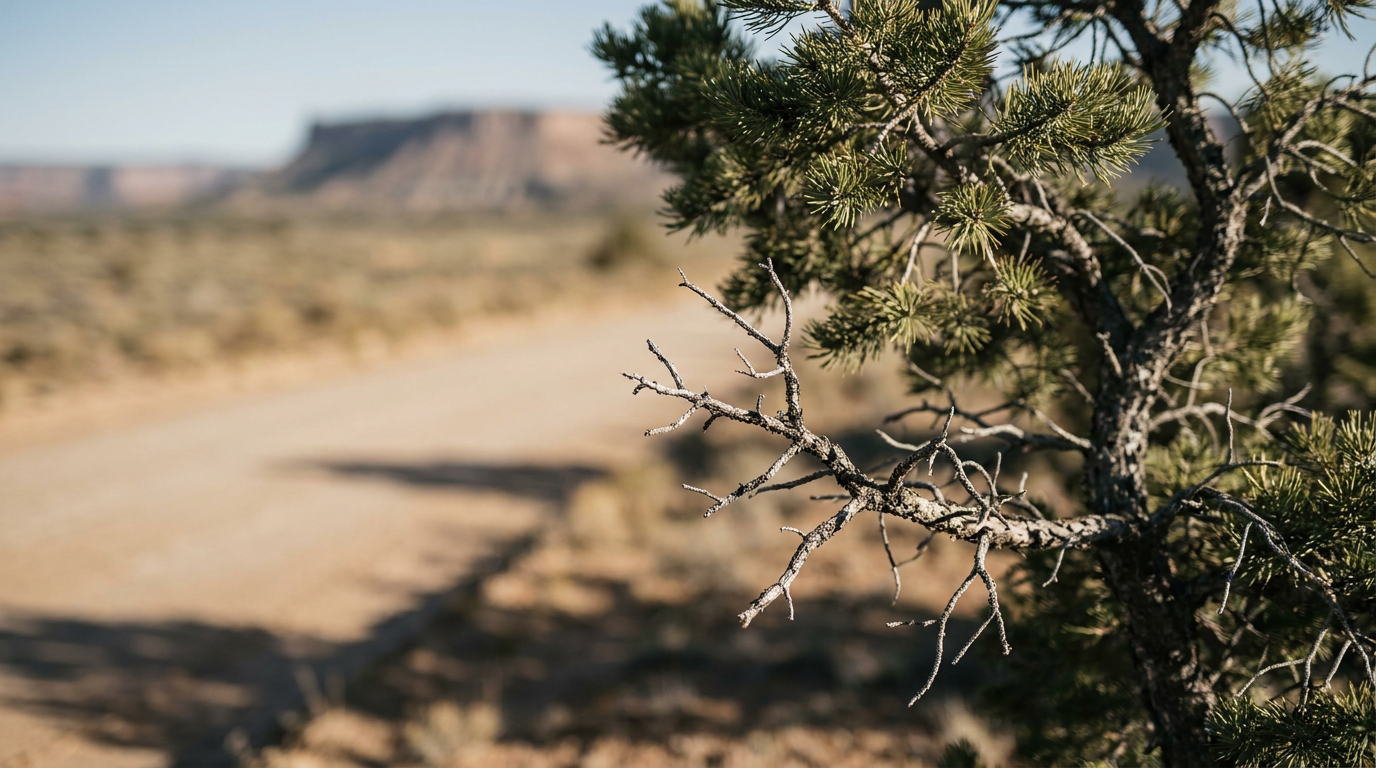
The Forest Still Looks Green. That's the Problem.
Research on Southwest US woodlands reveals that trees can lose the hydraulic and carbon reserves that keep them alive long before their canopy shows a single yellow leaf — meaning the forests we think we're watching die may already be past saving.
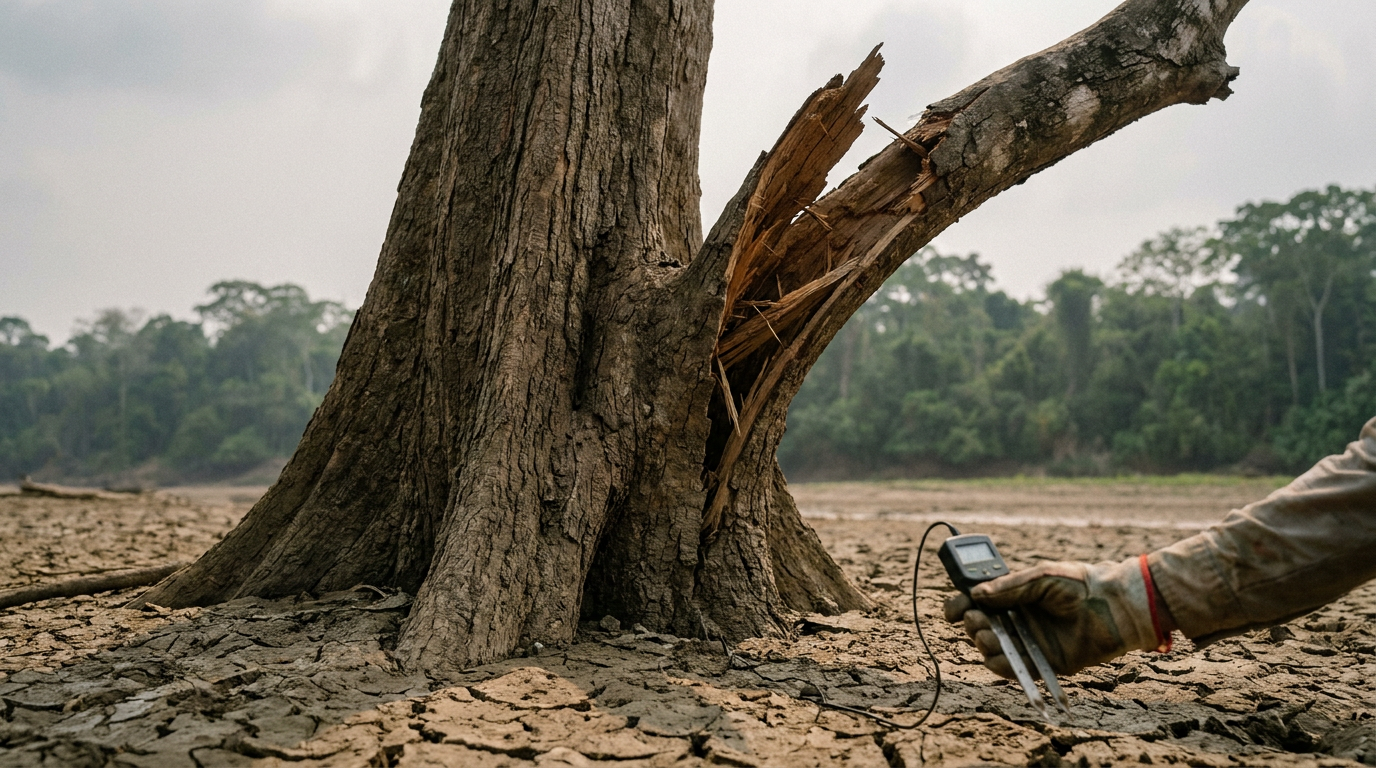
The Amazon Is Growing a Climate It Has Never Seen Before
Researchers have identified a precise soil-moisture threshold below which Amazon trees don't just wilt — they suffer fatal internal embolisms, and climate models suggest those conditions could persist for five months a year by 2100.
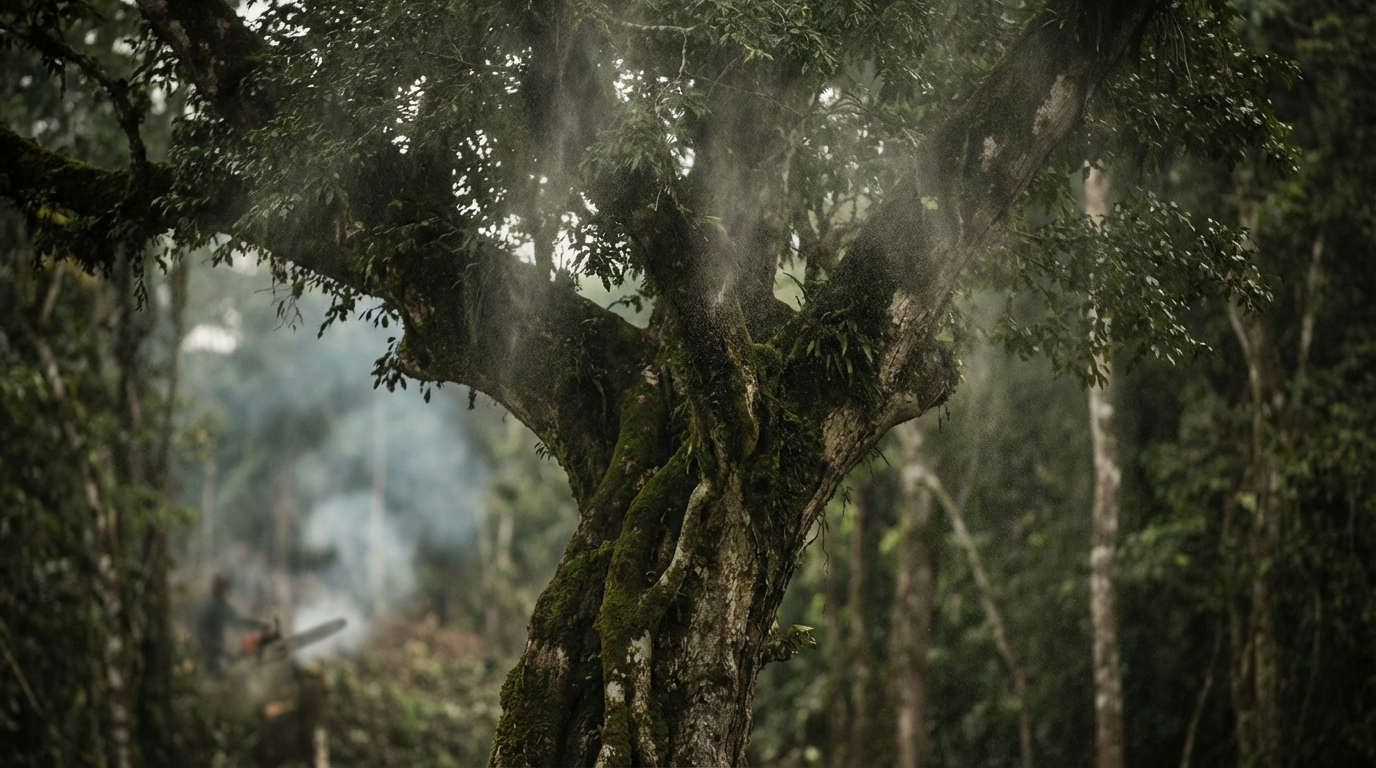
The Amazon Makes Its Own Rain. Deforestation Is Breaking That.
The Amazon recycles its own rainfall through vast airborne moisture corridors — and new data shows that eastern deforestation is already strangling the forests furthest downstream.