The Forest Still Looks Green. That's the Problem.
Research on Southwest US woodlands reveals that trees can lose the hydraulic and carbon reserves that keep them alive long before their canopy shows a single yellow leaf — meaning the forests we think we're watching die may already be past saving.
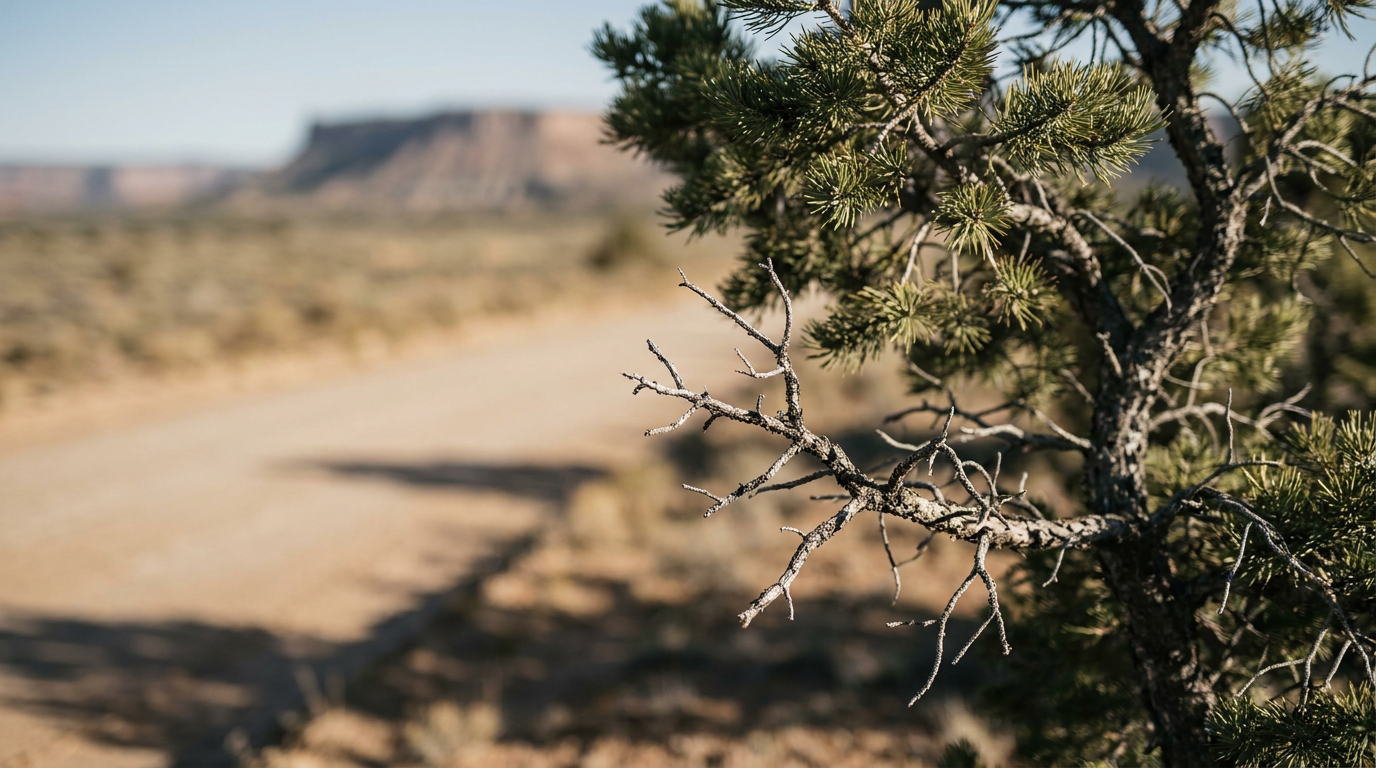
Drive through the pinyon-juniper woodlands of the American Southwest in a year that hasn't broken into obvious catastrophe and you'll see trees. Green ones. Needles in place, branches reaching the right directions, no obvious sign of distress at highway speed. The landscape reads as alive. That reading, it turns out, can be wrong by several years.
A 2025 study published in Ecology and Evolution[3] examined drought-stressed trees in Southwest US woodlands and found something that should fundamentally change how we look at forest health: visible decline in the canopy is a late-stage symptom, not an early warning. By the time a tree begins browning, dropping needles ahead of schedule, or failing to push new growth, the internal systems that sustain it — the hydraulic pathways that move water from root to leaf, and the carbon reserves that buffer a tree through hard seasons — have often been failing for years. The forest is still green. The death clock has already been running.
This is not a minor distinction. Forest managers, conservation planners, and climate modelers have historically used canopy appearance as a primary proxy for forest health. When researchers look at satellite imagery to assess stress, when land managers survey stands for die-off risk, when ecologists map drought impact, they are largely looking at what the trees show from the outside. If the outside is a lagging indicator — and a significantly lagging one — then the assessments we've been making about forest condition, resilience, and recovery potential are almost certainly too optimistic. What we've been calling a living forest may, in a meaningful physiological sense, be something closer to a forest in the process of dying that hasn't yet found the vocabulary to say so.
The American Southwest is a useful place to study this because the signals are being forced into clarity by heat. The region has experienced a prolonged aridification over the past two decades — not just drought in the cyclical sense, but a persistent, warming-amplified drying[2] that pushes beyond what these woodland species evolved to manage. Pinyon pine and Utah juniper, which have structured these high desert landscapes for thousands of years, are dying at rates researchers describe as regime-shifting. What the new research does is pull the death curve earlier, showing that what we're watching now is only part of what's actually happening.
How a Tree Dies Without Showing It
To understand why visible decline lags so far behind physiological failure, it helps to think about what a tree is actually doing when the world gets drier and hotter. Water movement through a tree is not passive. It depends on a tension gradient — a continuous hydraulic pull from roots through xylem tissue to leaves, driven by evaporation at the leaf surface. When soil moisture drops, that tension increases. When it increases too far, air can enter the xylem and form embolisms, essentially bubbles that block water flow. Trees have partial defenses against this: they can close their stomata to reduce water loss, draw on stored water in stem tissue, and produce compounds that allow some embolism recovery. But all of these responses have limits, and all of them are energetically expensive.
The carbon side of the equation is equally fragile. Trees store carbohydrates — sugars and starches — that function as reserves during low-productivity periods. These reserves fund root maintenance, defense against pathogens and insects, regrowth after damage, and basic cellular respiration when photosynthesis shuts down in heat or drought. Extended drought forces trees to run down these reserves while simultaneously limiting their ability to replenish them. Stomates close to save water, which means less carbon dioxide enters, which means less photosynthesis, which means thinner margins. A tree moving through its third or fourth drought year may be photosynthesizing, maintaining its canopy, and appearing entirely functional while its stored carbon has been quietly depleted to levels that make recovery from any additional stress essentially impossible.
“A tree can be photosynthesizing, holding its needles, and appearing entirely functional while its stored carbon has already dropped past the threshold of recovery.”
What makes this particularly difficult to detect from the outside is that trees tend to maintain their canopy as long as physiologically possible. The canopy is an asset — it's how the tree captures the light it needs. Shedding it is a last resort, not an early response. By the time needle loss, early leaf drop, or crown thinning becomes visible, the hydraulic and carbon systems that would allow a stressed tree to rebound have typically already crossed critical thresholds. The canopy is showing collapse. The tree finished losing its fight some time ago.
The Lag Problem and What It Means for Monitoring
Remote sensing technology has dramatically improved researchers' ability to track forest change at scale. Satellite platforms can detect subtle shifts in canopy reflectance — changes in how leaves reflect near-infrared wavelengths that indicate water stress — with precision that was unimaginable two decades ago. These signals are real and useful. But they are still, fundamentally, surface signals. They capture what the canopy is expressing, not what is accumulating in the hydraulic and carbohydrate systems below it.
The lag identified in research on Southwest woodlands suggests that current remote sensing methods may be missing a substantial portion of the forest mortality that is actually in progress at any given time. A stand that appears mildly stressed on satellite imagery may be months or years into a physiological decline that will only become visible in the canopy after the trees have already passed any meaningful point of recovery. The implication is not that remote sensing is useless — it remains one of the most powerful tools available for tracking forest change at landscape scale — but that the mortality we're watching on screen may represent a trailing edge of a process that began well before the imagery flagged it.
This creates a problem for adaptive forest management. If land managers are calibrating intervention decisions — whether to prioritize thinning, water retention projects, or assisted migration of more drought-tolerant species — based on what the canopy is currently showing, they may be consistently responding to conditions that already existed years earlier. The treatment arrives after the diagnosis would have mattered most.
“The forest mortality we can see from satellites may be the trailing edge of a process that began years before a single needle turned brown.”
Pinyon and Juniper: A Thousand Years of Endurance, Now Outpaced
Pinyon-juniper woodlands are easy to underestimate. They are not the dramatic forests that tend to anchor conservation attention — no towering canopy, no cathedral light through old-growth trunks, no iconic megafauna depending exclusively on their structure. They are slow-growing, often scrubby, and cover a vast swath of mid-elevation terrain across the Southwest: Utah, Nevada, Arizona, New Mexico, Colorado. In ecological terms, though, they carry enormous weight. They provide nesting and foraging habitat for dozens of bird species, including pinyon jays, whose entire social structure and foraging behavior is built around pinyon seed caching. They stabilize thin, rocky soils that would otherwise erode rapidly. They contribute to watershed function across terrain that receives little precipitation to spare. And pinyon nuts have been a food source for Indigenous communities in the region for thousands of years.
These trees are not fragile in any simple sense. Pinyon pine and Utah juniper evolved in an environment that cycles through dry periods, and both species carry physiological adaptations for managing drought: conservative water use strategies, deep or laterally extensive root systems, the ability to essentially idle through low-productivity periods. What they did not evolve for is sustained multi-year drought compounded by temperatures that were historically rare at their elevation range. Heat does not merely intensify drought — it changes the fundamental demand equation. Warmer air pulls more water from soil and leaves, meaning a given level of precipitation delivers less effective moisture than it would have a century ago. The trees that survive a dry year in 1950 and a dry year in 2024 are not experiencing the same dry year.
The die-off events that struck pinyon-juniper woodlands in the early 2000s, and again in more recent years, are now understood to represent something different from historical drought mortality. They appear to reflect a system being pushed past the range of variability it evolved to handle, with bark beetle outbreaks amplifying the hydraulic stress[1] in trees already running low on the reserves they'd need to mount a resin defense. The beetles aren't a separate problem; they're the final pressure on a structure that drought had already weakened beyond its capacity to hold.
The Carbon Debt Nobody Counted
Forests matter to climate accounting in ways that are both direct and deeply intertwined with ecological function. Living forests sequester carbon in wood, roots, and soil. Dead forests, particularly those that burn or decompose rapidly, release it. The standing forest is, in a crude but real sense, a carbon asset — which means a forest that appears standing and healthy can be entered on the ledger as doing its job. The research emerging from Southwest woodland studies suggests this accounting may have a structural error embedded in it.
If trees are entering physiological decline years before visible die-off, their carbon uptake may already be compromised well before the canopy signals it. A tree running down its carbohydrate reserves is not photosynthesizing at full capacity; it is likely already reducing carbon uptake as it manages the competing demands of stress response. It is also becoming a near-term mortality candidate — and a tree that dies and falls, or burns, transitions from carbon sink to carbon source. The carbon debt of a drought-stressed, apparently-healthy woodland may therefore be significantly larger than current estimates capture, because current estimates are largely calibrated to what the canopy shows, not to the carbon accounting that's happening inside the wood.
What Comes After the Silence
There is something specifically difficult about a loss that looks, from a distance, like it hasn't happened yet. The pinyon-juniper landscape of the Southwest is not silent. Pinyon jays still move through it in flocks, still cache seeds in the soil with what looks like purpose, still fill the dry air with their calls. But pinyon jay populations have declined by more than half over the past several decades[4], a trajectory that tracks closely with woodland health and seed availability. When the trees that a species' entire behavioral ecology depends on begin dying faster than they can regenerate — and when those trees may already be past the physiological threshold that would allow recovery — what the population is actually doing is navigating a landscape that is partway through becoming something else.
What comes after varies. Some researchers are working on identifying which tree individuals within stressed stands show greater hydraulic resilience — the possibility that assisted selection, protecting high-tolerance individuals and facilitating their reproduction, might help the woodland adapt faster than natural selection alone could manage under current pressure. Others are looking at assisted migration, introducing species better suited to the warmer, drier conditions that the region's mid-elevation terrain may be moving toward. These are not fantasies; they are active, legitimate areas of ecological management. But they require a clear-eyed account of where the system actually is, not where the canopy currently suggests it might be.
“The landscape is not silent, but it may already be partway through becoming something else — and the green canopy overhead is not evidence to the contrary.”
Somewhere in the Southwest right now, there is a pinyon pine that looks, to any reasonable observer, like a living tree. Its needles are in place. Its bark is intact. Nothing about it announces that it has passed the threshold its physiology needed to survive the next drought, or the next bark beetle pressure, or the next summer of temperatures the region was not recording thirty years ago. The tree is green. The tree is, in every visible sense, fine. And the research says we cannot trust that. It says the death clock may already be running inside the wood, in the hydraulic tension, in the depleted carbohydrate reserves, in the embolisms accumulating where water used to move freely. The forest still looks green. That is, increasingly, the problem.
References
- Drought predisposes piñon–juniper woodlands to insect attacks and mortality (nph.onlinelibrary.wiley.com)
Establishes the mechanism by which drought stress in pinyon-juniper woodlands triggers bark beetle outbreaks that compound hydraulic failure. - Megadrought and aridification in the southwest United States (climatehubs.usda.gov)
Documents the warming-amplified drying trend in the Southwest that exceeds historical drought cycles these tree species evolved to manage. - Positive Drought Feedbacks Increase Tree Mortality Risk in Dry Woodlands of the US Southwest (doi.org)
Provides the 2025 research finding that visible canopy decline in Southwest woodlands lags years behind internal hydraulic and carbon system failure. - allaboutbirds.org (allaboutbirds.org)
Provides evidence that pinyon jay populations have declined by more than half over recent decades, supporting the article's claim about ecological consequences of woodland loss.
About Sable Pike
Sable Pike writes about habitat loss, ecosystem strain, species decline, climate disruption, and the quiet unraveling of natural systems people once assumed were permanent — and the way that unraveling reaches into economies, politics, and daily life. Her work brings emotional weight to ecological change without sacrificing scientific rigor.
More like this
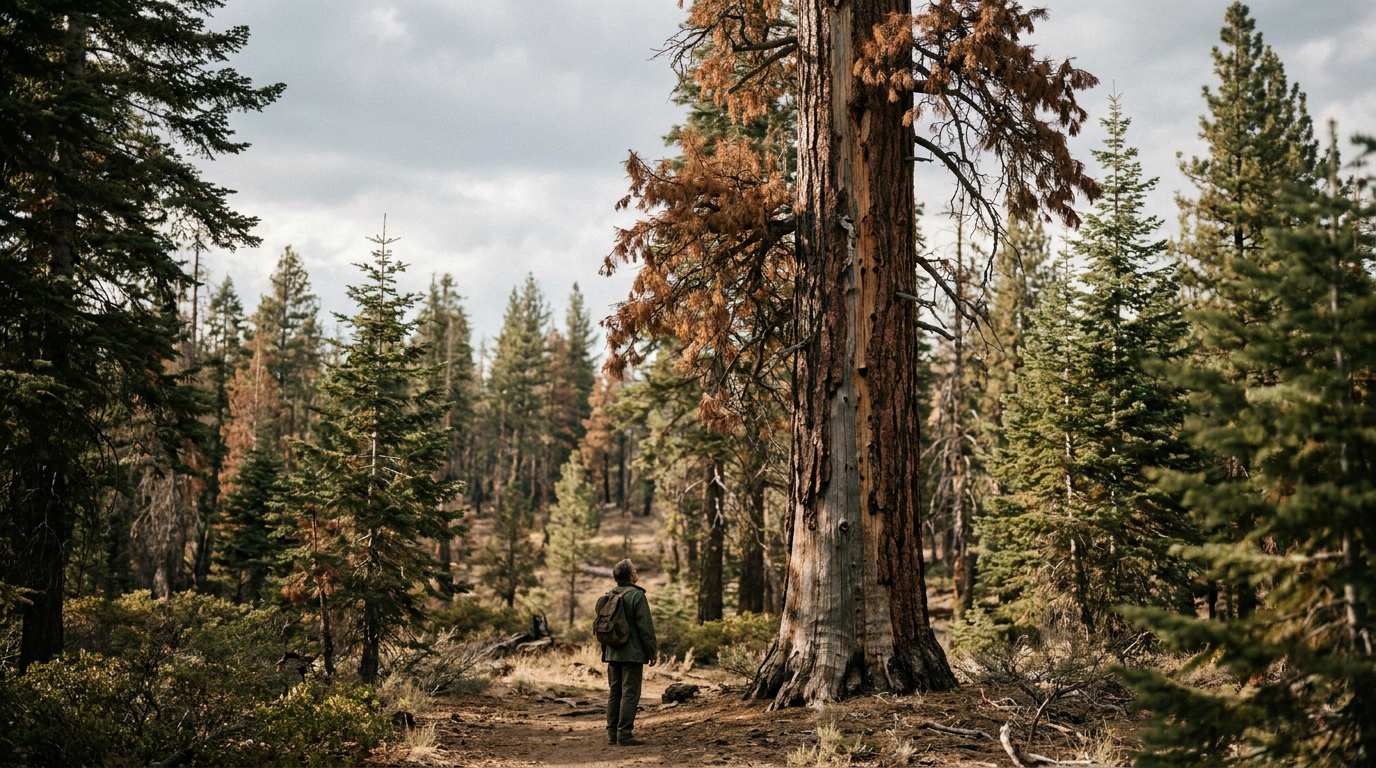
The Tallest Trees Are Dying First. That's Not a Coincidence.
A study of nearly 2 million California trees found that the largest trees die at twice the rate of small ones during drought — and the hydraulic physics behind that pattern reveal how forests begin to unravel long before they look like they're in trouble.
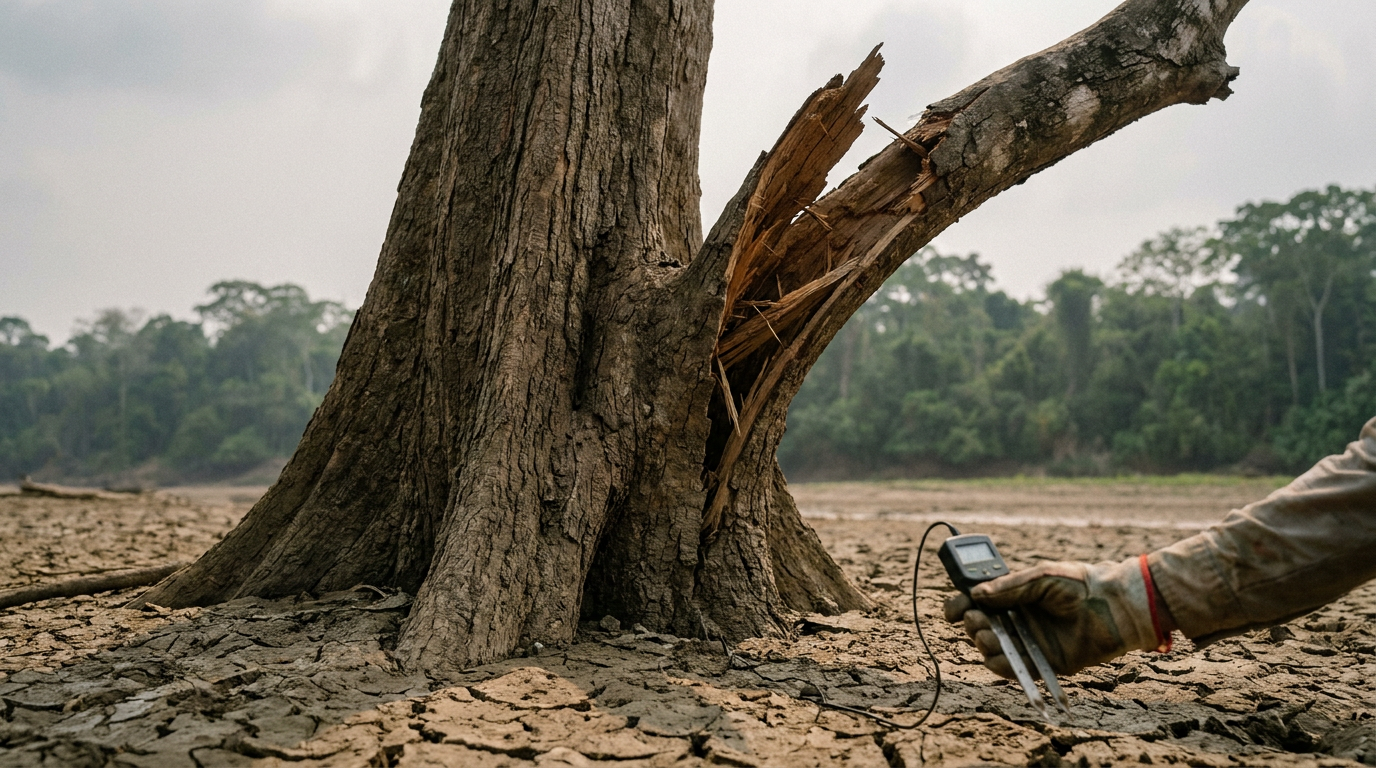
The Amazon Is Growing a Climate It Has Never Seen Before
Researchers have identified a precise soil-moisture threshold below which Amazon trees don't just wilt — they suffer fatal internal embolisms, and climate models suggest those conditions could persist for five months a year by 2100.
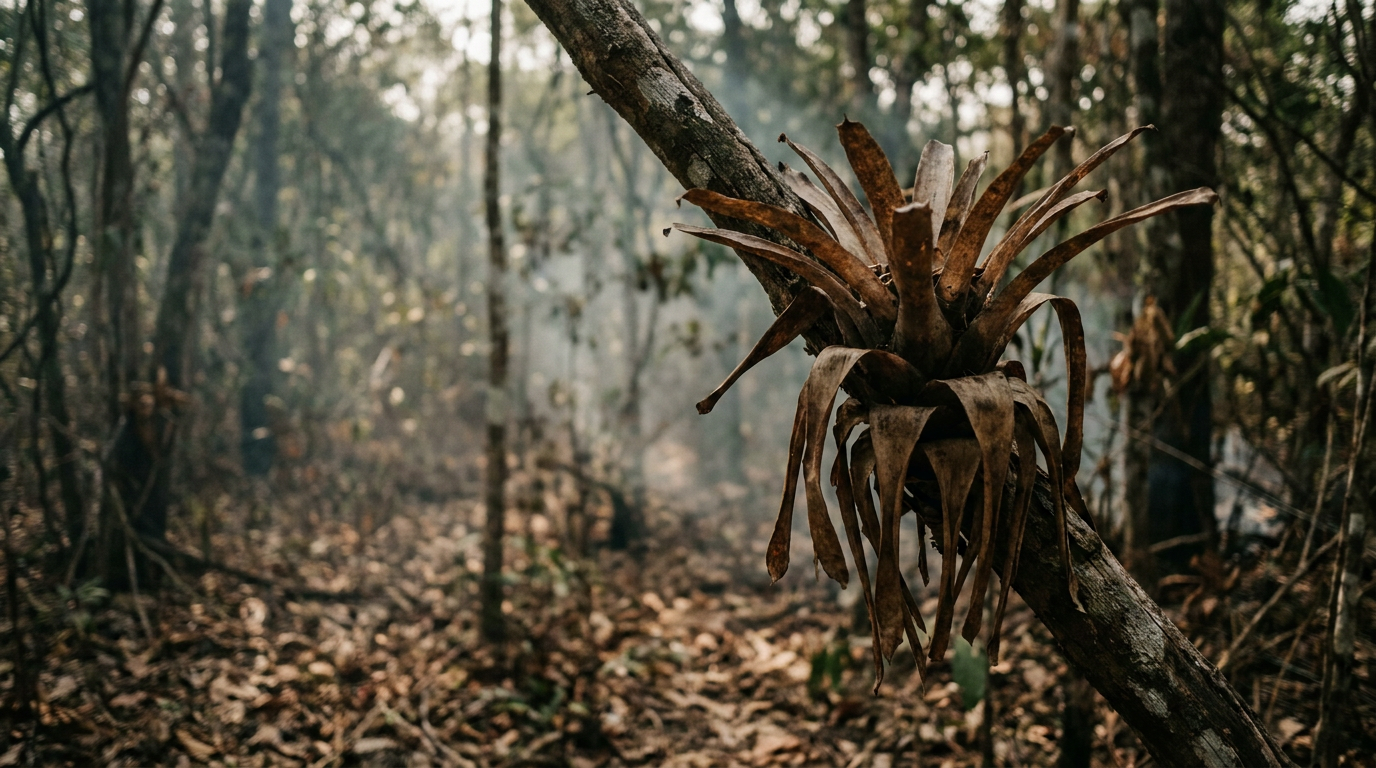
The Amazon Has a Specific Temperature Limit. Scientists Just Found It.
A new study puts a precise number on the Amazon's tipping point — and what happens just past it rewrites what we thought we knew about rainforest resilience.