Longitudinal Studies
A research method tracking the same subjects over time to spot changes or causes, unlike one-time snapshots. It reveals how behaviors evolve as people age or learn.
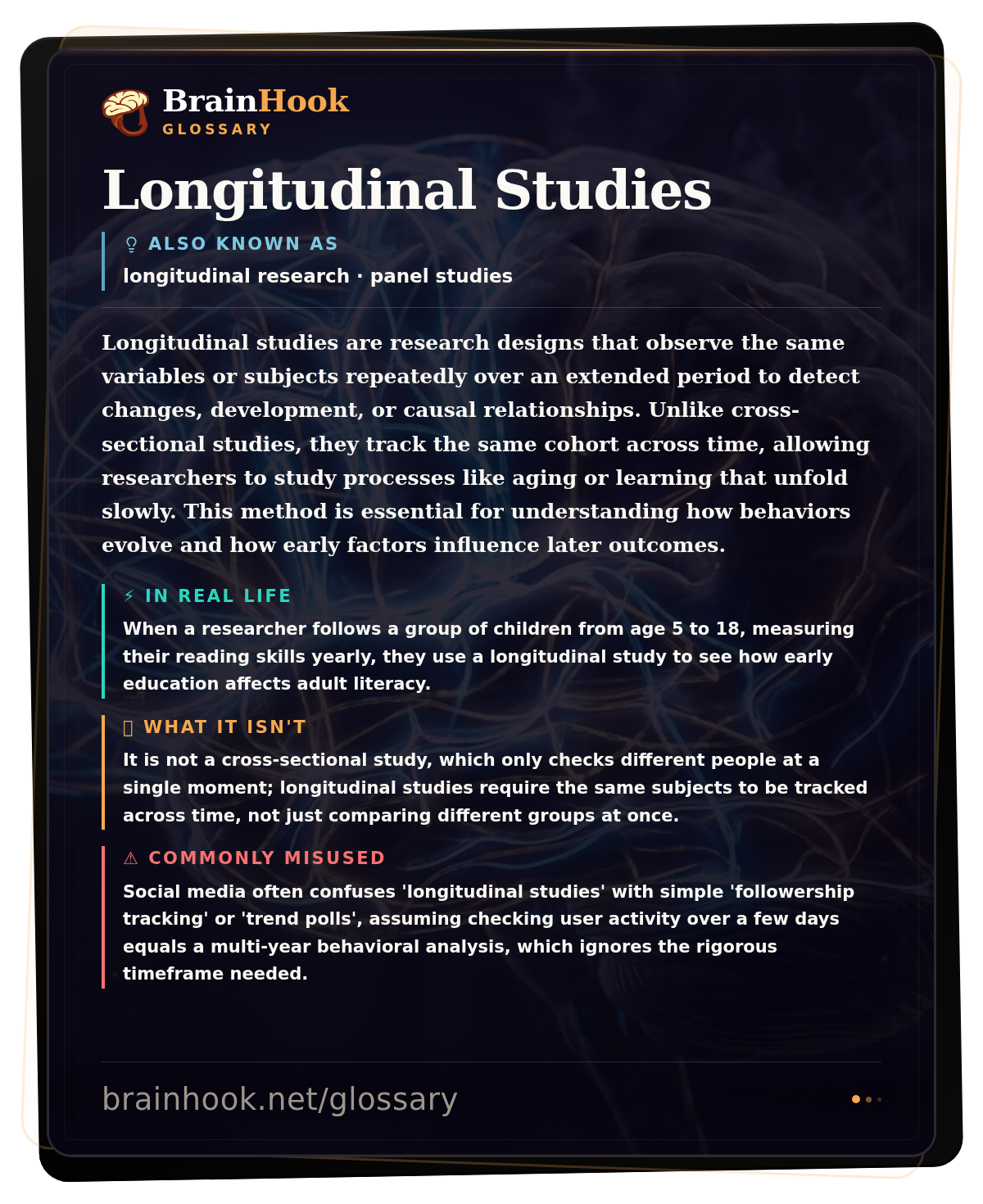
Longitudinal studies are research designs that observe the same variables or subjects repeatedly over an extended period to detect changes, development, or causal relationships. Unlike cross-sectional studies, they track the same cohort across time, allowing researchers to study processes like aging or learning that unfold slowly. This method is essential for understanding how behaviors evolve and how early factors influence later outcomes.
What this means in real life
A researcher surveys 500 teenagers about their social media use and mental health every six months for five years, watching how changes in screen time correlate with mood and anxiety levels as they age.
What it isn’t
Not a one-time survey or snapshot. A single questionnaire given to many people at one moment is cross-sectional research, not longitudinal—it shows a picture, not a movie.
Commonly misused online
People often call any study that mentions 'over time' longitudinal, even if it only compares two time points or relies on memory. True longitudinal studies require repeated, prospective measurement of the same subjects.