The Oceans Have Lost 500 Dead Zones' Worth of Silence
Ocean dead zones have grown tenfold since the 1950s, and the deoxygenation driving them is quietly rewiring marine life from the seafloor up — long before fish populations crash.
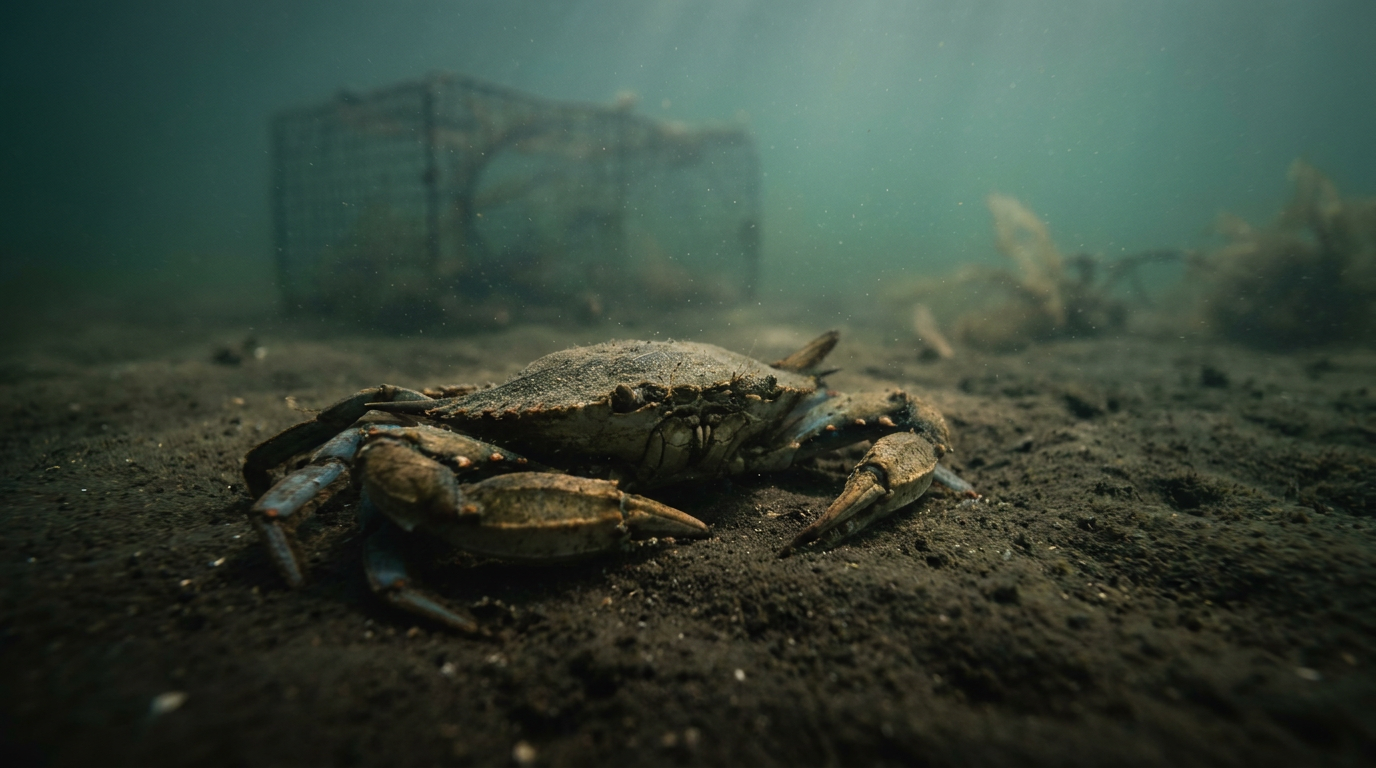
There is a layer of water in the Gulf of Mexico, roughly the size of New Jersey, where almost nothing can breathe. It sits off the coast of Louisiana every summer, a spreading mass of water so depleted of oxygen that most fish flee and the creatures that cannot flee — shrimp, crabs, slow-moving worms, bivalves anchored to the sediment — die where they are. The zone pulses with the season, shrinks in winter, expands again in summer, and has been doing so with increasing severity for decades. It is called a hypoxic zone, or more plainly a dead zone, and it is not unique. It is not even close to the largest. The Baltic Sea hosts one that has persisted for so long it has restructured the entire benthic community beneath it.
In the 1950s, oceanographers had catalogued roughly 50 ocean dead zones worldwide. Today that number exceeds 500. That tenfold multiplication[2] did not happen dramatically. It happened through the slow accumulation of two reinforcing pressures: the expansion of industrial agriculture, which sends rivers of nitrogen and phosphorus toward coastlines, and the warming of ocean water, which holds less dissolved oxygen as its temperature rises. Either pressure alone would be damaging. Together, they are restructuring the chemistry of the sea in ways that the food web is already registering, long before the surface-level population collapses that tend to alarm the public.
The concept of a dead zone implies a static, bounded place — a kind of underwater exclusion zone you could draw on a map. The reality is more diffuse and more troubling. Deoxygenation is not only happening in defined coastal hotspots. The open ocean is losing oxygen too, a process driven primarily by thermal stratification: as the surface warms, it becomes lighter than the cold water below, and the two layers mix less readily. That mixing is what normally carries oxygen from the atmosphere down into the ocean's interior. As it slows, oxygen concentrations drop across vast stretches of mid-water habitat, squeezing the livable space for thousands of species that have nowhere obvious to go.
Marine biologists who work in oxygen-minimum zones — the naturally occurring but expanding bands of low-oxygen water that circle the globe at mid-depth — describe finding fish compressed into increasingly thin layers of tolerable water above the zone, stacked so densely that predator-prey interactions change in character entirely. The compression of habitat does not necessarily kill a fish immediately. It changes what it encounters, what it eats, how much energy it burns, and how vulnerable it becomes. The damage looks like behavior before it looks like death.
Nitrogen's Long Journey to the Sea
The agricultural side of the deoxygenation story begins in the fields of the American Midwest, the floodplains of China's Pearl River Delta, the intensive farming regions of northwestern Europe, and dozens of other places where fertilizer application has scaled far beyond what soil can absorb. Nitrogen and phosphorus, applied in quantities engineered to maximize crop yield, do not stay in fields. Rain carries them into drainage ditches, drainage ditches carry them into rivers, and rivers carry them to the coast. This process — nutrient loading, or eutrophication — is one of the best-documented chains of ecological harm in environmental science, and it has been accelerating in step with global food production.
When that nutrient pulse reaches coastal water, phytoplankton bloom in extraordinary quantities, far beyond what the zooplankton community can graze down. The bloom crashes. The dead phytoplankton sink, and the bacteria that decompose them consume oxygen in the process. In stratified water — where a warm, lighter surface layer sits atop colder, denser water — that oxygen cannot be replenished from above. What remains on the bottom is a zone of suffocation, persistent through the summer growing season, thick enough in places to register on sonar as a boundary layer. The Mississippi River delivers so much agricultural runoff into the Gulf of Mexico each spring that the resulting dead zone has, in recent years, exceeded 20,000 square kilometers[3].
“The dead zone does not begin at the coast — it begins in the field, moves through the drainage ditch, and travels down the river for hundreds of miles before it stops breathing.”
The link between specific watersheds and specific coastal hypoxic zones is now well established enough that researchers can model how changes in agricultural practice in Iowa or Illinois would register in the Gulf of Mexico months later. The chain is that direct, and that legible. What remains harder to model — and harder to communicate — is what happens to the ecosystem inside those zones across years and decades of repeated exposure, not just one bad summer.
The Seafloor That Forgot How to Work
Benthic communities — the organisms living on and in the seafloor sediment — are where deoxygenation damage becomes structural. In a healthy marine system, the seafloor is ecologically dense: polychaete worms, amphipods, brittle stars, clams, sea cucumbers, and dozens of other invertebrate groups process organic matter, cycle nutrients, aerate sediment, and serve as the base of the food chain for demersal fish and mobile predators. The seafloor is not inert. It is a living interface between the water column and the sediment, and its functioning underpins much of what happens above it.
Persistent hypoxia erases that complexity in a predictable sequence. Sensitive species — those requiring higher oxygen concentrations — disappear first. They are replaced by more tolerant taxa, typically smaller-bodied, shorter-lived organisms that can survive the stress but perform fewer ecological functions. In severely affected zones, the community converges toward near-monocultures of sulfur-metabolizing bacteria, which produce hydrogen sulfide rather than processing organic matter into usable form. Sediments that once cycled nutrients back into the water column begin instead to release them in forms that reinforce algal blooms — a feedback loop that tends to make the dead zone self-sustaining.
The benthic fish that depend on diverse seafloor communities — flatfish, rays, bottom-feeding cod — lose their food base before the hypoxia itself becomes lethal to them. This is the mismatch problem that makes deoxygenation so insidious: the visible population crash often lags years or decades behind the substrate failure that drove it. By the time a fishery registers that something is wrong in the numbers, the seafloor that supported it may have already been simplified past the point of easy recovery.
The Open Ocean Is Quietly Contracting
“Oxygen-minimum zones in the open ocean have expanded by millions of square kilometers since the mid-twentieth century — a change that shows up not in a dead zone map, but in where fish are no longer found.”
Coastal dead zones draw attention partly because they are measurable and partly because they are visible in their consequences — shrimp kills, fish kills, discolored water, the smell of hydrogen sulfide on a summer beach. The open-ocean deoxygenation crisis is quieter and in some ways more ecologically significant. Oxygen-minimum zones, which exist naturally at mid-depth in tropical and subtropical oceans due to the decomposition of sinking organic matter in poorly ventilated water, have been expanding laterally and vertically for decades[4]. The expansion is driven primarily by warming: warmer surface water holds less oxygen, sinks less readily when it does cool, and delivers less oxygen to the interior when mixing does occur.
For species like marlin, tuna, swordfish, and many shark species that make their living at depth — hunting in the oxygen-minimum zone's upper boundary, where prey are compressed and concentrated — this expansion initially sounds like opportunity. And in the short term it may be, in the sense that prey species have nowhere to go and are easier to catch. But the compression of livable habitat into a thinner and thinner surface band increases the thermal stress on those same fish, which burn more energy thermoregulating in warm surface water, have less refuge from surface predators including fishing fleets, and are forced into contact with each other in ways that can destabilize predator-prey ratios.
The expansion of oxygen-minimum zones also affects the vertical migration of zooplankton — tiny crustaceans and gelatinous organisms that move upward at night to feed and sink during the day to avoid predators. That daily migration is one of the ocean's most important carbon pumps, carrying organic carbon fixed at the surface down into deep water where it can remain sequestered. When the oxygen-minimum zone expands upward, zooplankton migration is truncated. The animals stay shallower, spend less time at depth, and export less carbon. The ocean's ability to sequester atmospheric carbon weakens as a direct consequence of its own deoxygenation — a feedback loop that climate scientists are only beginning to model at full scale.
What a Trophic Cascade Feels Like Before It Arrives
Trophic cascades — the top-to-bottom or bottom-to-top reorganization of food webs following a key change in species abundance — are among the most dramatic events in ecological science when they finally become visible. Sea otters collapse, sea urchins explode, kelp forests vanish. Wolves return, elk change grazing behavior, riparian vegetation recovers. The cascade is legible in retrospect, often only once it has already happened. The deoxygenation of the ocean is generating the conditions for cascades that have not yet fully announced themselves.
Forage fish — anchovies, sardines, sand lance, capelin, menhaden — are perhaps the most systemically important group in the ocean food web, sitting at the center of the energy transfer between zooplankton and larger predators. Whales, tuna, cod, striped bass, puffins, gannets, terns, and dozens of other species depend on their abundance and distribution. Forage fish are sensitive to hypoxia and thermal stress, and their spawning success is highly dependent on the oxygen content and temperature of specific coastal and shelf habitats. As those habitats degrade, forage fish populations become patchier, less predictable, and harder to aggregate. The predators that depend on them shift behavior, experience reproductive failure, or move — and the effects propagate outward into ecosystems that, at the surface level, may still look intact.
“The cascade does not begin when the whale starves — it begins when the anchovy runs thin in the wrong place at the wrong time of year.”
The System Is Already Reporting In
Marine scientists measuring dissolved oxygen concentrations across the global ocean have documented a loss of roughly two percent of total ocean oxygen since 1960[1]. That sounds modest. It is not. Oxygen is not distributed uniformly through the ocean, and a two percent global average loss maps onto much sharper regional declines in precisely the zones where marine biodiversity is concentrated and where the food web is most densely woven. In some coastal regions and at mid-depth in tropical seas, the declines are several times the global average. And because the relationship between oxygen concentration and biological function is not linear — there are thresholds below which physiological processes fail, reproduction drops, and behavior changes sharply — even modest aggregate declines can translate into disproportionate ecological disruption.
The signals are already arriving in forms that researchers can read. Shifts in the distribution of commercially important species away from traditional fishing grounds. Changes in the timing and success of spawning events tied to oxygen-temperature combinations. Range compressions for species that once occupied broader depth bands. Altered stoichiometry of nutrients cycling through coastal systems, which changes what grows there and what can eat it. These are not predictions. They are observations already in the literature, already being argued over and refined and extended by oceanographers, fisheries biologists, and biogeochemical modelers working across a dozen research programs simultaneously.
The ocean does not announce its thresholds in advance. It does not send a warning before a food web reorganizes, before a spawning ground fails, before a species finds that the depth where it always lived has stopped supporting the oxygen its metabolism requires. What it does instead is change quietly for decades, registering in data that rarely makes headlines, losing fractions of a percent of its dissolved oxygen each year, expanding its dead zones one bad summer at a time, pushing its oxygen-minimum zones a few meters shallower with each year of warming — until the system is already running on a different set of rules than the one every organism in it was shaped by, and the visible consequences are simply the last thing to arrive.
References
- Decline in global oceanic oxygen content during the past five decades (nature.com)
Documents a two percent decline in global oceanic oxygen content since 1960, establishing the long-term deoxygenation trend underlying the article's narrative. - Declining oxygen in the global ocean and coastal waters (science.org)
Provides the scientific basis for the article's claim that ocean dead zones have increased tenfold since the 1950s. - Gulf of Mexico ‘dead zone’ is the largest ever measured (noaa.gov)
Documents that the Gulf of Mexico dead zone reached 8,776 square miles in 2017, the largest measured since mapping began in 1985. - What is an oxygen minimum zone? - NOAA Ocean Exploration (oceanexplorer.noaa.gov)
Establishes that oxygen-minimum zones occur naturally at mid-depth and have been expanding in number and size as oceans warm.
About Sable Pike
Sable Pike writes about habitat loss, ecosystem strain, species decline, climate disruption, and the quiet unraveling of natural systems people once assumed were permanent — and the way that unraveling reaches into economies, politics, and daily life. Her work brings emotional weight to ecological change without sacrificing scientific rigor.
More like this
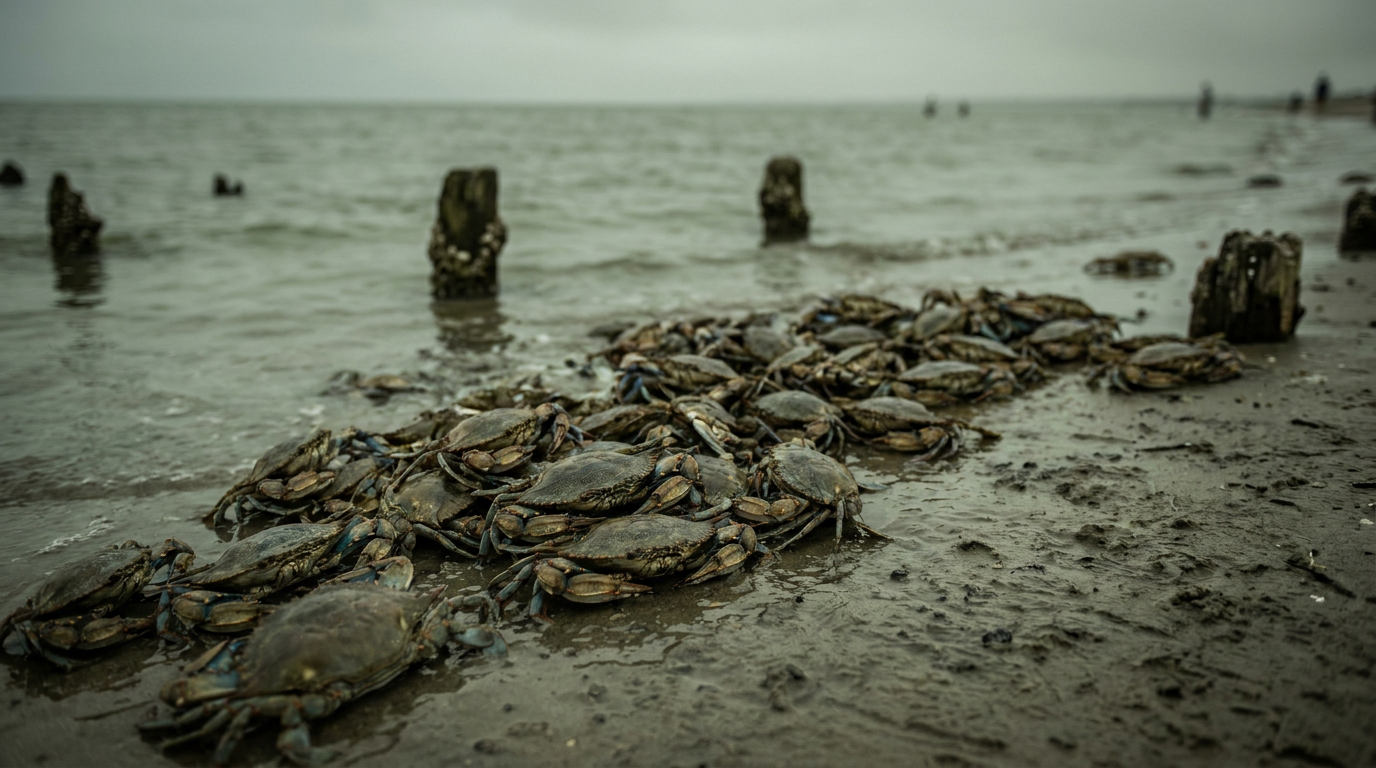
The Oceans Are Running Out of Breath. The Food Web Feels It First.
Dead zones have multiplied tenfold since the 1950s, but the real damage isn't the fish floating at the surface — it's the invisible collapse happening in the layers beneath them.
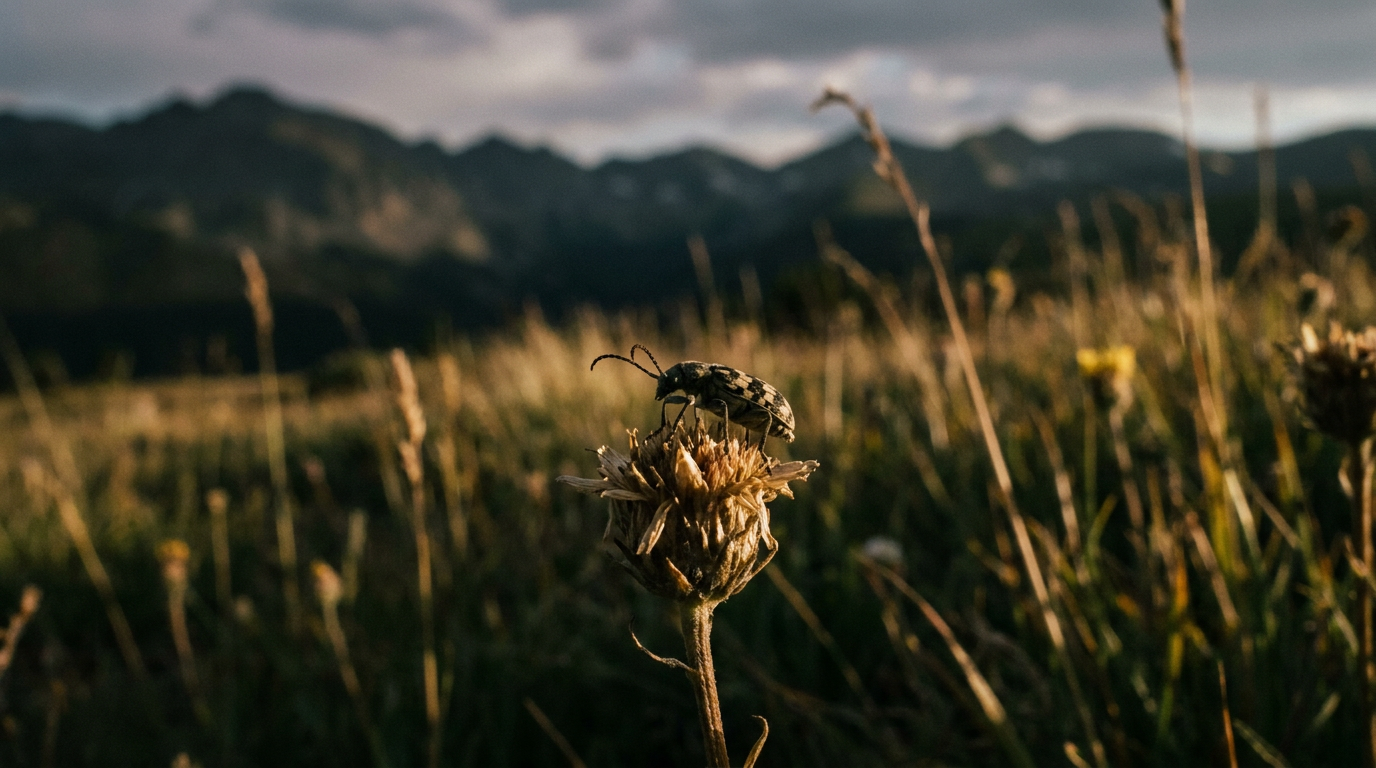
The Insects Are Vanishing Even Where We Didn't Touch Anything
A two-decade study in the Colorado Rockies found insect populations collapsing in pristine wilderness — and the culprit has nothing to do with pesticides, habitat loss, or human footprint.
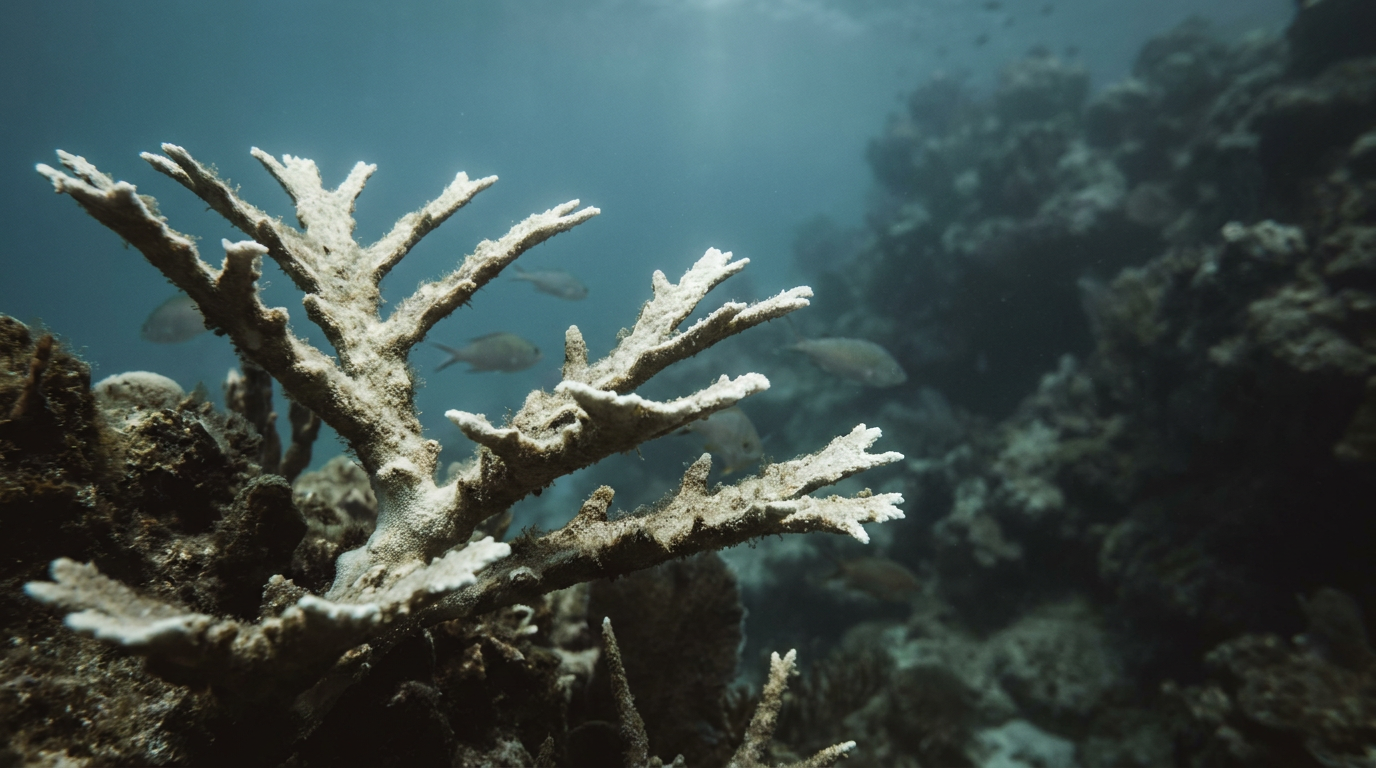
Florida's Reef Builders Are Functionally Extinct. The Reef Is Still There.
After the 2023 marine heatwave, staghorn and elkhorn corals crossed a threshold scientists call functional extinction — and the reef kept its shape just long enough to hide the damage.