Why Two Percent of People Hear a Sound No One Else Can Record
A new study tested the two leading explanations for the Hum and eliminated neither — which turns out to be the most honest and unsettling result of all.
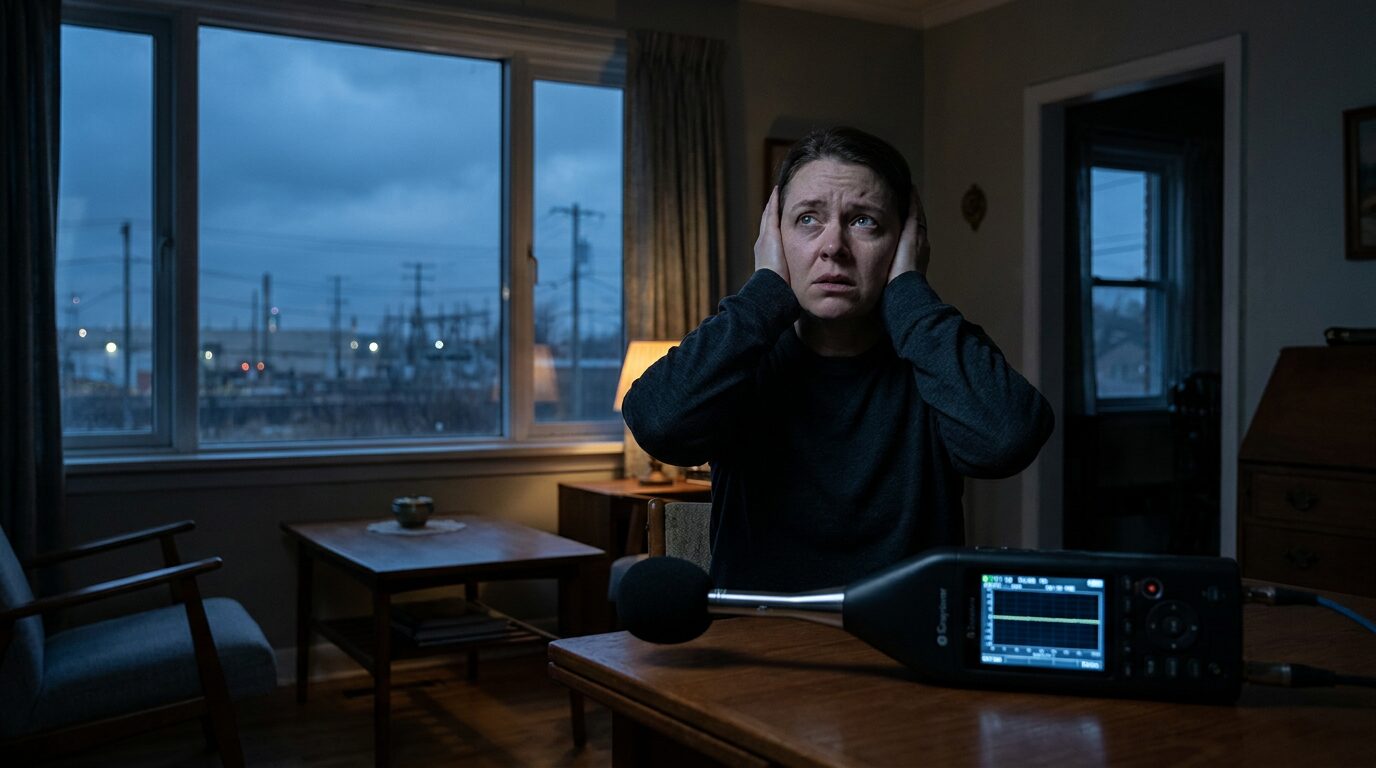
It begins — or rather, it never stops. A low, steady drone, pitched somewhere below the register of a refrigerator hum but above true silence. It persists through closed windows and earplugs. It is worse at night. It is worse indoors. It cannot be recorded, cannot be located, cannot be stopped. And for the roughly two percent of any given population who report experiencing it — a cluster of individuals studied, named, and still not fully understood — it is not imagined, not psychological, and not a joke. It is simply there, unrelenting, with no confirmed external source.
The phenomenon is called the Hum, sometimes the Windsor Hum, the Taos Hum, the Bristol Hum — named for the places where clusters of hearers have been documented. Researchers have been picking at it for decades. The working hypotheses have oscillated between two broad camps: that the Hum is neurological, a form of spontaneous inner-ear or auditory processing artifact generated by the perceivers themselves; and that it is environmental, the product of some ultra-low-frequency or infrasound source — industrial, geological, or oceanic — too diffuse and broadband to pinpoint with standard detection equipment. A peer-reviewed study published in PLOS ONE in March 2026[1] attempted to adjudicate between those camps with controlled methodology. What it found was, in scientific terms, inconclusive. In human terms, it was more interesting than a clean verdict would have been.
What the Study Actually Tested
The study's design was specific enough to matter. Researchers recruited confirmed Hum perceivers — individuals with a stable, long-term experience of the phenomenon — and compared them against controls, using a combination of audiological screening, psychological profiling, and environmental monitoring at participants' reported experience sites. The two competing hypotheses were operationalized clearly: if the Hum were primarily neurological, perceivers would show measurable differences in auditory processing, hyperacusis markers, or tinnitus-related characteristics that distinguished them from non-perceivers. If it were primarily environmental, low-frequency monitoring at sites where perceivers reported the Hum most strongly would detect correlated acoustic or infrasonic signals, even faint ones, that exceeded background at control sites.
Neither hypothesis was confirmed cleanly. The neurological markers were inconsistent across the perceiver group — some individuals showed elevated low-frequency sensitivity, others did not, and the distribution did not separate from controls in statistically decisive ways. The environmental monitoring found low-frequency signals at several perceiver sites that were elevated above background, but the signals were not consistent across sites, and their frequency profiles did not match what perceivers described hearing. The study was careful enough to report what it found and honest enough to say what it could not conclude. That honesty is what makes the result worth sitting with.
“Neither explanation was confirmed. Neither was eliminated. The Hum remained exactly what it has always been: documented, consistent, real in its effects, and resistant to closure.”
Why Inconclusive Is Not the Same as Uninformative
The phrase "no known explanation" sounds more dramatic than it is. Sometimes it means the available evidence is thin. Sometimes it means multiple explanations remain plausible. Sometimes it means the event was genuinely strange and the data was not good enough to close the case. In this instance, what the study established is something narrower and more precise: the Hum is not a single phenomenon. It may be a category label applied to at least two distinct types of experience — one neurologically sourced, one environmentally sourced — that have been grouped together because they present identically from the outside. If that is true, then every study that has tried to find a single mechanism will keep failing, not because the Hum is inexplicable, but because the question is structurally wrong.
This is not unusual in anomaly research. It mirrors the situation that UAP science found itself in when the distinction between sensor artifacts, atmospheric optics, drone misidentification, and genuinely uncharacterized objects collapsed into a single overstuffed category. The NASA UAP study[1] noted explicitly that the problem of unidentified phenomena is partly a classification problem — that different events with different causes had been lumped into a single bin, making pattern analysis nearly impossible until the categories themselves were cleaned up. The Hum may need the same treatment: not a search for the explanation, but a hard look at whether "the Hum" is even a coherent object of study in the first place.
The Signal-to-Noise Problem
The environmental side of the investigation faces a genuine detection difficulty. Very low frequency and infrasound propagation behaves differently from the acoustic range that standard monitoring equipment is built to catch. These waves travel vast distances with minimal attenuation. They pass through walls and terrain. Their sources can be hundreds or thousands of kilometers from where they are perceived. Industrial microseismic activity, ocean microseisms — the continuous low-frequency noise generated by ocean wave interactions first documented in the mid-twentieth century[2] — and even continent-scale subsurface geological structures all contribute to an ambient low-frequency acoustic environment that is far more complex and geographically smeared than most localized monitoring can resolve.
This means that a monitoring study placed at a perceiver's home address is not well-positioned to detect a source whose origin might be an industrial compressor station four hundred kilometers away, a subsea pipeline, or a standing wave pattern generated between geological features. The absence of a detected signal at a specific location is not strong evidence that no signal exists — it is evidence that no signal was detectable with that instrument at that place. These are different claims. The study acknowledged this limitation. It does not dissolve the environmental hypothesis; it simply means the environmental hypothesis has not been adequately tested, because testing it properly would require a different kind of infrastructure: widely distributed, sensitive, long-running low-frequency arrays, the kind built for seismological and military purposes, not health research.
The Neurological Side Is Not Simple Either
On the other side of the ledger, the neurological hypothesis runs into its own complications. Tinnitus is the obvious candidate — a well-documented phenomenon in which auditory processing generates phantom sounds without external stimulation. But Hum perceivers consistently report an experience that does not match tinnitus phenomenology. Tinnitus is typically high-pitched, often tonal or hissing. The Hum is low, droning, rhythmic in some accounts, and described by many perceivers as clearly external — located in space, outside the head, directional. That phenomenological profile is not what spontaneous cochlear or neural misfiring tends to produce.
There is also the suppression problem. Thinking about a sound you cannot stop hearing is a specific cognitive trap. Research on thought suppression — the psychology of trying not to think about something — consistently finds that active suppression tends to amplify intrusive perception rather than dampen it[3]. The process of trying to stop noticing the Hum may itself be part of why Hum perceivers cannot stop noticing it. This is not a debunking argument; it is a complicating one. A real low-level signal, barely at the threshold of detection, that triggers active monitoring and suppression attempts, could easily become subjectively louder and more distressing through a cognitive amplification loop — something analogous to how sleep disruption and perceptual load interact. The phenomenology of the Hum and the phenomenology of hypervigilance to a faint stimulus may be genuinely hard to distinguish from the inside.
“A real low-level signal, barely at the threshold of detection, that triggers active monitoring and suppression attempts, could easily become subjectively louder through a cognitive amplification loop — and that loop is not an explanation, it is an additional mystery.”
What Remains Genuinely Unresolved
The PLOS ONE study is not the last word. It is a careful, methodologically honest attempt to apply structured testing to a phenomenon that has mostly attracted either credulous popular coverage or dismissive professional indifference. Its value is in what it ruled in and ruled out, even if neither was a clean result. What it confirmed is that Hum perceivers are not malingering, not obviously neurologically impaired in ways that account for the experience, and not reporting something that disappears under scrutiny. What it could not confirm is either a consistent neurological signature or a consistent environmental source. That leaves the phenomenon where it has always been — documented, stable across decades and geography, real in its effects on the people who live with it, and unresolved at the level of mechanism.
The most honest position is this: the Hum is probably not one thing. Some portion of perceivers are likely experiencing a genuine low-frequency environmental signal that their auditory systems are detecting at the threshold of what standard instruments can resolve — a plausible scenario given what is known about infrasound propagation and individual variation in low-frequency hearing sensitivity. Some portion may be experiencing a neurological artifact that has been amplified by attention and suppression into something that feels fully external and continuous. And some portion may be experiencing a combination of both: a real but faint environmental signal that has been cognitively locked into the foreground by exactly the kind of hypervigilant monitoring that makes it impossible to tune out. These three populations, if they exist, would look identical from the outside and feel identical from the inside. Separating them would require a precision of both environmental monitoring and individual neuroscience that no study has yet achieved.
That is the unsettling part. Not that the Hum is unexplained — many things are unexplained, and for boring reasons. The unsettling part is that the phenomenon is specific enough, stable enough, and widely enough documented across independent populations to rule out simple mass suggestion, while simultaneously being resistant to the kind of instrumental detection that would settle the question in either direction. It occupies the uncomfortable methodological space between too real to dismiss and too diffuse to pin. The people who live with it are not asking for mystery. They are asking for a testable answer. The March 2026 study brought better tools to the question than most of its predecessors. The question held.
References
- UAP - NASA Science (science.nasa.gov)
- Microseism (en.wikipedia.org)
Defines ocean microseisms as continuous low-frequency noise from ocean wave interactions, providing the scientific basis for one potential environmental source of the Hum. - Thought suppression (en.wikipedia.org)
Establishes that active thought suppression amplifies rather than dampens intrusive perception, supporting the article's cognitive amplification loop explanation.
About Rowan Ellery
Rowan Ellery writes about anomalies, unexplained sightings, strange signals, and the uneasy border between observation, misinterpretation, and genuine mystery. Their work focuses on keeping curiosity alive without letting evidence dissolve into folklore.
More like this
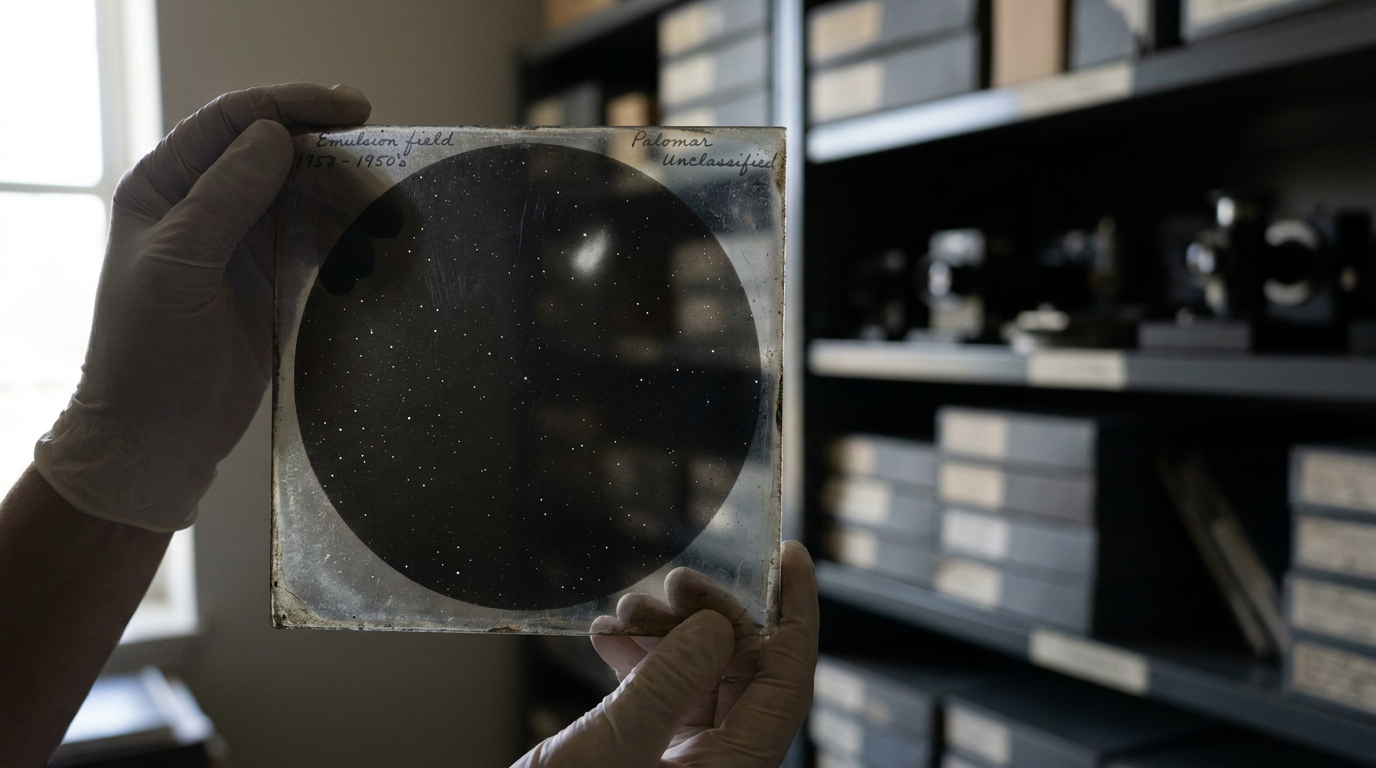
The 1950s Sky Survey That Just Became a UAP Evidence Problem
Researchers combing declassified nuclear test records against Palomar Observatory's 1950s photographic sky survey found a statistical correlation that mundane explanations haven't fully absorbed yet.
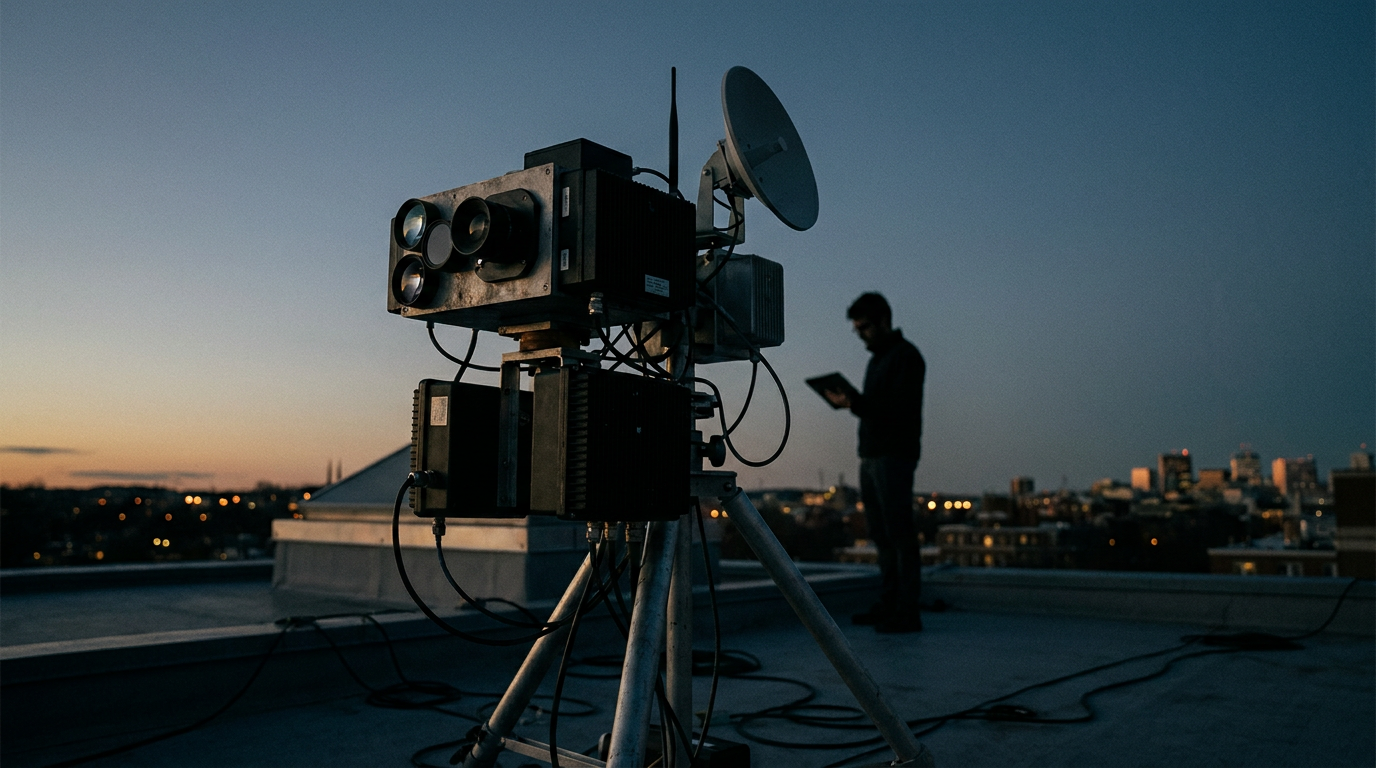
The Galileo Project Watched 80,000 Objects. 144 Broke the Rulebook.
The Galileo Project's first major sky survey didn't produce a smoking gun — it produced a data problem so precise it finally tells us what kind of evidence we actually need.
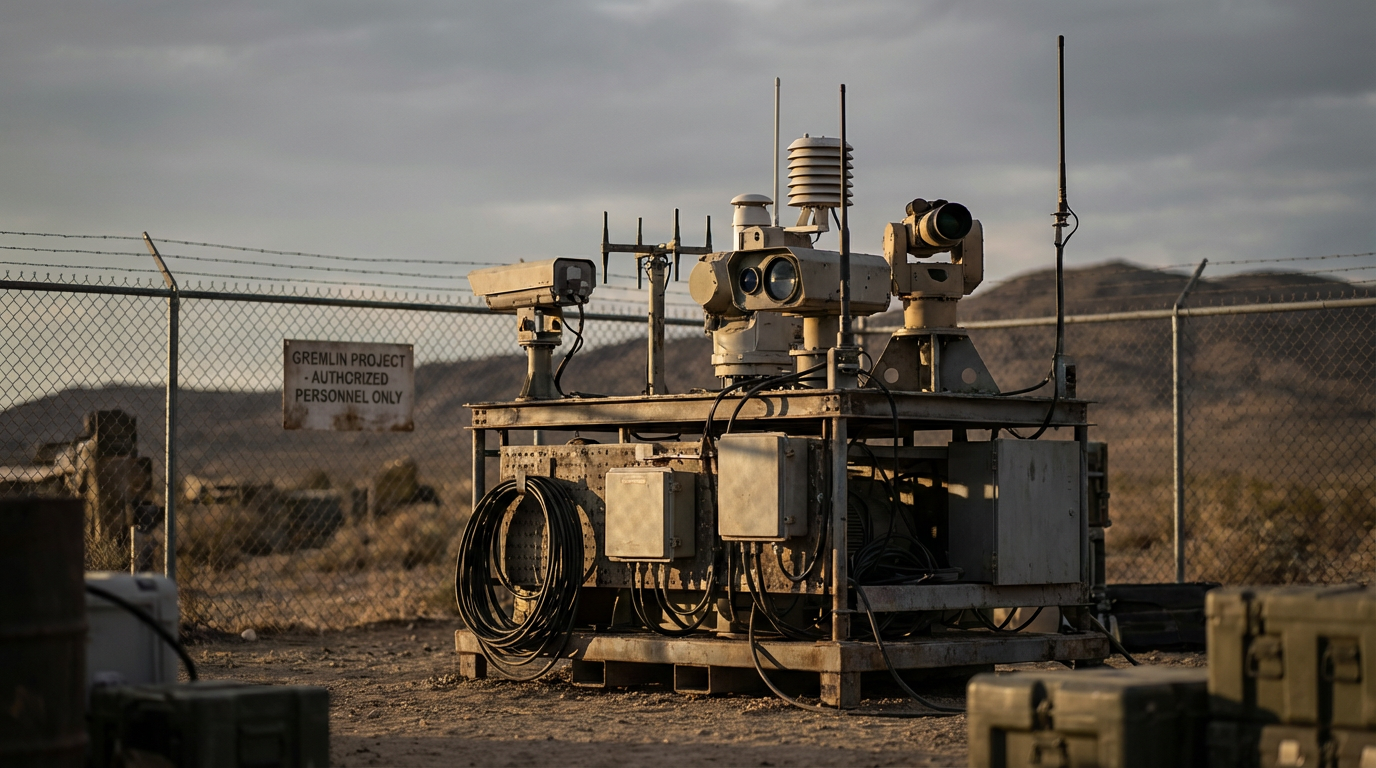
The Pentagon Built a UAP Sensor. It Found Mostly Balloons. That's Not the Whole Story.
The Pentagon's new UAP sensor system quietly entered field testing — and what it's already revealing is less about what's up there than about how badly we've been trying to look.