Hypervigilance
Hypervigilance is a state of extreme alertness where someone constantly scans for threats, often feeling overwhelmed by the need to detect danger in every situation.
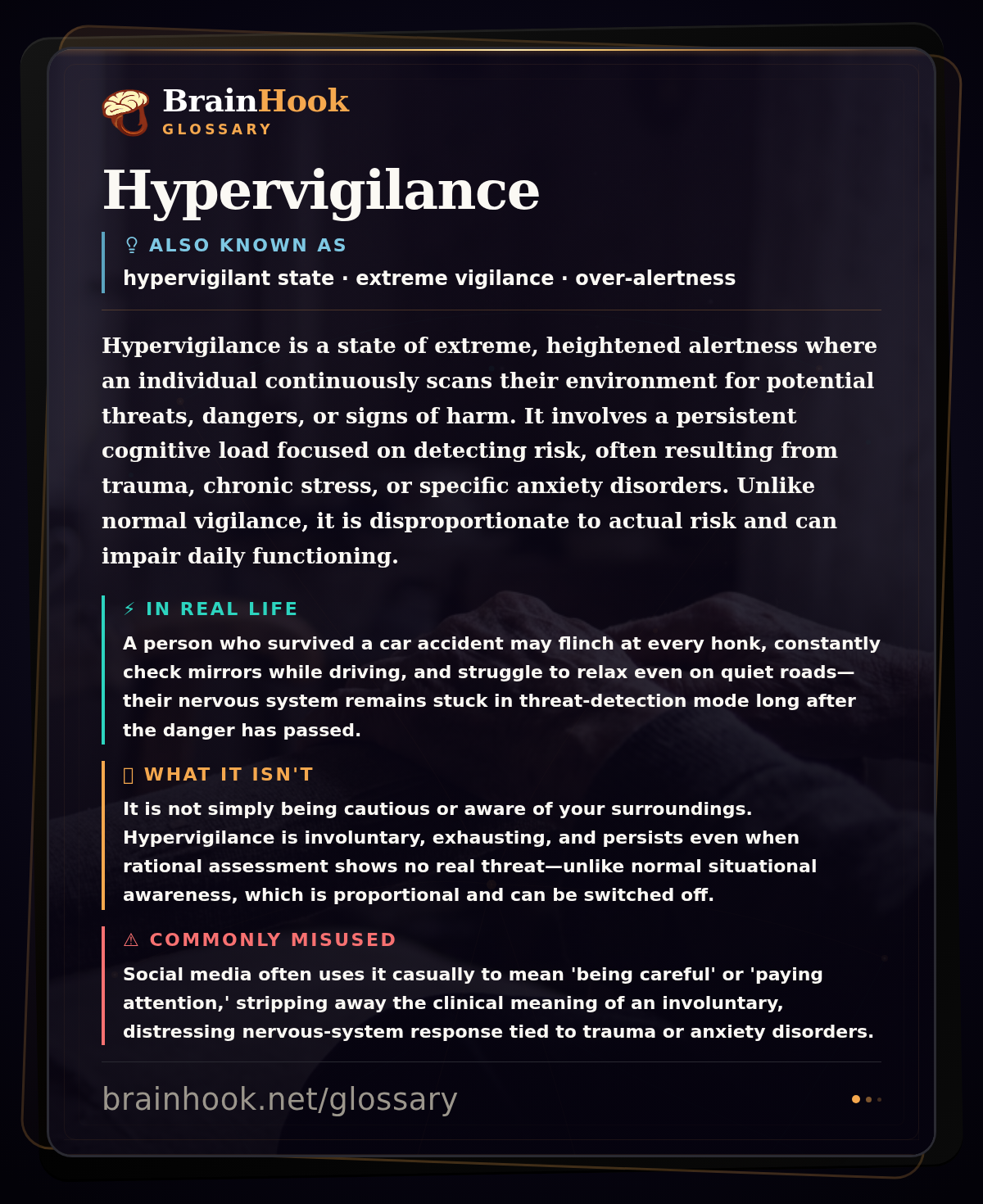
Hypervigilance is a state of extreme, heightened alertness where an individual continuously scans their environment for potential threats, dangers, or signs of harm. It involves a persistent cognitive load focused on detecting risk, often resulting from trauma, chronic stress, or specific anxiety disorders. Unlike normal vigilance, it is disproportionate to actual risk and can impair daily functioning.
What this means in real life
A person who survived a car accident may flinch at every honk, constantly check mirrors while driving, and struggle to relax even on quiet roads—their nervous system remains stuck in threat-detection mode long after the danger has passed.
What it isn’t
It is not simply being cautious or aware of your surroundings. Hypervigilance is involuntary, exhausting, and persists even when rational assessment shows no real threat—unlike normal situational awareness, which is proportional and can be switched off.
Commonly misused online
Social media often uses it casually to mean 'being careful' or 'paying attention,' stripping away the clinical meaning of an involuntary, distressing nervous-system response tied to trauma or anxiety disorders.