The T-Cell Therapy That Tells Your Immune System to Stand Down
Tregzi doesn't fight cancer — it prevents the immune system from declaring war on its new host, and its trial numbers are hard to argue with.
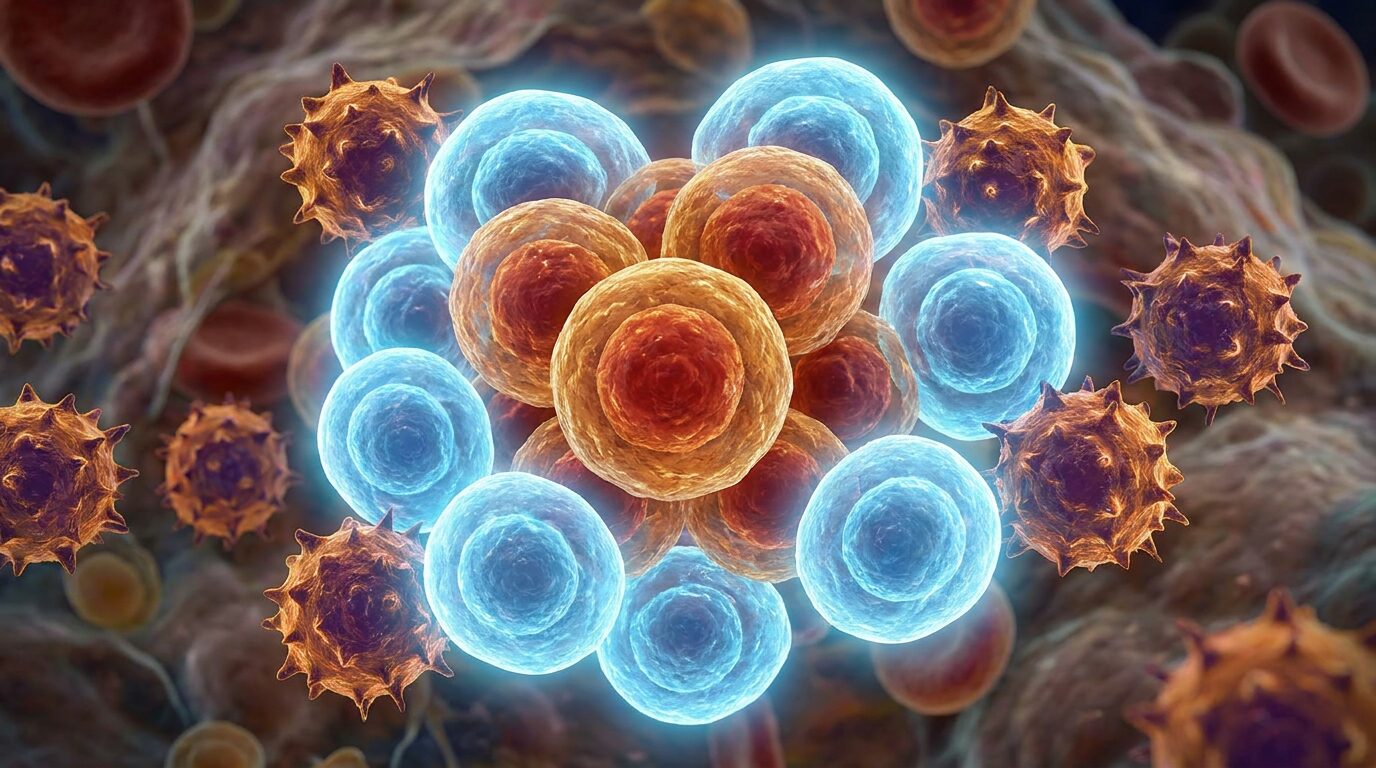
When most people hear about engineered T-cell therapies, they picture something aggressive: immune cells reprogrammed to hunt and kill tumors, unleashed into the bloodstream like a targeted search party. That image is accurate for CAR-T therapies, and those therapies have earned their reputation. But on June 30, 2026, the FDA approved[2] something that works on an entirely different logic — a cellular therapy designed not to attack, but to restrain. Its job is to stop the immune system from treating a transplanted donor graft as the enemy.
The agency approved Tregzi, the first regulatory T (Treg) cell-based immunotherapy for improving chronic graft-versus-host disease (GVHD)-free survival in adult patients with blood cancers undergoing allogeneic hematopoietic stem cell transplantation. Developed by Orca Bio, it is a product that sits at an intersection clinicians have been trying to navigate for decades: how do you cure leukemia with a donor's immune system without that immune system then turning on the patient who received it?
That question is not a footnote to transplant medicine. It is, for many patients, the central one.
The Problem That Follows the Cure
For patients with blood cancers such as acute myeloid leukemia, acute lymphoblastic leukemia, and myelodysplastic syndrome, allogeneic stem cell transplantation remains a standard curative treatment — but the procedure is often complicated by chronic graft-versus-host disease, a condition where donor cells attack the recipient's healthy tissue. This is not a rare edge-case complication. Chronic GVHD remains one of the most serious long-term complications of transplant, contributing substantially to morbidity, impaired quality of life, prolonged immunosuppression, and non-relapse mortality.
The standard approach to preventing it has been pharmacological: suppress the immune system broadly with drugs like tacrolimus and methotrexate, blunt its reactivity, and hope the graft settles in without too much damage. The problem is that broad immunosuppression is a blunt instrument. Current GVHD prevention primarily relies on broad immunosuppressive drugs, which can increase infection risk and potentially compromise immune recovery. Patients are, in effect, left immunocompromised twice over — once by the disease and its treatment, and again by the drugs meant to protect them from the transplant's own aftermath.
What Orca Bio and the scientists behind Tregzi proposed was something more precise. Rather than suppressing the immune system from outside with drugs, they would reshape the donor graft itself — building in the very cells the immune system uses to regulate itself.
A Three-Part Graft, Engineered for Tolerance
Tregzi consists of three specific components: purified hematopoietic stem and progenitor cells (HSPCs), which reconstitute the immune system; purified Tregs to maintain immune tolerance and suppress GVHD; and conventional T cells (Tcons) to provide essential graft-versus-leukemia activity. This three-part architecture is the crux of the idea. The stem cells rebuild the patient's blood-forming system. The conventional T cells preserve the anti-cancer effect that makes the transplant worth doing in the first place. And the regulatory T cells — the Tregs — are the novel addition: the peacekeeping layer, designed to prevent the donor immune system from misreading the host's own tissues as a threat.
Treg cells are a specialized CD4+ subset that maintain peripheral immune tolerance by suppressing alloreactive immune responses. In conventional allogeneic stem cell transplants, the relative scarcity of Treg cells is hypothesized to permit unchecked T-cell–mediated alloreactivity against host tissues, producing chronic GVHD. The biology here is well established at the basic-science level; what has been lacking until now is a commercially scalable way to isolate, purify, and deliver donor-derived Tregs in precise doses alongside the rest of the graft. The approval converts a concept previously limited to single-institution studies into a commercially scalable therapy, removing a longstanding barrier to broader clinical adoption of Treg-based transplantation.
“The Tregs are the peacekeeping layer — designed to prevent the donor immune system from misreading the host's own tissues as a threat.”
What the Trial Data Actually Show
The safety and effectiveness of Tregzi were established through PRECISION-T, a clinical trial in which 187 adult patients with blood cancers, including acute leukemia and myelodysplastic syndrome, were randomly assigned to receive either Tregzi or a standard stem cell transplant. The primary endpoint was not simply survival; it was a composite — how long patients could remain alive without developing moderate or severe chronic GVHD. That framing matters, because it forces the therapy to demonstrate both safety and meaningful quality-of-life benefit, not just that patients stayed alive regardless of what happened to them along the way.
The numbers were striking. At one year, 78% of patients who received Tregzi achieved chronic GVHD-free survival, compared to 38.4% of patients who received a standard transplant.[1] After accounting for death as a competing risk, 12.6% of patients who received Tregzi developed serious chronic GVHD within one year, compared with 44% of patients who received a standard transplant. Non-relapse mortality — deaths attributable to the transplant rather than the underlying cancer — was also substantially lower. Overall survival at one year was 94% for Tregzi versus 83% for the standard transplant arm, and non-relapse mortality was 3% for the Tregzi arm compared to 13% for the conventional arm, though the overall survival difference did not reach statistical significance in the trial.
Median GVHD-free survival was not reached in the Tregzi arm — meaning the data did not have enough events to calculate a midpoint — whereas patients receiving a standard unmanipulated donor graft had a median GVHD-free survival of just 7.3 months. This translated into a 74% reduction in the risk of death or moderate-to-severe chronic GVHD. These are not small differences. They represent the kind of effect size that, in a field accustomed to incremental gains, commands serious attention.
The safety profile was also notable for what did not happen. The side effects observed with Tregzi were generally consistent with those expected in patients undergoing stem cell transplantation — most commonly, infections. No patient had a severe reaction during the infusion of Tregzi, and no cases of graft failure were observed within the study period. That last point is significant. One concern with manipulating the donor graft is that precision engineering might compromise engraftment itself. All treated patients achieved neutrophil engraftment within 28 days after transplantation, indicating the immune system rebuilt itself on schedule even with the altered graft composition.
What This Is Not, and What Remains Uncertain
Some honest qualifications are worth naming. The PRECISION-T trial enrolled patients receiving 8/8 HLA-matched grafts, which limits the generalizability of these findings to mismatched or haploidentical transplant settings — a population that represents a meaningful share of patients who need transplants but cannot find a fully matched donor. The therapy as currently approved is not for them. Longer follow-up will also be needed to fully characterize overall survival benefit and relapse rates beyond the trial window. The one-year data are encouraging, but blood cancer transplant outcomes are measured in years, not months, and the durability of the GVHD protection over time has not yet been fully established.
As a complex multi-component cellular product, Tregzi will also require careful logistical implementation across transplant centers, including apheresis coordination and cell processing infrastructure. This is not a drug you mix in a pharmacy. It is a living product derived from a specific donor, sorted into precise cell populations, and delivered in sequence. The manufacturing and delivery chain is real and adds complexity — and cost, though pricing has not yet been widely reported. Approximately 46,000 people are diagnosed with AML, ALL, and MDS in the U.S. each year, but only a fraction of them receive an allogeneic stem cell transplant within the current paradigm. Even among eligible patients, access to a fully matched donor and to a transplant center equipped to handle Tregzi's logistics will shape who actually benefits.
A Different Kind of First
“This approval is not about giving the immune system a new weapon. It is about giving it a governor — a biological check on its own tendency toward collateral damage.”
The broader significance of this approval is worth sitting with. Cell therapy has been expanding its vocabulary steadily — from early CAR-T approvals that targeted B-cell malignancies, to more recent engineered constructs aimed at solid tumors and autoimmune disease. But Tregzi operates on a different principle than most approved cellular therapies. This is the first FDA-approved allogeneic regulatory T cell-based cellular immunotherapy, representing a major advance in transplant immunology. Rather than relying solely on pharmacologic immunosuppression to control GVHD, Tregzi uses a precisely engineered donor graft enriched with regulatory T cells to promote immune tolerance while preserving hematopoietic reconstitution.
That distinction — using cells to build in biological restraint rather than biological aggression — is the conceptual leap this approval represents. The immune system's capacity for self-regulation is real and well-characterized; Tregs are not a novel discovery. What is new is the ability to harness that capacity precisely enough, and at sufficient scale, that it can be packaged as a standardized therapy and tested in a multicenter randomized trial. Stanford Medicine's Robert Negrin, one of the foundational researchers whose lab work on Treg biology helped establish the scientific basis for this approach, described the approval as "a defining moment for the transplant community[3]" — a characterization that tracks with the data, even accounting for the enthusiasm of a scientist watching years of foundational work reach clinical fruition.
For the patients this is designed to help — adults with leukemia and related malignancies who survive the cancer only to find their new immune system turning against them — the difference between 12.6% chronic GVHD and 44% is not an abstraction. Chronic GVHD is not a manageable inconvenience for most of those who develop it; it is a prolonged, systemic inflammatory process that can damage the skin, liver, lungs, gastrointestinal tract, and joints, sometimes for years. The body cured of its cancer but now at war with its own graft is a clinical problem that has not had a structural answer — only drugs that tried, imperfectly, to quiet the fight from the outside. Tregzi, with all its acknowledged caveats, offers something more fundamental: a graft that carries its own ceasefire terms.
References
- Fda Approves Allogeneic Regulatory T Cell Based Immunotherapy Hspc And T Cells Vldq Use Matched (fda.gov)
Provides the one-year trial data showing 78% chronic GVHD-free survival for Tregzi versus 38.4% for standard transplant, the article's core efficacy claim. - Fda Approves New Treatment Uses Donor Immune Cells Prevent Serious Complications Blood Cancer (fda.gov)
Confirms FDA approval of Tregzi on June 30, 2026, for chronic GVHD-free survival in blood cancer patients undergoing stem cell transplantation. - Orca Bio’s TREGZI™ Receives U.S. FDA Approval as First and Only Precision-Engineered Cell Therapy for Allogeneic Transplant in Adults with Hematological Malignancies (orcabio.com)
About Marcus Okafor
Marcus Okafor covers general wellness, brain health, cognitive aging, sleep, and the biology of staying sharp across a lifetime. His work traces how the body and mind maintains, loses, and sometimes rebuilds — from the nitty gritty science of your bones — to the strange frontiers of the glymphatic system flushing toxins overnight — to the way imagined conflict primes the same stress circuitry as the real thing.
More like this
Why the Drug That Finally Beat KRAS Took 40 Years to Arrive
For decades, a single mutant gene drove some of the deadliest lung cancers while resisting every drug thrown at it — now a head-to-head trial has shown that the second wave of treatments may be genuinely different, not just incrementally better.

The Microbes in Your Gut Are Deciding What Your Skin Does Next
A 2025 review confirmed the gut-skin axis runs in both directions — and the signaling mechanism is stranger, more specific, and more actionable than the probiotic aisle ever let on.

When You Cut Yourself, Your Gut Microbiome Changes. Here's the Exact Mechanism.
Researchers traced a single molecular signal from broken skin all the way to the colon, and what it does to gut bacteria there is not what anyone expected.