What Your Pastor Can Legally Say From the Pulpit in 2026—And Why the IRS Just Changed the Rules
The IRS quietly broke with seven decades of precedent on church political endorsements, a court blocked the move, and new guidance is still coming—here's what the law actually says right now.
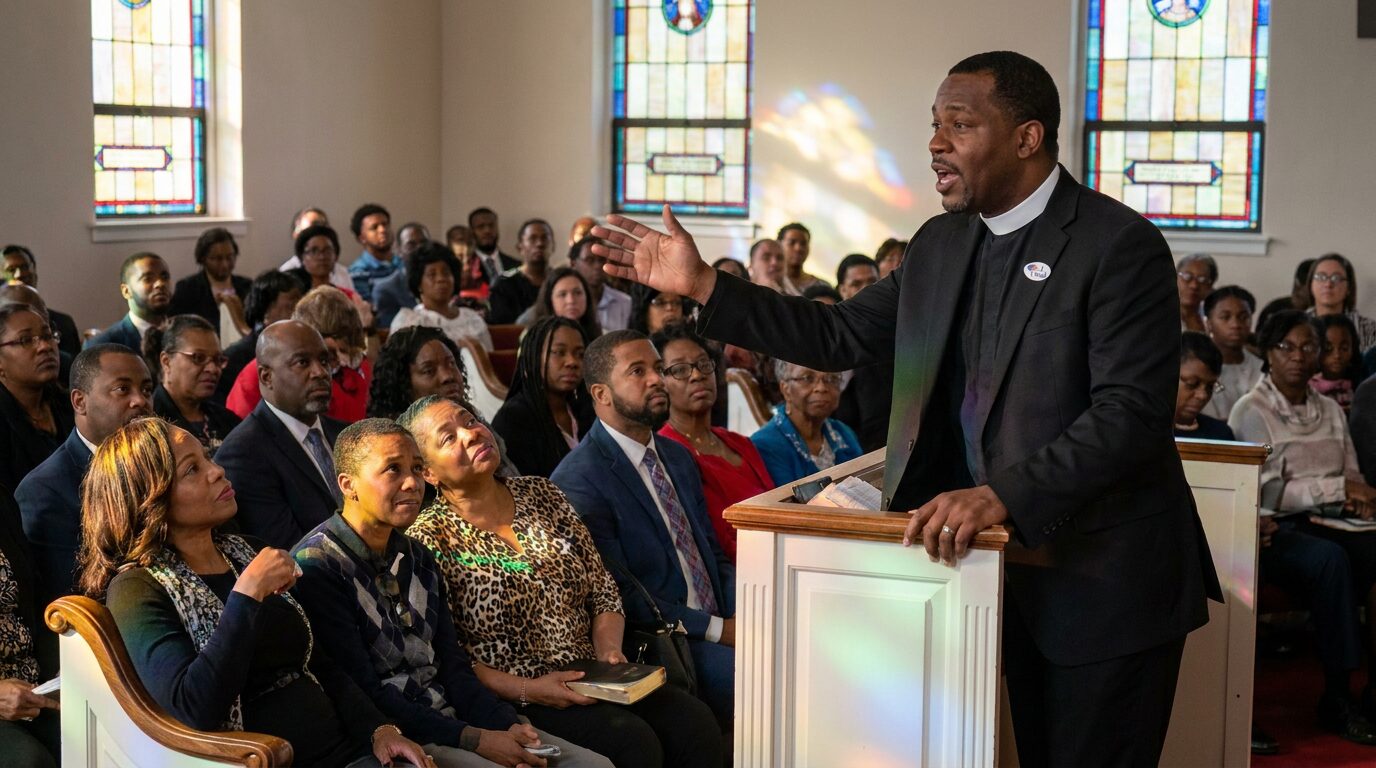
Here is the situation as it actually stands right now: your pastor cannot legally endorse a candidate from the pulpit without risking your church's tax-exempt status. The Johnson Amendment[1]—a provision of the federal tax code that has been the law since 1954—still prohibits every 501(c)(3) nonprofit, including every house of worship in the country, from supporting or opposing candidates for public office. The rule applies to the November 2026 election cycle. It has not been repealed by Congress, it has not been struck down by any court, and no IRS guidance has formally changed it.
But here is what did happen, and why it matters enormously: earlier this year, the IRS made a legal filing in a federal lawsuit arguing that religious leaders should be able to endorse political candidates from their pulpits without losing their organizations' tax exemption. That was not a clerical error or a rogue attorney. It was the Trump administration's IRS, in writing, in court, officially breaking with more than seventy years of legal precedent. A federal judge in Texas then dismissed the underlying case on March 31, 2026—ruling that the court lacked jurisdiction to approve the proposed settlement that would have undermined the amendment—so the settlement never took effect. Treasury Secretary Scott Bessent promptly announced that the administration remains committed to changing the rules anyway, and that Treasury and the IRS will issue new guidance. The fight is not over. It has just moved to a different arena.
What you can do
- Know the current rule: no church or 501(c)(3) nonprofit can legally endorse or oppose a candidate right now, regardless of what you may have heard.
- Track the IRS Priority Guidance Plan for 2025–2026, where new Johnson Amendment rules are listed as forthcoming—that document is publicly available and will signal when real changes are coming.
- If your congregation is pressured toward a candidate endorsement, it is still a reportable violation: the IRS accepts complaints about political activity by tax-exempt organizations.
- Distinguish pastoral opinion from official endorsement—clergy can discuss moral issues, policy, and even political parties in general terms; a direct candidate endorsement is the line the law draws.
What the Johnson Amendment Actually Does—and Doesn't Do
The Johnson Amendment is named for Lyndon B. Johnson, then a senator from Texas, who inserted it into a preliminary draft of the tax code in July 1954. It is not a free-speech law. It is a tax-status law. The bargain is simple: 501(c)(3) organizations—the most common type of nonprofit in the country, covering everything from hospitals and universities to food banks and churches—receive the most favorable tax treatment the federal government offers, including the ability to accept tax-deductible donations. In exchange, they stay out of partisan electioneering. No endorsements. No opposition campaigns. No candidate fundraising. The Interfaith Alliance[4] puts it plainly: the law 'protects the independence and integrity of faith communities; it ensures fairness in our political system.' Nobody forces a church to accept 501(c)(3) status. But if it does, the Johnson Amendment is part of the deal.
What the amendment does not do is silence clergy on political topics. Pastors, priests, imams, and rabbis can preach about poverty, war, immigration, healthcare, criminal justice, racial equity, environmental stewardship, or any other policy issue from any angle they choose. They can tell their congregations that abortion is murder or that it is healthcare. They can call the death penalty an abomination or a moral necessity. They can host candidate forums, as long as the forum is genuinely nonpartisan. The line is direct candidate endorsement—'vote for this person, not that one'—and it is a line the law has held for seven decades.
How the Trump IRS Tried to Erase That Line in Court
The vehicle was a lawsuit called National Religious Broadcasters v. Bessent, filed in the Eastern District of Texas—a jurisdiction that has become, in recent years, a preferred forum for litigants who want friendly federal judges and quick conservative rulings. The National Religious Broadcasters, an industry association of Christian media organizations, challenged the Johnson Amendment on religious liberty grounds. What made the case alarming was not just the lawsuit itself. It was what the IRS did in response: rather than defending the law, the government argued with the plaintiffs that houses of worship should be able to endorse candidates without losing their tax exemptions. The IRS, in other words, filed paperwork arguing against its own enforcement authority.
“The IRS argued in court against its own enforcement authority. That is not a legal technicality. That is an agency being weaponized against the rule it is supposed to enforce.”
The proposed settlement would have functionally rewritten the Johnson Amendment without an act of Congress. On March 31, 2026, a federal judge dismissed the case, ruling the court lacked jurisdiction to approve such a settlement—not because the settlement was illegal on the merits, but because the procedural vehicle was wrong. That is a narrow escape. It does not mean the administration stopped wanting the outcome. Three days later, Treasury Secretary Bessent publicly pledged that Treasury and the IRS would issue new guidance on the Johnson Amendment anyway, and that agenda item has been placed on the IRS's formal 2025–2026 Priority Guidance Plan. The administration could not get what it wanted through a Texas courthouse. It is now trying to get it through rulemaking.
Who Wins When Churches Can Endorse Candidates
The donor-class framing of this fight is 'religious freedom.' The actual structure of the benefiting interest is simpler: money. If the Johnson Amendment's enforcement is gutted—either through revised IRS guidance, legislative action, or administrative non-enforcement—churches become a new channel for tax-advantaged political spending. Contributions to a 501(c)(3) church are tax-deductible. Political donations are not. If you can give money to a church that openly campaigns for a candidate, and deduct that donation from your federal taxes, you have just created a subsidized campaign finance vehicle. The public treasury funds the deduction. The donor gets the political outcome. The candidate gets the church network. Everybody wins except the voters trying to figure out where the money came from and the taxpayers quietly covering the subsidy. This is exactly the kind of arrangement that as BrainHook has covered, nonprofit structures have already been quietly exploited for.
There is also the question of what it does to churches themselves. According to PRRI[2], most Americans across religious traditions actually oppose churches endorsing political candidates. That is not a liberal talking point. It reflects a genuine and widespread instinct that houses of worship should remain spaces where the full range of a congregation can gather, rather than become satellite offices for a party apparatus. Congregants who do not share their pastor's political preferences do not stop being members of the congregation. They stop feeling like they belong in it. The Interfaith Alliance notes that previous efforts to weaken the amendment have failed because they are 'fundamentally unnecessary, unwise and unwanted.' The polling backs that up.
What Happens Next—and What It Means Right Now
As of the 2026 election cycle, the National Law Review's election-year guide is unambiguous: 'The Johnson Amendment is still in effect. Section 501(c)(3) organizations, including churches, may not endorse or oppose candidates for public office.' Treasury and the IRS have signaled that new guidance is coming, but until it is actually issued and survives any legal challenge, the current rules apply in full. A pastor who endorses a candidate this November is still technically risking the church's tax-exempt status, even if the odds of IRS enforcement under this administration are, to put it gently, low.
That enforcement gap is itself part of the story. The IRS under Trump has signaled clearly which direction it wants this to go. Whether or not formal guidance arrives before November 2026, the practical signal to politically aligned clergy is already loud: the agency that would punish you has told you it does not want to. The law on the books and the law as enforced are two different things, and the distance between them is where political power quietly relocates. The broader pattern of democratic backsliding this administration has pursued runs precisely through that gap—the slow dismantling of institutional constraints not through legislation but through non-enforcement, re-interpretation, and administrative pressure. The Johnson Amendment may be the next item on that list. Watch the guidance. Watch what churches do before November. And remember that seventy-one years of precedent did not collapse in a courtroom. It started collapsing in a legal brief that the government chose to file.
References
- Johnson Amendment (en.wikipedia.org)
- Most Americans Oppose Churches Endorsing Political Candidates (prri.org)
Documents that Republicans, white evangelical Protestants, and Christian nationalism adherents most favor allowing churches to endorse candidates. - Religious Organizations and Political Activity: A 2026 Election-Year Guide (natlawreview.com)
Confirms the Johnson Amendment remains in effect for the November 2026 election and that no formal rule changes have been issued. - What is Happening with the Johnson Amendment? (interfaithalliance.org)
Reports the IRS's legal filing breaking with seven decades of precedent and the March 31, 2026 federal court dismissal of the National Religious Broadcasters case.
About Rafael Tomlin
Rafael Tomlin writes about current politics from a fiercely populist perspective: pro-worker, pro-renter, anti-billionaire capture, anti-authoritarian, and deeply hostile to the machinery that turns public life into cruelty for profit. His work focuses on power, policy, class, democracy, corruption, and who actually pays when political theater becomes law.
More like this
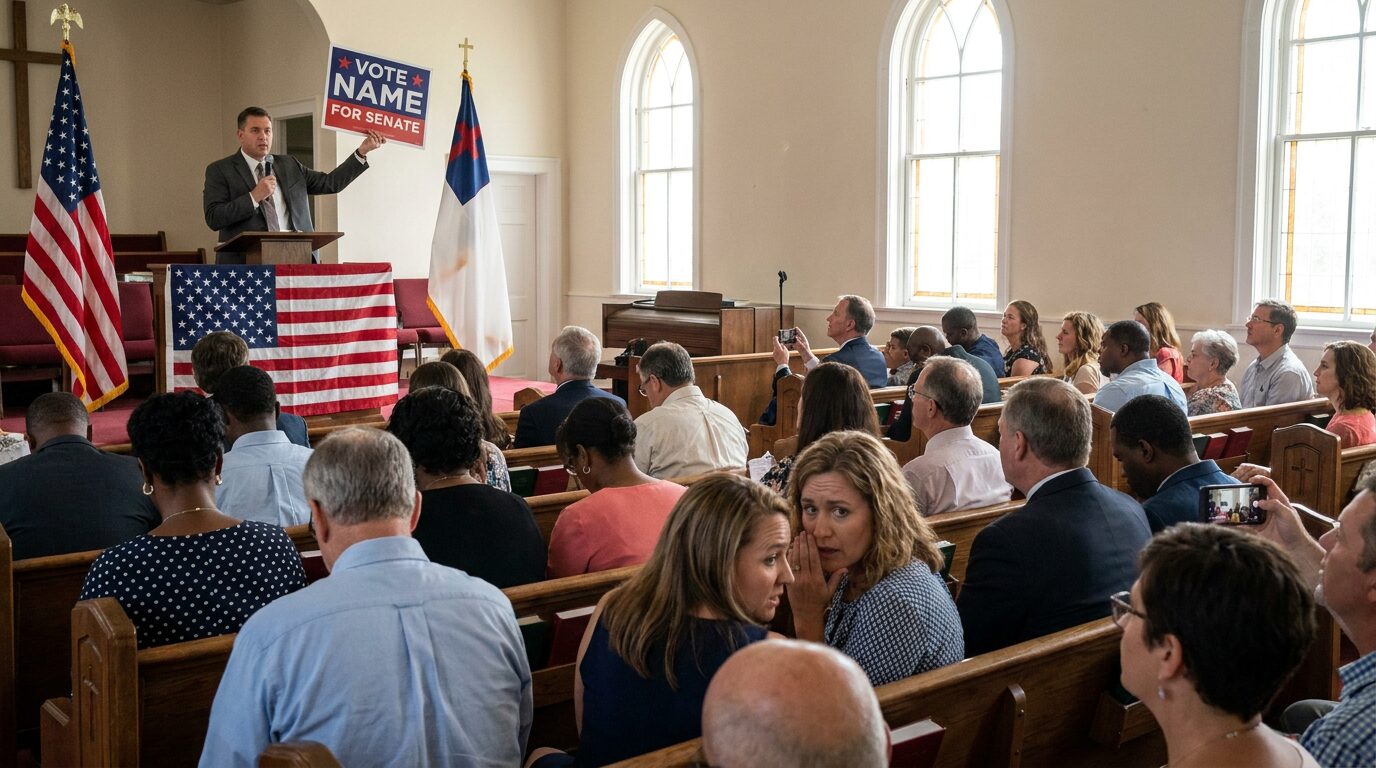
When the Pulpit Becomes a Polling Place, Who Actually Wins?
The IRS just broke with seventy years of precedent on church political endorsements — and exposed the gap between what political operatives want from faith communities and what faith communities want for themselves.
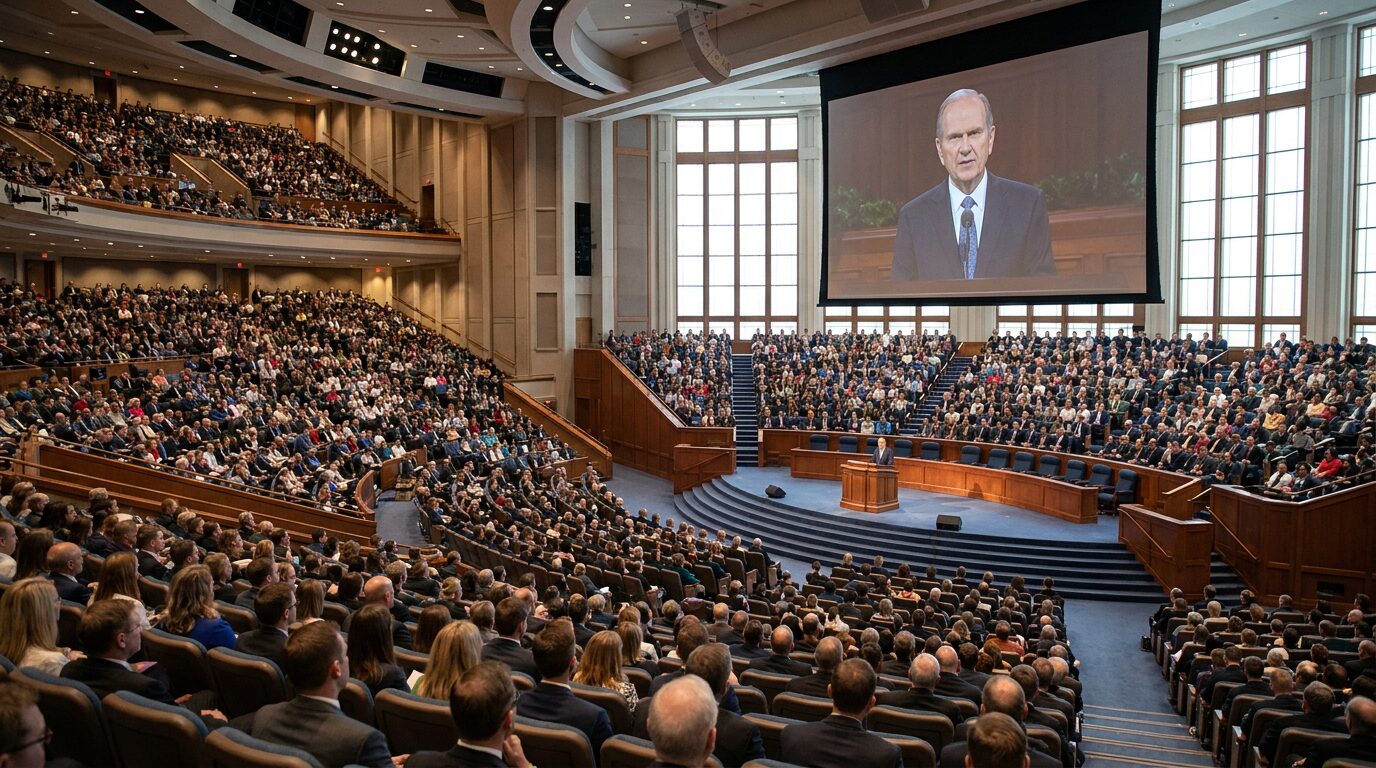
How a Church Mobilizes Millions of Voters Without Breaking Campaign Finance Law
The LDS Church has mobilized millions of voters through satellite broadcasts, sacred pulpits, and apostolic instruction — and the law has almost never touched them for it.
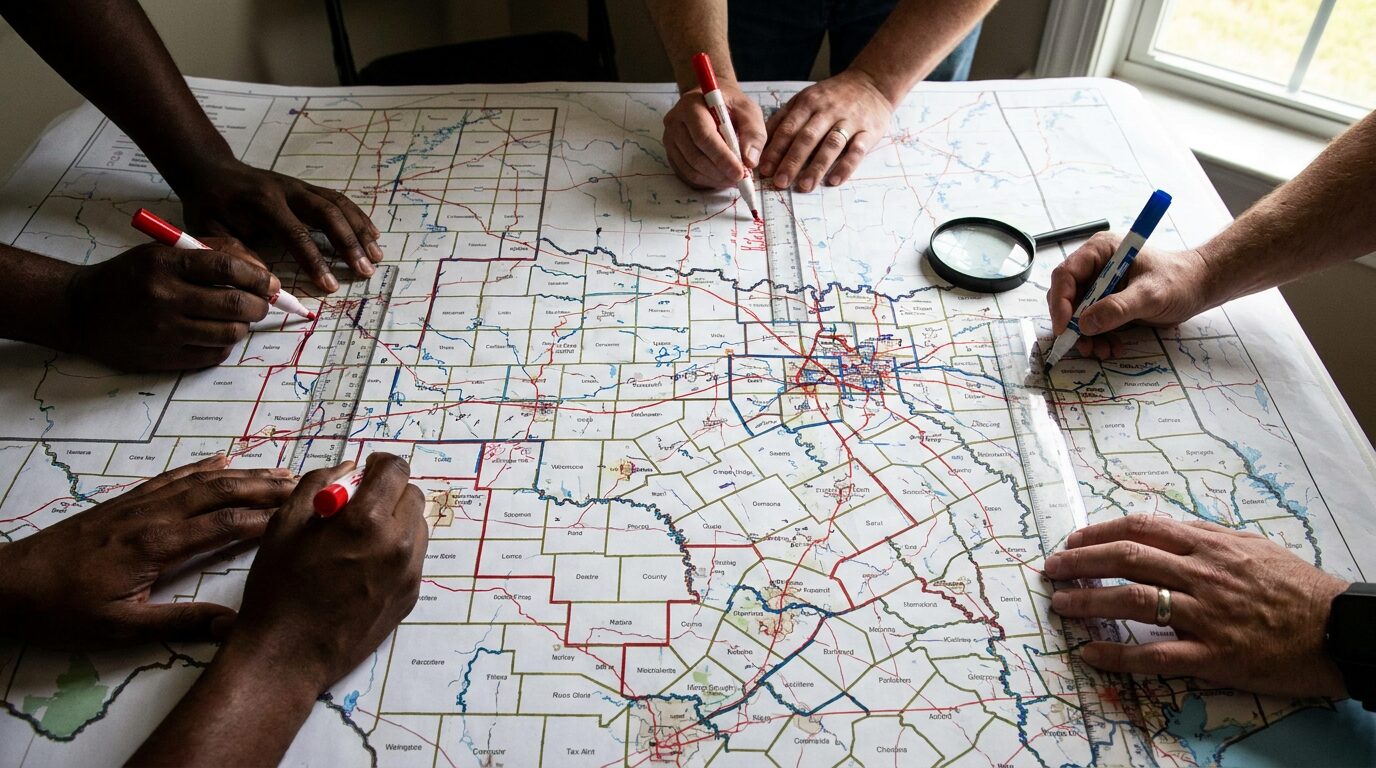
The Redistricting War Has a Winner. It's Not Voters.
A 2026 Supreme Court ruling reshaped the rules of political mapmaking, and the damage it's about to do runs deeper than any single congressional district.