How a Church Mobilizes Millions of Voters Without Breaking Campaign Finance Law
The LDS Church has mobilized millions of voters through satellite broadcasts, sacred pulpits, and apostolic instruction — and the law has almost never touched them for it.
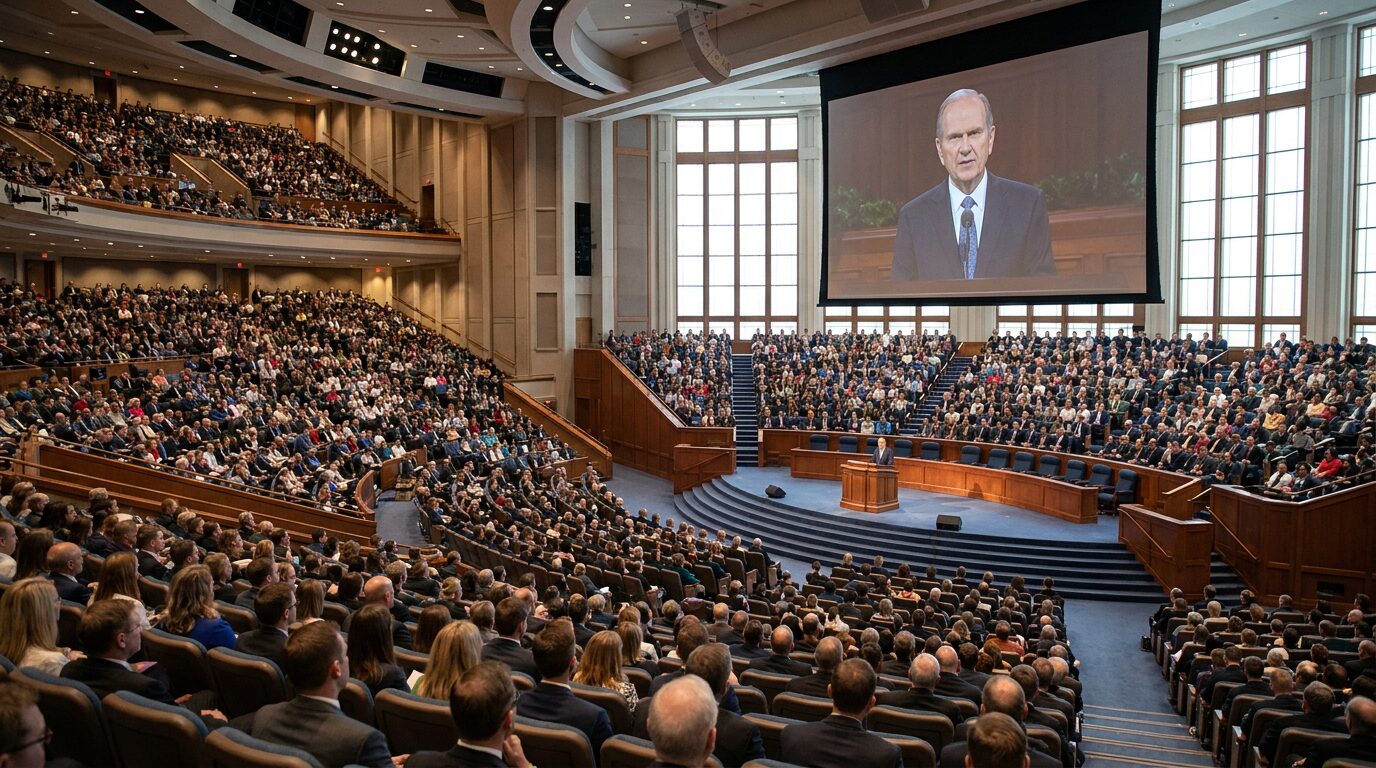
Picture the scene: tens of thousands of Latter-day Saints settle into their chapel pews or tune in via satellite across California. An apostle appears on screen. He is not a campaign surrogate. He holds no party affiliation. He speaks in the measured cadence of divine authority. And he asks members to donate their "means and time" to block same-sex marriage, to commit four hours a week to phone-banking, to "go viral" on social media for the cause. This is not a Republican National Committee call to action. This is a church broadcast. And that distinction, legally speaking, is where the whole story lives.
The Church of Jesus Christ of Latter-day Saints maintains, with a straight face and an official press release, that it "does not endorse, promote or oppose political parties and their platforms or candidates for political office." The church's own newsroom says so. That line is politically careful, technically defensible — and, depending on how you weigh what actually happened during the Proposition 8 campaign in 2008, a genuinely impressive piece of institutional self-description. Advocacy without endorsement. Mobilization without campaigning. A political operation wrapped in a theological frame, humming along tax-free for decades.
What you can do
- When a church or institution claims to be 'nonpartisan,' check whether it is lobbying on ballot measures, mobilizing volunteers for campaigns, or deploying official communication channels for political goals — those are the behaviors that matter, not the press release.
- If you're LDS and [navigating questions about institutional loyalty and political pressure](https://brainhook.com/article/the-cost-of-the-mormon-church-the-dark-shadow-left-on-former-members), know that you have the legal right to evaluate your church's political positions independently — prophetic framing is not the same as legal obligation.
- Track the Johnson Amendment's status in your state and nationally — the IRS's July 2025 pivot, now reversed by a federal court, showed how quickly enforcement norms can shift depending on who sits in the White House.
- If you're a donor to any religious organization, understand that churches face almost no financial disclosure requirements — you have very limited visibility into how your contributions are used politically.
The Law That Never Bit Back
The relevant statute has been sitting in the tax code since 1954. [The Johnson Amendment requires charitable organizations, including churches, from participating or intervening in "any political campaign on behalf of (or in opposition to) any candidate for public office" as a condition for retaining tax-exempt status.[2]](https://firstamendment.mtsu.edu/article/johnson-amendment/) Named for then-Senator Lyndon B. Johnson, who introduced it partly to defang tax-exempt organizations that were running smear campaigns against politicians he found inconvenient, it has been on the books ever since. It has also been enforced approximately once in seventy years. In the past 70 years, only "one church, plus maybe a couple other religious organizations, have lost their exemptions for violating the Johnson Amendment," according to Loyola University Chicago tax law professor Sam Brunson, who specializes in exactly this intersection of religion and tax policy.
That one enforcement action involved a church that ran a full-page newspaper ad urging Christians not to vote for Bill Clinton in 1992 — a public, paid political ad that left nothing to interpretation. In 1995, the IRS retroactively revoked that church's tax-exempt status, and in the 1999 case Branch Ministries v. Rossotti, the D.C. Circuit upheld the decision, ruling that the church was still free to speak politically — it just couldn't do so while claiming the benefits of tax-exempt status. That was the high-water mark of enforcement. It has never happened again. The lesson the LDS Church and others seem to have absorbed: keep it in the pews, frame it as theology, use official church channels rather than newspaper ads, and the IRS will leave you alone.
Proposition 8: A Political Operation in Sacred Clothing
The Prop 8 campaign in California is the case study that makes all the abstract legal arguments concrete. The emergence of the LDS Church as a national political force had actually begun in the 1970s during the fight over the Equal Rights Amendment, when church leaders characterized the battle as moral rather than political and mobilized members in Virginia and Florida, resulting in the ERA's defeat in both states. By 2008, the playbook was refined. Three factors underlie its influence: near-universal deference to the will of its prophet; de facto control of the Utah state legislature, some 90 percent of whose representatives are LDS; and an impressive ground game when the call to mobilize is issued by the prophet. That ground game got its fullest national workout in California.
In late June 2008, the First Presidency sent a letter to all local priesthood leaders in California, scheduled to be read over pulpits in Sacrament Meetings on June 29th, urging all members to "do all you can to support the proposed constitutional amendment by donating of your means and time." This was not a suggestion from a civic-minded institution. In LDS institutional culture, a letter from the First Presidency read over the pulpit carries something closer to prophetic instruction than a political flyer. The obedience rate reflects that. Church members accounted for 80 to 90 percent of volunteers who campaigned door-to-door and as much as half of the nearly $40 million raised during the campaign.
“Keep it in the pews, frame it as theology, use official church channels rather than newspaper ads — and the IRS will leave you alone.”
On October 8, LDS Church members in California attended a special satellite meeting broadcast from Salt Lake City, where high-ranking officials introduced members to the final voter persuasion and get-out-the-vote "phases" of the campaign, asking members to use social networking technology to "go viral" with their support for Proposition 8 and commit four hours each week to the ground and phone campaign. Members were, by some accounts, encouraged to avoid identifying themselves as Mormon while canvassing — to not "look like missionaries." According to Laura Compton, the LDS Church provided the "backbone of leadership, flesh of volunteers, blood of money" for the Yes on 8 campaign. Yet the church retained its tax-exempt status. The California Fair Political Practices Commission did investigate. In 2010, the LDS Church was fined for failing to properly report about $37,000 in contributions in 2008 towards Prop 8, in violation of California state's political contribution laws. Thirty-seven thousand dollars. The fine was over disclosure paperwork, not the underlying political activity. The tax exemption never moved.
As legal analysis of the campaign concluded, the church's vast size likely shields it from any serious threat of revocation under the "substantiality" standard most courts apply — a standard that fails to consider the true economic value of political endorsements by influential organizations with extensive and time-tested lists of phone numbers and email addresses. In plain English: because the church is enormous, spending tens of millions of volunteer hours on a political campaign might still represent a small enough percentage of its total activity that the law doesn't technically trigger. The bigger the institution, the more political work it can do before the math catches up. God damn the economies of scale.
The Issue Advocacy Escape Hatch
Here is where the legal distinction earns its keep. The Johnson Amendment's hard prohibition is on endorsing or opposing candidates. It is not, technically, a blanket ban on political activity. Houses of worship can lobby Congress, advocate for or against certain policy positions, and individual faith leaders can endorse candidates in their personal capacity — just not from the pulpit. Ballot measures occupy a complicated middle zone. Courts and the IRS have generally treated issue advocacy — including on ballot initiatives — as distinct from candidate campaigning. The LDS Church has operated almost entirely within that middle zone. It doesn't endorse Republicans. It endorses positions on marriage, gambling, cannabis, and LGBTQ rights that happen to align with Republicans. The voters make the connection themselves. The church maintains its neutrality on paper.
This is not unique to Mormonism, and it would be lazy to pretend otherwise. [A 2026 PNAS study found that nearly 15% of predominantly evangelical churches engaged in direct political advocacy and endorsements during the three months surrounding the 2020 and 2024 elections.[1]](https://en.wikipedia.org/wiki/Johnson_Amendment) The Johnson Amendment has been violated openly, repeatedly, with essentially no consequence. For years, Alliance Defending Freedom organized "Pulpit Freedom" Sundays designed to have preachers openly violate IRS rules by endorsing candidates from the pulpit — but those efforts were futile and the ADF no longer runs the initiative, partly because the IRS simply refused to engage. What makes the LDS Church distinctive is not that it flouts the law more egregiously than others. It is that it has built a more sophisticated, centralized, and theologically reinforced political operation inside the legal boundaries — and it has done so with an institutional hierarchy that converts prophetic authority into voter behavior at a scale most political machines can only envy.
The 2025 IRS Pivot — and the Court That Blocked It
The story took a sharp turn in July 2025. In August 2024, a coalition of conservative religious groups — National Religious Broadcasters, two Texas churches, and Intercessors for America — sued the IRS in the Eastern District of Texas, arguing that the Johnson Amendment violated their First Amendment rights. The Trump administration's IRS did not defend the law. [On July 7, 2025, the IRS filed a proposed consent judgment formally agreeing that the Johnson Amendment does not reach speech by a house of worship to its congregation through its customary channels.[3]](https://www.claconnect.com/en/resources/blogs/nonprofits/is-the-johnson-amendment-in-jeopardy-a-landmark-church-state-case-unfolds) It was the first time in the amendment's history that the IRS officially gave ground on its own enforcement authority in a court filing — a significant institutional concession dressed up in narrow legalese.
The proposed settlement alarmed civil liberties groups immediately. Americans United for Separation of Church and State filed a motion to intervene, arguing the proposed decree would create a two-tier system: churches could endorse candidates freely, while secular 501(c)(3) organizations like Americans United remained prohibited from doing the same. More practically, critics pointed to the disclosure problem that has always made churches a uniquely dangerous vector for political finance. One concern is that political campaign contributions funneled through 501(c)(3) organizations would be tax-deductible for donors and that such contributions would not be disclosed, since churches are exempt from reporting requirements required of other 501(c)(3) organizations.[2]
“The bigger the institution, the more political work it can do before the math catches up.”
The courts, however, did not cooperate. On March 31, 2026, a federal judge declined to approve the proposed settlement and dismissed the case. The Johnson Amendment remains formally on the books. Even though the proposed settlement was ultimately rejected, this case remains notable — for the first time, the IRS publicly took the position in a formal court filing that applying the Johnson Amendment to certain internal church communications could raise constitutional concerns. That marked a clear departure from decades of agency practice. The court stopped it from becoming binding law. But the IRS's willingness to try tells you something about where the institutional pressure is pointing.
What the Machinery Is Actually Doing
The LDS Church is not stupid. Its official political neutrality declaration is sincere in the narrow sense: it genuinely does not tell members which party to register with, and it has occasionally surprised observers with positions that cut against Republican orthodoxy. But sincerity about party affiliation is not the same thing as political non-interference. In less than a century, the Church of Latter-day Saints shifted from political pariah — because of its refusal to abandon plural marriage — to a potent political force whose influence belies its numbers, about 1 percent of the American population. That influence runs through an institutional hierarchy where the word of a prophet is not a suggestion. It runs through General Conference broadcasts that reach millions of members simultaneously. It runs through local ecclesiastical structures — wards and stakes — that can be activated as precinct-level political organizing units on short notice. For members already navigating the intense social and familial pressures of LDS institutional life, a call from the pulpit carries a weight that no campaign mailer can replicate.
The tax exemption survives because the law was built for a simpler model of religious political activity — the pastor who endorses a candidate by name during Sunday service. The LDS Church operates at a different altitude. It shapes the moral vocabulary of its members over decades. It defines which issues are "moral" versus "political," and then engages the moral ones with the full weight of prophetic authority. It tells members that opposing same-sex marriage is doctrinal, not partisan — and then deploys the most disciplined volunteer ground operation in California ballot-measure history. By the time a member casts a vote, they may genuinely believe they are responding to God rather than to a political strategist. That is not cynicism about the members. It is an honest accounting of how elite cueing works when the elite in question is believed to speak for heaven. The IRS has no good tool for measuring that. And as the broader debate over church political speech shows, it has rarely tried.
The Johnson Amendment's near-total non-enforcement was not an accident. It reflects a genuine political reluctance — across administrations of both parties — to put federal auditors in the business of evaluating sermons. That reluctance is not unreasonable. But it has produced a system in which the formal prohibition exists mostly to be cited when someone needs to defend the principle, while the actual behavior it was meant to constrain continues unimpeded. Removing the Johnson Amendment would shift the financial burden of political campaigns onto taxpayers and open the door for political actors to use charitable nonprofits as conduits for anonymous campaign funding. The LDS Church's tax-exempt status isn't a loophole someone exploited. It is an institutional structure that the law never actually built a wall around — and an administration that just tried to formally remove the last brick got stopped by a federal judge who noticed. For now. The challenges are not done.
References
- Most in US oppose churches endorsing political candidates, 2022 survey shows (pewresearch.org)
- Johnson Amendment (en.wikipedia.org)
Defines the Johnson Amendment as the 1954 tax code provision prohibiting 501(c)(3) nonprofits from endorsing or opposing political candidates. - Scripps News (scrippsnews.com)
Documents the IRS's July 2025 proposed consent judgment allowing pastors to endorse political candidates from the pulpit without losing tax-exempt status.
About Paul Wardell
Paul Wardell writes about politics, institutions, voters, media, class, power, polarization, and the incentives that make public life feel dumber than it needs to be. Left-leaning but stubbornly practical, his work focuses on how systems actually behave, not how partisans wish they behaved.
More like this
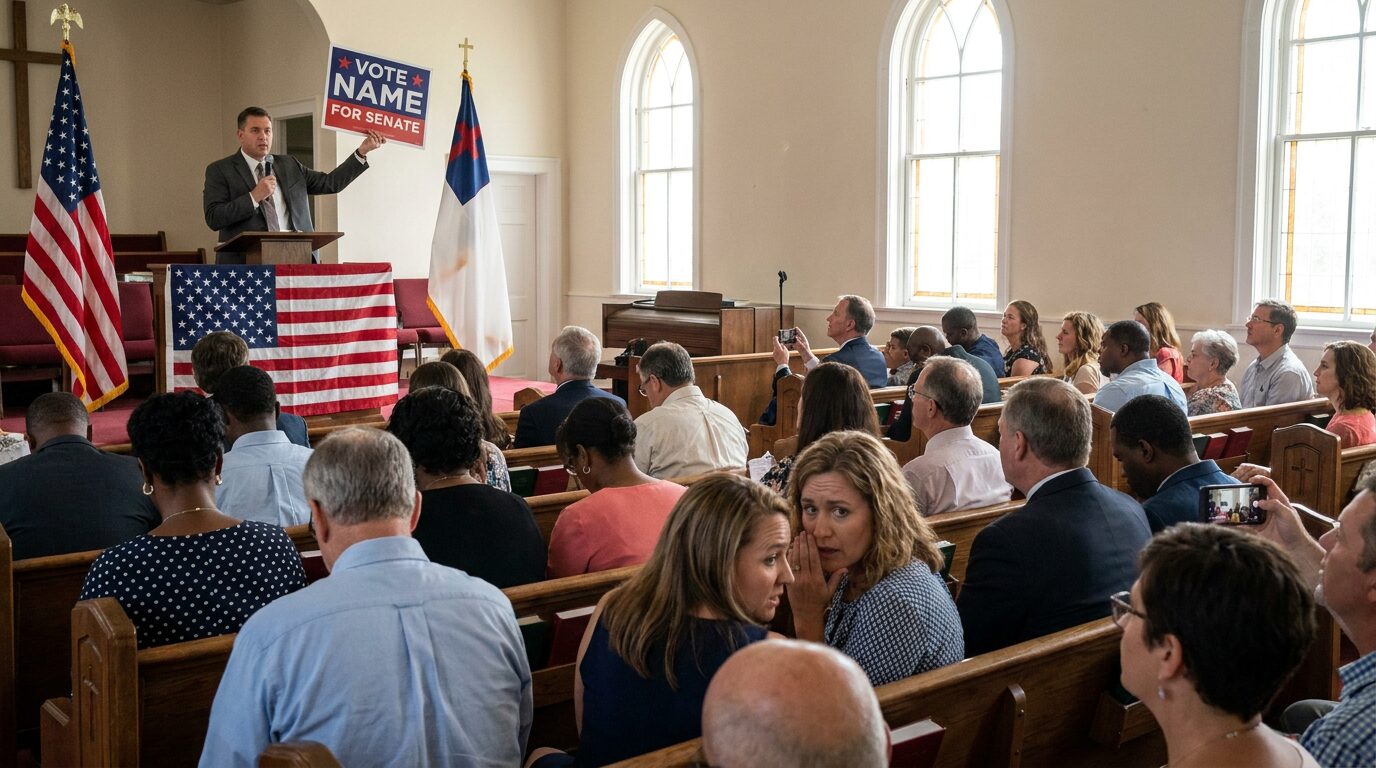
When the Pulpit Becomes a Polling Place, Who Actually Wins?
The IRS just broke with seventy years of precedent on church political endorsements — and exposed the gap between what political operatives want from faith communities and what faith communities want for themselves.
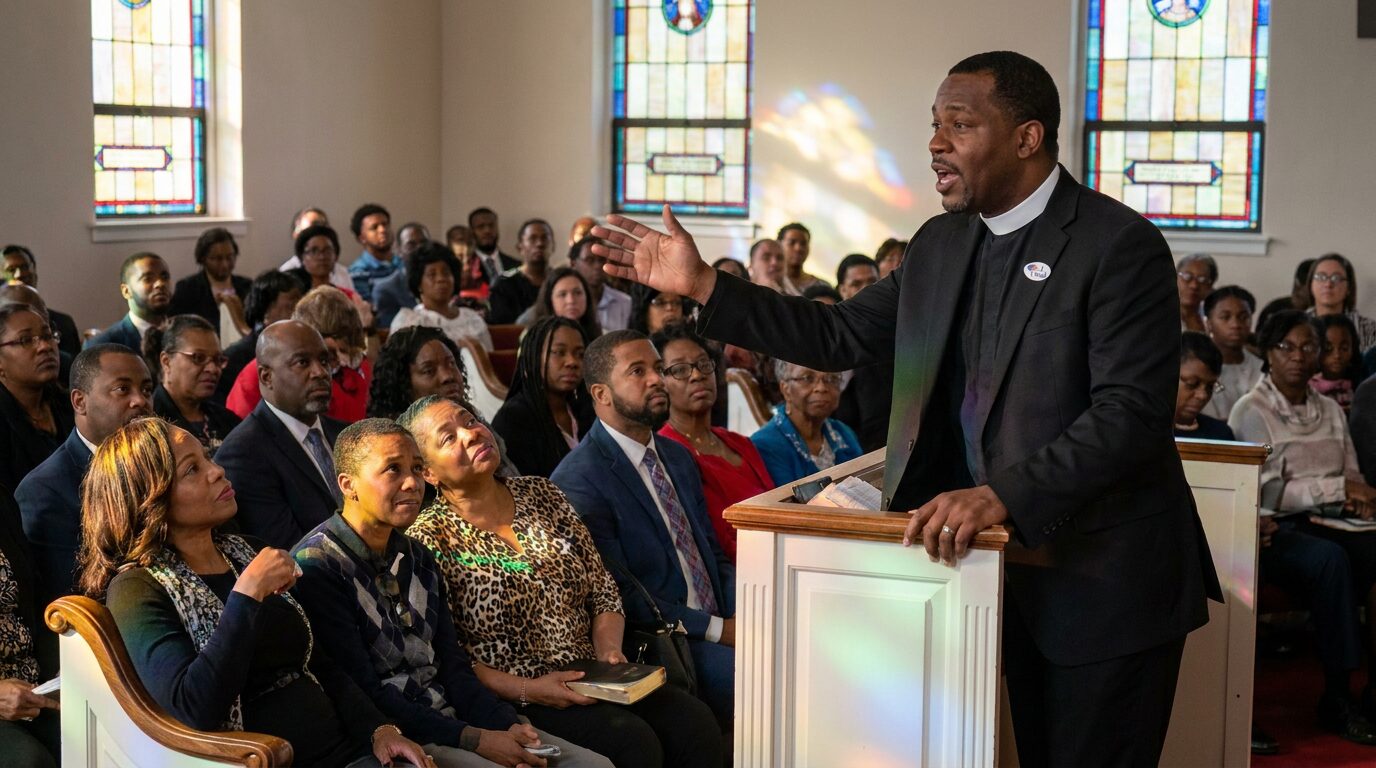
What Your Pastor Can Legally Say From the Pulpit in 2026—And Why the IRS Just Changed the Rules
The IRS quietly broke with seven decades of precedent on church political endorsements, a court blocked the move, and new guidance is still coming—here's what the law actually says right now.

How Foreign Money Hides Inside Your Favorite Nonprofits
Foreign money doesn't walk through the front door of an election — it takes a much more respectable route.