Trump's DNA, Carroll's Dress, and the Machinery of Institutional Revenge
Trump spent years stonewalling a DNA test that could have cleared his name — and now, owing $88 million in civil judgments, his Justice Department has opened a criminal probe into the woman who asked for it.
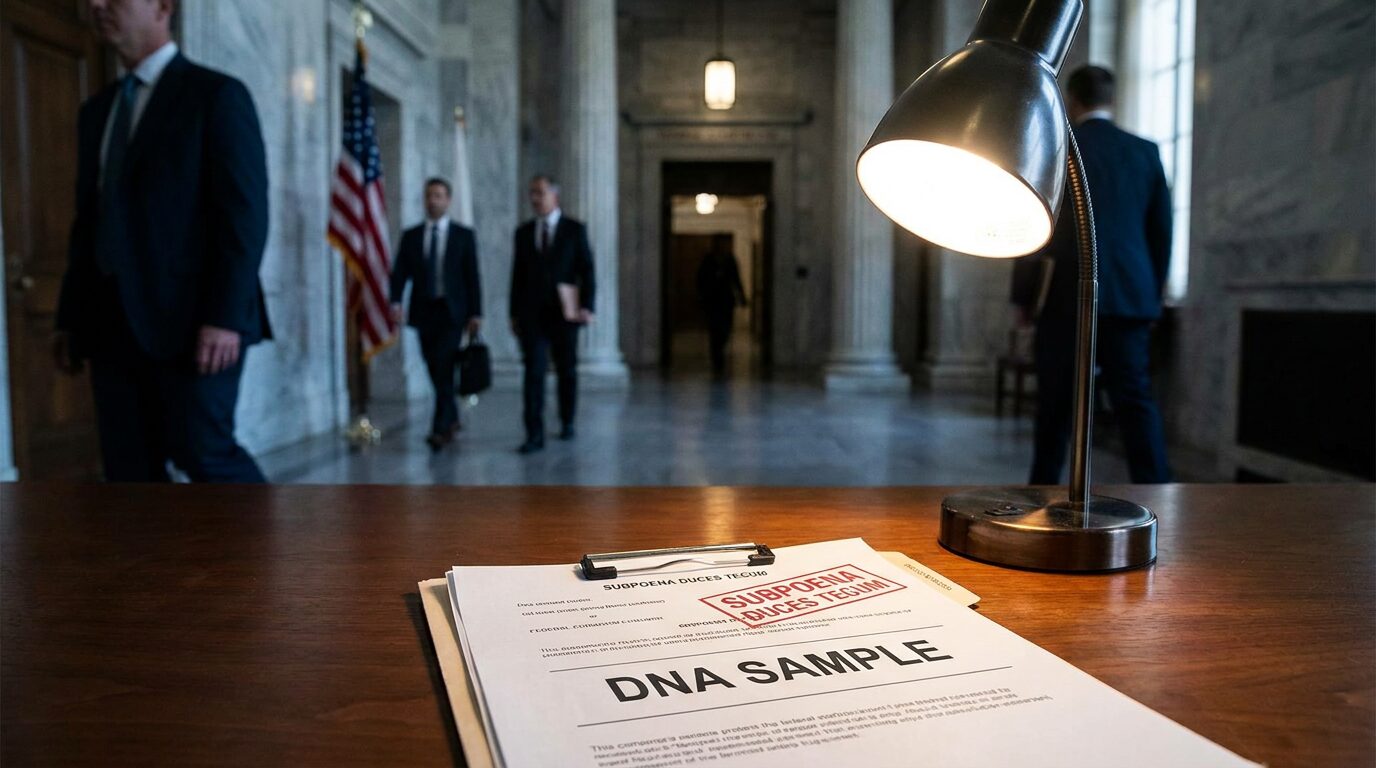
Let's start with the undeniable core of this thing, because it's easy to get lost in the procedural fog and miss how extraordinary it is. A sitting president of the United States — the most legally shielded, institutionally armored person in the country — spent six years in active litigation refusing to provide a DNA sample that his own lawyers later suggested could help prove his innocence. He stonewalled, delayed, maneuvered. Federal judges described his tactics as probable delay operations. And then, once two civil juries found him liable and ordered him to pay a combined $88.3 million in damages, his Justice Department opened a criminal investigation into his accuser. That's not a legal system working. That's a powerful man using a legal system as a weapon.
The facts here matter, so let's be precise about them, because the noise around this case has been extraordinary and deliberately so. E. Jean Carroll alleged that Donald Trump raped her in a Bergdorf Goodman dressing room in the mid-1990s. Carroll's lawyers first asked Trump to turn over a sample of his DNA in January 2020[4], to be used for "analysis and comparison against unidentified male DNA present on the dress" she said she wore during the alleged encounter. A lab report found DNA on the sleeves of the dress, which included a mix of at least four people, at least one of them male. Trump's response to this request was not to provide a sample and clear his name. His response was to stall.
Until February 10, 2023 — about ten weeks before the case was set to be tried — Trump refused to provide his DNA. Moreover, as the judge noted, he employed litigation tactics whose effect and probable purpose had been to delay Carroll's actions against him. Then, with trial imminent and discovery long closed, his new attorney made a sudden offer: Trump would provide DNA, but only if Carroll first handed over a missing appendix from the DNA report — a document Carroll's team had provided three years earlier. A federal judge denied Trump's "quid pro quo" offer to provide his DNA, slamming it as a delay tactic. The judge added: "His conditional invitation to open a door that he kept closed for years threatens to change the nature of a trial for which both parties now have been preparing for years."
The Door He Kept Closed
Understand the logic here, because it's the key to everything. If you are an innocent man and someone has a dress with an unknown man's DNA on it and they want to compare it to yours — and you are innocent — you provide the sample. You want that comparison. You make it the first thing you do. You hold a press conference about it. Instead, Carroll's lawyers first requested a DNA sample in January 2020. Trump had repeatedly resisted the request, vowed to continue resisting, and Carroll's team was faced with a choice: almost three years into the litigation, she could engage in a protracted fight over an unprecedented request — one that Trump had vowed to continue resisting and would inevitably turn into a substantial issue in court — or she could take Trump's deposition and work toward trial. She chose the trial. The DNA was left off the table — by both sides, for different reasons.
Trump's allies have since tried to weaponize that mutual decision, arguing in a December 2025 Supreme Court amicus brief that Carroll's failure to pursue DNA confirmation undermined her credibility. America First Legal, a conservative legal group founded by senior Trump adviser Stephen Miller, urged the justices to review the appellate decisions upholding two New York jury verdicts that forced Trump to pay more than $88 million to Carroll[3]. Their argument, stripped of its legal dressing, is essentially: she should have pushed harder for the test she spent three years trying to get from the man who spent three years refusing to give it. That's some Kafkaesque bullshit right there. The trial judge himself had noted that even if there were a DNA match, "it would not prove or disprove Ms. Carroll's rape allegation." DNA on clothing proves contact. It doesn't prove or disprove the nature of that contact. The test, in other words, was never going to be the clean exoneration Trump's people keep implying. Which raises an obvious question: if the test wouldn't have cleared him, why is his camp so loudly complaining it wasn't done?
“If you are an innocent man and someone has a dress with an unknown man's DNA on it and they want to compare it to yours — you provide the sample. You want that comparison. You make it the first thing you do.”
What Two Juries Actually Said
Here's the record, because the MAGA media ecosystem works overtime to blur it. A jury verdict in May 2023 found Trump liable for sexually abusing and defaming Carroll, and ordered him to pay $5 million in damages. The jury did not find Trump liable for rape under New York's narrow legal definition at that time — which required forcible penetration with the penis — and instead found him liable for a lesser degree of sexual abuse. The judge later clarified that the jury's finding constituted rape by the common definition of the word. Then a second jury, in January 2024, awarded Carroll an additional $83.3 million — $65 million in punitive damages and $18.3 million compensatory damages — for Trump's relentless social-media defamation campaign against her after she came forward. The appeals court panel that upheld that award noted that the case "involved malice and deceit, caused severe emotional injury, and continued over at least a five-year period," and that the degree of reprehensibility of Trump's conduct was "remarkably high, perhaps unprecedented."
Trump has appealed both verdicts. During the first half of 2026, the Supreme Court has fifteen times scheduled, then delayed, a conference to consider taking up the matter. His lawyers have argued presidential immunity, evidentiary error, and — with help from America First Legal — that the DNA questions weren't fairly handled at trial. The Second Circuit has rejected his appeals. The en banc petitions have been denied. The Trump DOJ has even tried to use the Westfall Act to substitute the United States government as defendant in the Carroll I case, and Trump's team asked the Second Circuit to stay its rejection so they could appeal to the Supreme Court. This man has more legal tools at his disposal than anyone in American history. He is using all of them. And yet.
The DOJ Moves In
The Justice Department has launched a criminal investigation into E. Jean Carroll over potential perjury in testimony during her lawsuits against Trump. Prosecutors are examining whether Carroll lied in a 2022 deposition when she said no one else was paying her legal fees. The theory is this: Carroll said in a deposition that no outside party was funding her case. Months later, it emerged that billionaire Democratic donor Reid Hoffman's nonprofit had helped cover some legal costs. Carroll had said the case was being handled on a contingency basis and that no one else was paying her legal fees. Six months after the deposition, Carroll's lawyer told the judge that Carroll "has recollected additional information" and "she now recalls that at some point her counsel secured additional funding from a nonprofit organization to offset certain expenses and legal fees." A federal judge reviewed this, allowed Trump's team to re-depose Carroll, and then said he saw no issue with Carroll's credibility and blocked the lawyers from asking about Hoffman's funding at trial.
This is despite a 2024 ruling by a federal appeals court panel that dismissed claims E. Jean Carroll committed perjury. But the Trump administration has referred the matter to federal prosecutors in Chicago, where Hoffman's nonprofit is based. The DOJ probe is the latest move by the Trump administration to target the president's perceived political foes, including multiple attempts by the department to prosecute former FBI Director James Comey and New York Attorney General Letitia James[1]. And notably: Acting Attorney General Todd Blanche has reportedly been recused from the department probe, having worked as one of Trump's personal attorneys on the Carroll appeals[2]. The man who defended Trump against Carroll is now, in effect, running the Justice Department that is investigating Carroll. He recused himself from this particular probe, but the institutional conflict embedded in that arrangement is staggering and should not be normalized by repetition.
“The man who defended Trump against Carroll is now, in effect, running the Justice Department investigating Carroll. The institutional conflict embedded in that arrangement should not be normalized by repetition.”
Epstein, Immunity, and the Bigger Picture
This is where the Carroll case connects to something even larger and more troubling about institutional decay under a second Trump term. Trump is mentioned more than 1,000 times in the three million Jeffrey Epstein documents released in January 2026, with some references including newly disclosed unverified sexual assault claims against Trump as well as fresh details about how some of Epstein's victims described their interactions with the future president. As we've written about the shape of these silences before, the pattern of redaction and selective disclosure matters as much as any single document. You can read more about what the Epstein files do and don't tell us in our earlier piece.
Federal prosecutors had initially identified six million pages as potentially responsive to the Epstein disclosure law, but the DOJ released only half that amount. Democratic lawmakers disputed the compliance claim and accused the department of withholding FBI victim interview statements, a draft indictment and prosecution memorandum, and hundreds of thousands of emails and files from Epstein's computers. The Republican chair of the House Oversight Committee has pledged to look into reporting revealing Epstein files related to President Trump are missing from the public record. This is not a fringe concern. It's bipartisan, documented, and still unresolved.
The Carroll case and the Epstein file fight are not the same story, but they rhyme in an important way. Both involve a president using institutional power — litigation delay, DOJ deployment, document suppression — to manage accountability that would apply to any other citizen. The DNA test is the perfect symbol of this: a simple, cheap, conclusive-in-one-direction test that a man who claims to be innocent refused for six years. The same legal machinery that could have given him a clear answer instead became his shield. And now, with $88 million in civil judgments against him and a Supreme Court petition pending, that machinery — his DOJ, his appointed judges, his allies at America First Legal — is being pointed at the woman who asked the question. This is what democratic backsliding actually looks like — not a coup, not a single dramatic rupture, but a slow institutional conversion in which the tools of accountability are systematically redirected to protect the powerful from accountability itself.
What the Incentive Structure Rewards
Political scientists who study democratic erosion — Levitsky and Ziblatt's work on how democracies die, Ginsburg and Huq on the mechanics of backsliding — document a consistent pattern: the institutions don't fall, they bend. Courts remain open. Trials still happen. Prosecutors still file charges. But the targets shift, the timelines stretch for enemies and collapse for allies, and the procedural tools multiply for those with power. What we are watching in the Carroll case is a masterclass in this. Trump didn't win the DNA fight. He didn't need to. He ran the clock long enough that the evidence question became moot, then used the absence of DNA testing as a grievance in the next round of appeals, and now his administration is trying to criminalize the funding structure of the woman who sued him — a perjury theory that the trial judge rejected, that a federal appeals court dismissed, and that legal experts describe as facing serious materiality obstacles.
As legal scholars have noted, Carroll must have willfully or knowingly lied under oath for perjury to apply — if she simply wasn't aware of whatever funding arrangement was in place, that's not perjury. Additionally, the statement must have some material bearing on the likely outcome of the case. When Carroll's allegations went to trial, the judge decided that none of the funding question should even come into evidence, finding it too tangential to bear in any meaningful way on the case — meaning the materiality requirement for perjury will be very difficult to establish. The case has real procedural weaknesses. That's not the point. The point is the signal it sends: sue this president and you may face a criminal probe. Fund a lawsuit against him and federal prosecutors may scrutinize your nonprofit. The chilling effect is the product, whether or not a charge ever materializes.
Two civil juries — regular American citizens, sitting in a Manhattan federal courthouse, hearing evidence — found Donald Trump liable for sexual abuse and for defaming the woman who reported it. He refused a DNA test for six years that he now claims should have been done. He is appealing both verdicts while his Justice Department investigates his accuser. The dress is still in the closet. The test was never run. And the man who refused it is the most powerful person in the country. Let that arrangement sit with you for a moment before you let the procedural noise wash it away.
References
- Justice Department opens criminal probe involving E. Jean Carroll testimony in Trump sexual abuse lawsuit (nbcnews.com)
Confirms DOJ opened criminal investigation into Carroll involving perjury allegations and money laundering related to Hoffman's nonprofit funding. - Reid Hoffman says E. Jean Carroll probe involving his nonprofit is meant to ‘silence’ Trump critics (cnn.com)
Provides Hoffman's statement that the DOJ probe targeting Carroll's funding is intended to silence Trump critics and discourage support for his accusers. - Trump v. Carroll (25-573) (scotusblog.com)
Shows America First Legal, founded by Stephen Miller, filed Supreme Court amicus brief urging review of jury verdicts awarding Carroll over $88 million. - caselaw.findlaw.com (caselaw.findlaw.com)
Documents that Carroll's lawyers first requested Trump's DNA sample in January 2020 for comparison against male DNA found on the dress.
About Paul Wardell
Paul Wardell writes about politics, institutions, voters, media, class, power, polarization, and the incentives that make public life feel dumber than it needs to be. Left-leaning but stubbornly practical, his work focuses on how systems actually behave, not how partisans wish they behaved.
More like this
E. Jean Carroll Waited Decades. The Supreme Court Just Made It Final.
After three years of appeals, delay tactics, and a DOJ weaponized against his accuser, the Supreme Court just shut the last door Trump had left.
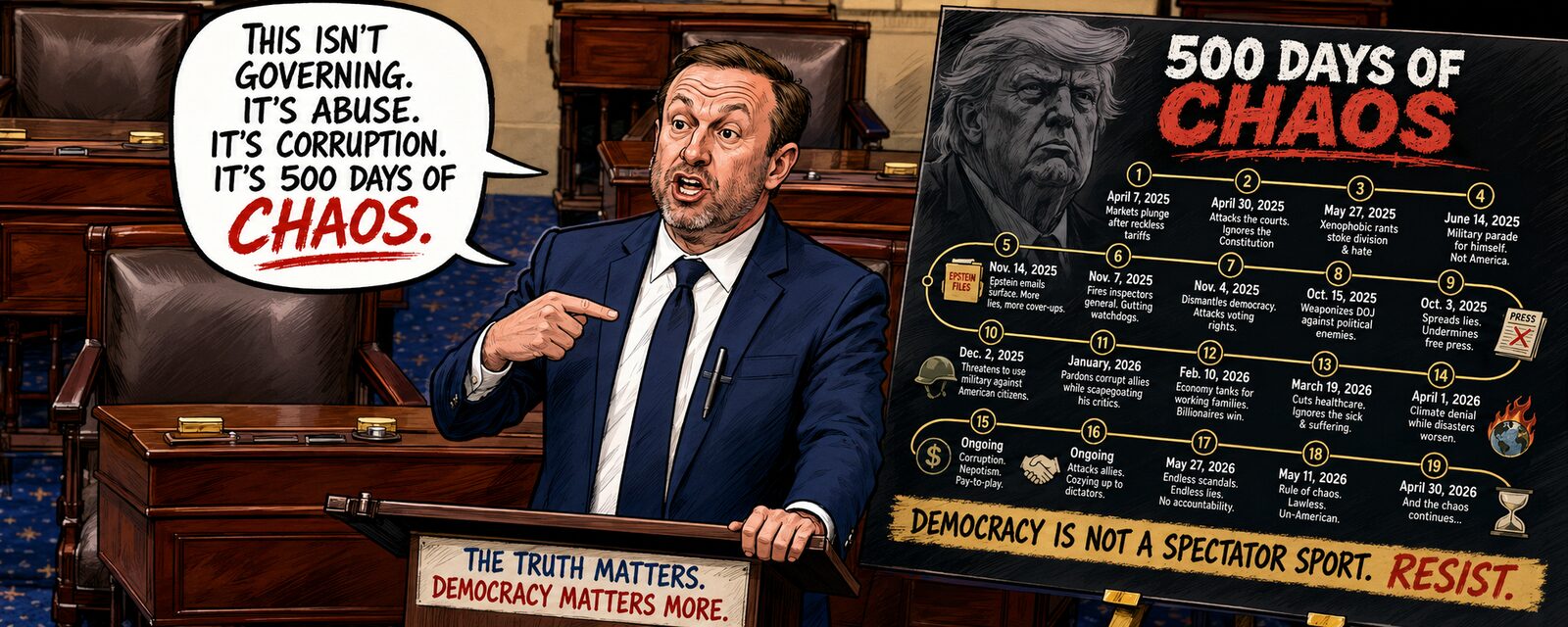
The White House Is a Corruption Machine. Senator Murphy Just Documented Every Moving Part.
Senator Chris Murphy just spent half an hour on the Senate floor reading a documented timeline of corruption — and the pattern it reveals is worse than any single scandal.
Trump's Name Was Redacted Dozens of Times. Here's What the Shape of That Silence Tells Us.
The released Epstein documents don't prove a conspiracy — but the architecture of what's been withheld is its own kind of evidence.