The Supreme Court Just Removed the Judiciary's Last Guardrail Against Presidential Power
Trump v. CASA was framed as a boring procedural dispute — it was actually a structural transfer of power from the courts to the executive branch, and it will outlast this presidency.
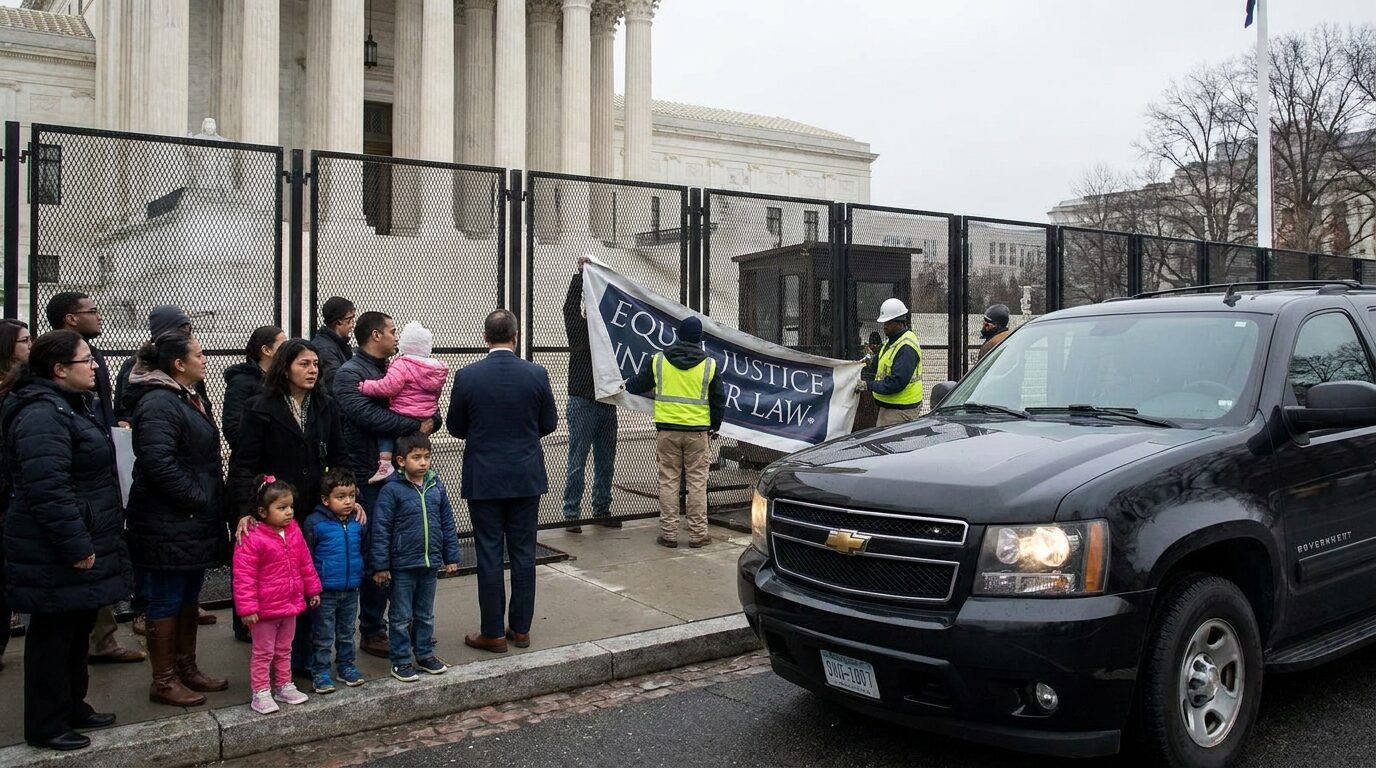
On June 27, 2025, the Supreme Court handed the Trump administration one of its cleanest institutional victories yet — and the Court did it without ever ruling on whether Trump's underlying policy was legal. The case, Trump v. CASA, Inc., addressed whether lower-court judges have the authority to issue "universal injunctions" to block the enforcement of policies nationwide — and the Court ruled 6–3 that they generally do not[4]. The administration's attempt to strip birthright citizenship from children born to undocumented parents, an executive order that every court to examine it found likely unconstitutional, survived the day because the Supreme Court changed the rules for how courts can stop the president. That's the move. That's the whole game.
The ruling reined in federal judges' ability to issue sweeping orders that have in recent years stymied implementation of policies from Republican and Democratic presidential administrations alike — and the high court said that universal orders likely exceed the equitable authority that Congress has granted to the federal courts. The administration called it a "monumental victory for the Constitution." What it was, more precisely, was a structural rewiring of how executive power meets judicial resistance in this country — and the damage doesn't disappear when the next president takes office.
To understand what was actually taken from the public, you need to understand what a universal injunction does and why it exists. The difference between a traditional injunction and a universal injunction is not so much where it applies, but whom it protects: a universal injunction prohibits the government from enforcing the law against anyone, anywhere. When a district court judge looked at Trump's birthright citizenship order and concluded it was almost certainly unconstitutional — as six separate courts did — a universal injunction meant the order couldn't hurt anyone while the case wound its way up. Not just the people who sued. Anyone. That's not judicial overreach. That's the courts doing the job of protecting constitutional rights before they're violated.
A Procedural Ruling With a Constitutional Hole in the Middle
While the case did not directly address birthright citizenship, it centered on several universal injunctions blocking Executive Order 14160[1], an order issued by President Trump to redefine the government's understanding of the Citizenship Clause. By a vote of 6–3, the justices repudiated the concept of universal or nationwide injunctions, which prohibit the government from enforcing a law or policy anywhere in the country — but the justices did not weigh in on the question at the center of the three lawsuits: whether the birthright citizenship order itself is constitutional. The Court deliberately set that question aside. The administration hadn't asked them to rule on it, and the majority was happy to oblige. Justice Sotomayor, in dissent, had a sharp read on why: to argue that the executive order was likely constitutional, the government would have had to overcome the fact that six courts had found the order unconstitutional — so the administration came on the narrow ground of universal injunctions instead, which Sotomayor called gamesmanship.
Justice Barrett's majority opinion rested on the Judiciary Act of 1789 — the statute that authorizes federal courts to issue remedies like injunctions. The Court held that the Judiciary Act authorizes only those remedies traditionally available in English courts at the time the United States was founded, and the Court viewed that historical tradition as largely foreclosing universal injunctions. Scholars pushing back on this have noted that the originalist history here is shakily assembled. The Stanford Law professor who wrote the most cited analysis of the decision noted that it rests on "an amalgam of bad history, fiat, and ipse dixit[3]" — and that no American Founding-era cases were actually cited despite the Founding era being treated as of critical importance. When your constitutionalist history argument doesn't cite any historical cases, that's not scholarship. That's aesthetics.
“The administration came on the narrow ground of universal injunctions rather than the merits — because on the merits, six courts had found the order unconstitutional.”
What the Ruling Actually Does to Ordinary People
The practical consequence is blunt: if you are not a named plaintiff in a lawsuit, a court order may no longer protect you. Justice Sotomayor criticized the majority opinion for "render[ing] constitutional guarantees meaningful in name only for any individuals who are not parties to a lawsuit" and providing "an open invitation for the Government to bypass the Constitution." Justice Jackson filed an additional solo dissent, writing that the "Court's decision to permit the Executive to violate the Constitution with respect to anyone who has not yet sued is an existential threat to the rule of law[2]." Those are not the words of people who think this ruling has been adequately covered by the legal workarounds the majority gestured toward.
There are workarounds. The ruling leaves intact broad injunctions protecting members of a properly certified class under Rule 23(b)(2) of the Federal Rules of Civil Procedure, and litigants immediately used this route in the birthright citizenship litigation, starting the same day the Supreme Court issued its decision. But class actions must meet specific criteria, including commonality and typicality — basically, that the class members' circumstances are sufficiently alike for class-wide adjudication. In the Maryland case, the court certified a class for children but denied certification for parents in their individual capacities, finding their fears about their children's citizenship to be too individualized. That's the friction point. Not every policy harm is tidy enough to survive the technical requirements of class certification. Not every vulnerable person has access to lawyers who can move in hours. And not every administration will sit still while class actions are organized against it.
For individuals to get relief, they now all have to sue as individuals, to the degree that they have the resources and the wherewithal to get lawyers — and that will add to the already overburdened lower federal court dockets. Think about what that means structurally. If the executive issues an order that affects millions of people, each of those people now needs to be either a named plaintiff or a certified class member to receive judicial protection. The administration has also been cracking down on law firms that take on issues it sees as opposing the Trump agenda, which means the organized legal capacity to bring those class actions may itself be under pressure. The system for contesting executive overreach just got significantly more expensive, slower, and harder to coordinate.
The Bipartisan Critique and Why It Doesn't Exonerate This Decision
Here is where the framing gets slippery: there is a real bipartisan critique of universal injunctions that deserves honest engagement, because pretending otherwise lets the Court off too easy. As presidential administrations have been implementing more and more policy measures through executive branch fiat, nationwide injunctions have increased in number and in consequence — and both sides played the same game. During the Obama and Biden years, Republican attorneys general figured out that they could file in friendly Texas courts and shut down those presidents' policies nationwide. Then during Trump's first term, Democratic attorneys general perfected the same strategy in California and in First Circuit districts. Forum shopping for a judge likely to issue a sweeping block is genuinely bad for institutional legitimacy. That's a real problem.
But there is a difference between a real structural problem and using that problem as cover for a power transfer. The question was not only whether universal injunctions had become too easy to obtain. The question was also: what do you replace them with, and who benefits from the change? The Court's answer — trust class actions, trust the appellate process, trust the Court's emergency docket to correct abuses — assumes good faith, functioning institutions, and a government that will comply with orders that only protect named plaintiffs. Concerns were raised that the ruling will disincentivize the government from seeking appeals following losses that apply only to a small set of plaintiffs — and Justice Sotomayor noted in her dissent that even Supreme Court rulings on injunctions may not bind the Executive as to nonparties, raising further questions about how and when legal questions will reach final resolution. That is not a theoretical concern in an administration that has already flouted court orders in deportation cases.
This decision by the Supreme Court expands the power of the executive — and one PBS analyst noted that it is particularly interesting they issued this ruling during Trump's presidency, not during Biden's or Obama's, when these issues came up too. The Biden administration actually asked the Supreme Court to take up the propriety of nationwide injunctions at one point. The Court said no then. And now, five months into the Trump administration, the Court weighed in. Timing is not everything. But it is something. And a Court that spent years letting this question fester, then resolved it in the opening months of the most aggressive executive expansion in modern memory, bears responsibility for what that sequence communicates.
“The question wasn't only whether universal injunctions had become too easy to obtain. It was also: who benefits from removing them right now, and what replaces them?”
The Damage That Outlasts Trump
The instinct to frame this as a story about Trump specifically is understandable, but it misses the longer arc. On the surface, Trump v. CASA was about the dry legal question of whether federal district courts can issue "universal" injunctions — but the impact of the Court's decision is likely to be seismic, both because of the fundamental nature of the right involved and because of what the ruling portends for future challenges to unlawful executive action. Every future president — the authoritarian and the well-meaning alike — now operates in a legal environment where mass executive action can only be stopped on a person-by-person or class-by-class basis, with all the expense, delay, and legal gatekeeping that entails. That's the permanent structural gift buried inside what looks like a procedural ruling.
The piece is written, and it isn't subtle. With the single exception of its June victory at the Supreme Court on the universal injunction issue, the Trump administration has lost at every stage of every lawsuit in every court over the president's birthright citizenship order. Every substantive court that has looked at this executive order has concluded it almost certainly violates the Constitution. The Supreme Court didn't fix that. It changed the rules so that the constitutional violation can be contested only by those with the legal standing, resources, and organizational capacity to sue — one family, one baby, one class action at a time, against an executive branch running at full speed in the opposite direction. That is not how constitutional rights are supposed to work. Rights are not supposed to require a lawsuit to exist. They are supposed to exist, and the state is supposed to be restrained from violating them. What the Court did in Trump v. CASA is shift the default: now the state acts, and you sue to stop it, individually, with a lawyer, before the harm becomes permanent. For people with resources and organized legal backing, that's manageable. For everyone else, it's a door that just got heavier.
References
- 24A884 Trump v. CASA, Inc. (06/27/2025) (supremecourt.gov)
Provides the Supreme Court's official slip opinion and syllabus for Trump v. CASA, establishing the June 27, 2025 decision date and case details. - existential threat to the rule of law (congress.gov)
Provides Justice Jackson's dissent characterizing the ruling as 'an existential threat to the rule of law. - Trump v. CASA and the future of the universal injunction (scotusblog.com)
Supplies the Stanford Law professor's critique that the majority's originalist history rests on 'an amalgam of bad history, fiat, and ipse dixit' without citing Founding-era cases. - Trump v. CASA (en.wikipedia.org)
Confirms the 6–3 vote and holding that universal injunctions likely exceed Congress's grant of equitable authority to federal courts.
About Rafael Tomlin
Rafael Tomlin writes about current politics from a fiercely populist perspective: pro-worker, pro-renter, anti-billionaire capture, anti-authoritarian, and deeply hostile to the machinery that turns public life into cruelty for profit. His work focuses on power, policy, class, democracy, corruption, and who actually pays when political theater becomes law.
More like this
Democracies Don't Warn You Before They Stop Being One
Political scientists have spent two decades mapping exactly how democracies die without a coup — and the indicators they built now point at the United States.
50,000 Federal Workers Just Lost the Right to Fight Back
Schedule Policy/Career strips due process, silences whistleblowers, and hands the president a workforce he can fire at will — and the administration did it after nine in ten public commenters said no.
Institutional Collapse Doesn't Look Like a Coup. It Looks Like Everyone Deciding Not to Fight.
Political scientists have a name for the pattern where courts, corporations, universities, and legislators each decide individually that resistance isn't worth it — and the math of those private surrenders adds up to the end of accountability itself.