Cartoons Have Been Telling You Hard Truths for Decades. Were You Laughing or Listening?
Animated satire has smuggled serious ideas past our defenses for decades — but there's a real question about whether the laugh is the point or the problem.
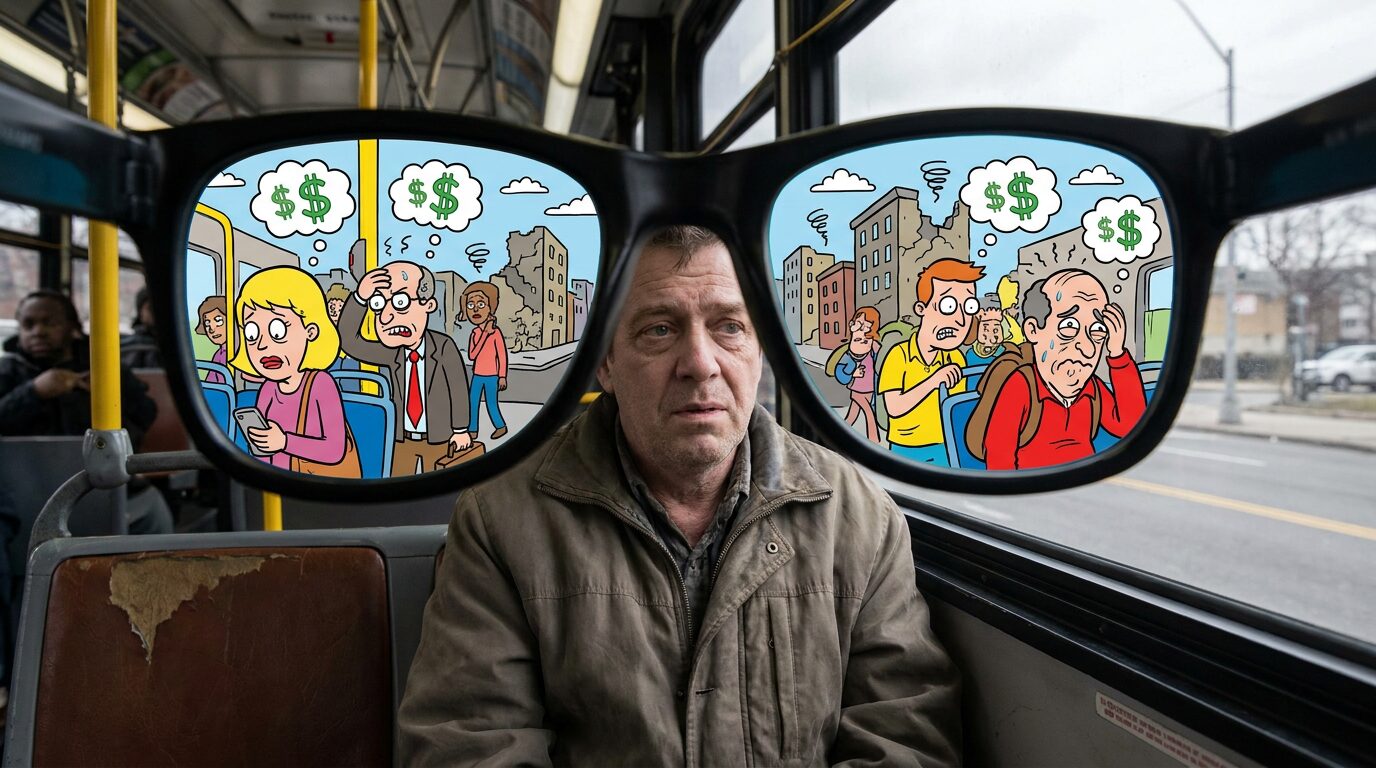
There is a scene in an early season of The Simpsons where Homer discovers he can get disability benefits by gaining weight. He does it cheerfully, methodically, and with complete sincerity. It is funny. It is also, if you slow down for a moment, a precise little cartoon about how workers navigate a system that offers them almost no other leverage. Nobody in 1993 was calling it political economy. They were laughing at Homer eating a bag of donuts in the bath.
That gap — between what the joke is and what the joke is about — is where animated satire has always lived. Family Guy, American Dad, Bob's Burgers, Archer, South Park, BoJack Horseman, even SpongeBob SquarePants in its stranger corners: these shows have spent years smuggling critiques of capitalism, addiction, gender, race, war, and institutional failure past an audience that showed up to watch cartoon people yell at each other. The mechanism is not subtle once you see it. But the question of whether it actually does anything — whether laughing at a problem is a step toward thinking about it, or a pressure-release valve that makes thinking about it unnecessary — is worth taking seriously.
The Trojan Horse Argument
The strongest case for animated satire is psychological before it is political. When a message arrives inside a joke, it bypasses a layer of defensive processing. You are not in argument mode. You are not being lectured. Your defenses are down because you came to be entertained. Researchers studying persuasion and narrative have a name for this: transportation. When you are absorbed in a story — even an absurd one — you tend to relax the kind of counter-arguing you would normally deploy against a position you find uncomfortable. Work in entertainment-education research[1] has found that people who consume a message through fiction update their beliefs more readily than people who receive the same message as an argument. A documentary about food industry practices may harden the viewer's existing position. A cartoon episode where a beloved buffoon stumbles into the same reality might actually move the needle.
Bob's Burgers is a good example of the gentler end of this. The show does not announce itself as a show about working-class economic precarity. It is about a warm, slightly chaotic family running a mediocre restaurant in a town that is mostly indifferent to them. But the texture of that life — the landlord conflict, the catering job taken out of desperation, the pride Bob takes in work that barely pays — is emotionally honest in a way that a lot of television explicitly about economic struggle is not. It does not editorialize. It just shows what that life looks like from the inside, and then it asks you to love these people. You end up caring about the structural conditions without anyone ever using the phrase 'structural conditions.'
American Dad, which is ostensibly a show about a CIA agent in the suburbs, has spent twenty years satirizing the particular American pathology of masculine certainty — the patriot who confuses his personal anxieties with national values, who performs toughness as a substitute for intimacy, who is capable of enormous love but buries it under ideology. Stan Smith is not a villain. He is a man who has been badly taught about what men are for, and the show keeps showing you the cost of that without ever becoming a lesson about it. The comedy does the emotional work. Understanding what has gone wrong in Stan follows naturally, without you having to sit through an argument about gender norms.
“When a message arrives inside a joke, it bypasses a layer of defensive processing. You are not in argument mode. You are not being lectured.”
The Pressure-Release Problem
Now for the less comfortable side. Satire has a known failure mode, and it is not that it goes too far. It is that it stops short of discomfort at exactly the moment discomfort would be useful. When you laugh at something, you have metabolized it — briefly, partially, in a way that can feel like having engaged with it when you have really just discharged some of the tension it produced. Humor researchers sometimes describe this in terms of incongruity resolution[3]: you experience a mismatch between expectation and reality, the punchline resolves it, and the resolution feels good. That resolution is the product. The issue it involved was the raw material.
Family Guy is an almost perfect test case for this failure mode. The show is genuinely willing to go places other animated shows are not. It has made explicit jokes about racism, homophobia, domestic violence, addiction, and the Catholic Church's abuse scandal. It is not squeamish. But it also has a complicated relationship with consequence. A lot of its jokes are structured so that the show gets credit for naming a dark thing while simultaneously insulating itself from any particular position on that dark thing. The joke acknowledges the reality but then dissolves into absurdism before it has to commit to anything. You laughed, you nodded, you moved on. Whether anything changed is another matter. Research on the effects of political satire[4] has found mixed results: exposure to satirical content can raise awareness and even increase cynicism toward institutions, but it does not reliably increase civic engagement or motivate behavior. Awareness and action are not the same thing, and comedy may be better at producing the first than the second.
There is also a version of this problem that is specifically about comfort. The Simpsons at its peak was doing something genuinely subversive — using a lovable idiot and his perpetually strained middle-class life to expose what that life actually costs people. But the show's warm familiarity has always been part of its appeal, and familiarity is a conserving force. By the time a satirical idea has become beloved enough to be a cultural institution, it is doing as much work maintaining the status quo as challenging it. Homer's powerlessness became a running gag. The gag became affectionate. The affection made the powerlessness feel normal and even cozy. That is a strange thing for a critique to do.
What Cartoons Can Do That Drama Cannot
It would be a mistake to treat this as purely a satire problem, because animation specifically does something that live-action drama cannot — it strips away the naturalistic detail that would trigger our pattern-matching for people like us or not like us. A cartoon character is already abstracted. That abstraction creates a kind of productive ambiguity. When BoJack Horseman depicts the internal experience of depression — the way it is not dramatic sadness but a low-grade, self-perpetuating flatness, an inability to believe that effort will matter — it can do so inside a horse man in a Hollywood parody world, which means the audience can sit with it without the instant social calculations that come from watching a specific human actor perform specific human distress. The distance the cartoon provides is also the intimacy it creates. It is close enough to be true and strange enough to be bearable.
Something similar is true of SpongeBob, which sounds like a stretch until you actually think about what that show is doing. SpongeBob is relentlessly optimistic in a world that does not reward optimism. His boss is an explicit capitalist villain. His neighbor's misery is largely economic. The show is aimed at children and it is very cheerful, but its underlying architecture is a fairly dark portrait of service labor, status anxiety, and the psychic cost of enthusiasm in an indifferent system. Kids absorb this emotionally before they have language for it. What exactly that does to them is a genuinely open question, but research on children's media and moral reasoning suggests that narrative exposure to social dynamics — even in fantastical form — does shape how children think about fairness, power, and belonging.
The Language That Gets Left Behind
There is one more thing worth naming. Cultural satire, including animated satire, does something to language. It generates shorthand. "Don't have a cow" was once a specific cultural signal. "Cool, cool, cool" from Community became a verbal tic for anxious deflection. The Simpsons alone has contributed enough phrases to ordinary speech that linguists have studied it seriously[2]. These phrases carry the emotional logic of the episode or character they came from, and they give people a quicker way to name something they might otherwise struggle to articulate. That is genuinely useful — it is one of the things good comedy does that mirrors what good psychological language does. It creates shared vocabulary for shared experience. Studies on humor and in-group communication have found that cultural references function as social bonding tools, creating a sense of common ground that can make harder conversations more accessible.
But shared vocabulary can also flatten. When "working for Mr. Burns" becomes the go-to phrase for exploitative labor relationships, you get the efficiency of a shared image and the loss of everything specific and structural about what that relationship actually involves. The cartoon does some of the work that political language or psychological precision might otherwise have done, and it does it faster and more pleasingly, which is not always better. This connects to something I think about a lot in the context of therapy language moving into ordinary communication and conflict: the shortcut is only as good as the concept underneath it. If the concept is solid, the shortcut extends it. If the concept was always a bit soft, the shortcut just spreads the fuzziness faster.
“The cartoon does some of the work that political language might otherwise have done — faster and more pleasingly, which is not always better.”
Better Together Than Apart
The framing in the original question — does animated satire improve society or make things worse by making light of serious issues — is probably the wrong frame. It assumes that comedy and seriousness are working against each other, when the evidence suggests they mostly work in sequence. Satire opens a door. It lowers defensiveness, creates emotional familiarity with difficult material, and sometimes gives people vocabulary they did not have before. What happens after the door opens depends almost entirely on what else is available to walk through it. A culture with rich public debate, good journalism, and decent civic infrastructure can use the emotional opening that satire creates. A culture that has mostly comedy and not much else ends up in the pressure-release scenario: the tension gets discharged into laughter and nothing particular follows.
The shows themselves seem dimly aware of this. BoJack Horseman eventually became explicit about the limits of irony as a coping strategy — the central character's whole arc is about a man who mistakes self-awareness for change. The Simpsons, at its best, never let Homer's foolishness fully absolve the systems that shaped him. Even Archer, which is mostly a show about extremely funny terrible people, occasionally stops to let the consequences of those people's selfishness land without a joke cushioning them. The best animated satire knows the joke is not the endpoint. The laugh is the permission slip, not the lesson. What you do with the entry is still up to you.
References
- Entertainment?Education and Elaboration Likelihood: Understanding the Processing of Narrative Persuasion (onlinelibrary.wiley.com)
Establishes that fiction-based messages produce greater belief updates than argument-based messages, supporting the article's transportation theory. - Language Log » Simpsons (languagelog.ldc.upenn.edu)
Confirms that The Simpsons has become a major source of idioms and catchphrases in everyday language, supporting the article's claim about satire's linguistic impact. - To Resolve or Not To Resolve, that Is the Question: The Dual-Path Model of Incongruity Resolution and Absurd Verbal Humor by fMRI (frontiersin.org)
Explains incongruity resolution in humor—how punchlines resolve mismatches between expectation and reality—the mechanism the article identifies in satire's pressure-release problem. - How Does Political Satire Influence Political Participation? Examining the Role of Counter- and Proattitudinal Exposure, Anger, and Personal Issue Importance (ijoc.org)
Documents mixed effects of political satire: raises awareness and cynicism but does not reliably increase civic engagement or motivate behavior.
About Owen Mercer
Owen Mercer writes about therapy concepts, emotional language, and the ways good psychological ideas get distorted once they hit self-help culture, social media, and ordinary conflict. His work focuses on separating useful insight from recycled jargon, false certainty, and emotionally sophisticated nonsense.
More like this

The Feeling of Not Having Enough Is Its Own Financial Problem
New research shows that feeling financially stretched — regardless of what you actually earn — quietly suppresses retirement savings in ways that have nothing to do with math.

You're Not Forgiving Too Slowly — You're Skipping a Step
Research on emotional processing suggests forgiveness doesn't stall because people won't let go — it stalls because they were never taught what has to happen first.

You're Not Faking Fine. You're Burning Through the Last of Your Resources.
A major 2025 meta-analysis found that pretending to feel emotions you don't is one of the fastest routes to depression — and the reason why changes everything about how you actually recover.