Your Brain Washes Itself at Night. Here's What Breaks the Drain.
A 2025 trial confirmed the brain flushes Alzheimer's proteins overnight — but the specific sleep conditions that make that flush work are messier, and more contested, than anyone is telling you.
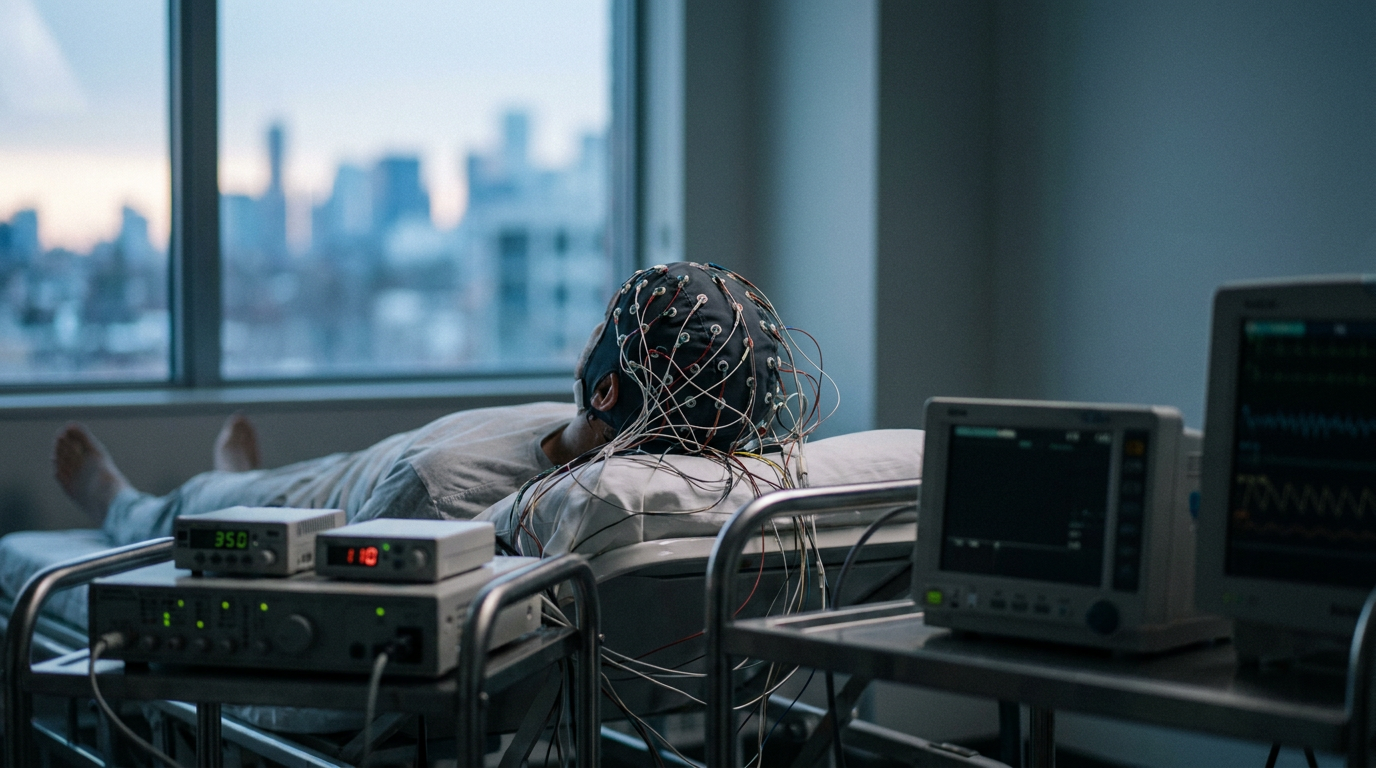
Here is a finding that has held up with unusual consistency over the past decade: the brain does, in a meaningful sense, wash itself while you sleep. The glymphatic system — a network of fluid-filled channels running alongside blood vessels, operated largely by star-shaped glial cells called astrocytes — drives cerebrospinal fluid through brain tissue during sleep, and that fluid carries out metabolic waste, including amyloid-beta and tau, the proteins most closely associated with Alzheimer's disease. This is no longer speculative. A 2025 randomized trial published in Nature Communications[4] added robust human evidence to what had been compelling but largely animal-based work, tracking glymphatic clearance markers before and after controlled sleep interventions and finding meaningful differences between well-rested and disrupted participants. The system is real. The clearing happens.
What is considerably less settled is the question of exactly when, and under what sleep conditions, this clearance runs most efficiently — and what specific disruptions to sleep architecture bring it closest to a halt. That question matters enormously, because the headlines that followed the 2025 trial were not wrong, exactly, but they were tidy in a way the science is not. Most of the coverage implied a simple relationship: sleep well, flush the drain, reduce your Alzheimer's risk. Sleep poorly, let the proteins accumulate. The mechanism supports that general framing. But the more granular imaging work emerging alongside and after the trial is revealing something less convenient — a picture in which the architecture of sleep, not just its duration, shapes the clearance process, and in which our ability to predict or optimize that architecture from the outside is still genuinely limited.
To understand why this distinction matters, you need to spend a moment with what sleep actually looks like from the inside. The brain does not simply power down for eight hours and run a uniform cleaning cycle throughout. It moves through a repeating, structured series of stages: lighter non-REM sleep, slow-wave sleep — also called N3, or deep sleep — and REM sleep, with each stage characterized by distinct electrical patterns, different neurochemical environments, and, it increasingly appears, different glymphatic dynamics. The popular version of glymphatic science has tended to locate almost all the important work in slow-wave sleep, partly because early rodent studies found the strongest clearance signal there, and partly because slow-wave sleep is where the brain produces its most synchronized, large-amplitude electrical oscillations, which are thought to help drive the pressure gradients that move fluid through tissue.
But the newer imaging work — relying on MRI techniques sensitive to cerebrospinal fluid movement and blood flow dynamics — is complicating that single-stage story. Some researchers are finding clearance-related signals in REM sleep that are stronger than expected. Others are pointing to the transitions between stages, particularly the precise patterning of how the brain moves between slow-wave and REM across the night, as potentially important for overall clearance efficiency. A few groups are examining the role of the so-called slow oscillation, the specific rhythmic firing pattern within slow-wave sleep, rather than slow-wave sleep as a whole. None of this invalidates the core finding. It does mean that "get more deep sleep" is a significantly less complete answer than it first appeared.
Why the Architecture Argument Changes the Risk Calculus
If glymphatic clearance were driven primarily by total sleep duration, the practical guidance would be relatively simple and already well-supported: sleep seven to nine hours, protect that time, reduce what fragments it. Duration still matters. That much appears solid. But if clearance is more tightly tied to specific architectural features — the proportion of slow-wave sleep, the regularity of slow oscillations within that stage, the sequencing of REM and non-REM across the night — then the picture becomes more complicated, because those features are not reliably captured by hours-in-bed alone, and they vary substantially across people and across life stages in ways that are not always obvious or correctable.
Slow-wave sleep declines with age[3], and it does so early and steeply, often well before people notice any cognitive change. A healthy 25-year-old might spend 20 percent or more of their night in slow-wave sleep. By the mid-sixties, that figure has typically dropped to somewhere between 5 and 10 percent, and sometimes lower. This decline is not merely a side effect of aging; it may be mechanistically upstream of some of the protein accumulation that characterizes Alzheimer's pathology, rather than simply accompanying it. The direction of causality here remains genuinely contested — amyloid buildup itself appears to disrupt sleep architecture, which could then worsen clearance, which could worsen accumulation further, which is the kind of feedback loop that is difficult to study cleanly in humans because you cannot watch someone's brain over forty years under controlled conditions.
“The decline in slow-wave sleep with age is not a minor footnote — it may be one of the mechanisms, not merely a symptom.”
What makes the architecture question practically important is this: several of the things that most reliably degrade sleep architecture are not the same things that most reliably reduce sleep duration. Alcohol is the clearest example. A drink or two close to bedtime can leave total sleep time relatively intact while significantly suppressing slow-wave sleep, particularly in the first half of the night when slow-wave sleep is normally concentrated. Sleep fragmentation from untreated sleep apnea presents a similar pattern — people with moderate-to-severe apnea often spend adequate time in bed and report feeling like they slept, while their slow-wave sleep is repeatedly interrupted, their slow oscillations disrupted, and their cerebrospinal fluid dynamics are perturbed by cycles of reduced oxygen and arousal. If architectural quality is what drives clearance, then a person who sleeps seven hours with frequent apneic events and a glass of wine most evenings may be doing meaningfully worse by their glymphatic system than their reported sleep duration would suggest.
What the Imaging Work Is Actually Showing
The most recent noninvasive work on glymphatic dynamics in humans relies on a combination of MRI techniques — phase-contrast imaging to measure cerebrospinal fluid flow at the aqueduct, newer sequences sensitive to fluid movement in perivascular spaces, and in some labs, EEG-fMRI coupling to link electrical sleep signatures to fluid dynamics simultaneously. These approaches are technically demanding and not yet standardized across research groups, which is one reason the findings are still somewhat fragmented. Different labs are measuring slightly different things, in slightly different populations, under slightly different conditions, and the results do not always cohere cleanly.
The signal that is emerging with some consistency is that glymphatic flow is not uniform across the night and appears to pulse with the brain's slow oscillations — the low-frequency, high-amplitude waves that characterize deep non-REM sleep — rather than simply tracking the presence of slow-wave sleep as a stage. This is a meaningful distinction. Two people could have similar proportions of N3 sleep on a polysomnogram while having substantially different slow-oscillation density or coupling quality, and preliminary evidence suggests those differences may correspond to differences in how efficiently fluid moves through perivascular spaces. Whether this translates into measurable differences in amyloid or tau clearance over longer time frames in humans is a question the field has not yet answered cleanly, largely because no one has yet built the longitudinal study design capable of answering it well.
REM sleep's role remains the more genuinely surprising open question. Early glymphatic models deprioritized REM partly because REM lacks the slow oscillations thought to drive fluid dynamics, and partly because early rodent work found the most dramatic clearance suppression with non-REM disruption. But some human imaging work suggests that cerebrospinal fluid flow during REM is not negligible, and may serve different functions — possibly related to the regional clearance of waste products generated by the intense metabolic activity of REM itself, during which the brain, despite the body being largely still, is running close to waking metabolic rates. The idea that different sleep stages contribute to clearance in different ways, rather than slow-wave sleep doing all the work, is plausible and gaining traction, but it remains at the compelling-hypothesis stage rather than the settled-finding stage.
The Factors That Break the Drain
“Alcohol, sleep apnea, and erratic sleep timing each degrade the architectural features of sleep in ways that duration alone does not capture — and may not compensate for.”
Setting aside the unsettled questions about which specific features matter most, the evidence on what reliably degrades sleep architecture — whatever the relevant features turn out to be — is considerably firmer. Alcohol suppresses slow-wave activity and disrupts the natural patterning of sleep stages, with the suppression typically concentrated in the first half of the night when slow-wave sleep would normally dominate. The rebound effect — more fragmented, lighter sleep in the second half — does not compensate for what was lost. Sleep apnea interrupts the consolidation of slow-wave sleep through repeated arousals, with the severity of the disruption scaling roughly with apnea severity. Untreated moderate-to-severe sleep apnea is one of the more consistent risk factors in the epidemiology of dementia, and the glymphatic disruption hypothesis offers one plausible mechanism for why, though the relationship is probably not fully explained by glymphatics alone.
Irregular sleep timing — sleeping and waking at substantially different hours across the week — appears to impair slow-wave sleep quality through mechanisms related to circadian misalignment, which disrupts the hormonal and thermoregulatory signals that help initiate and consolidate deep sleep. Chronic sleep restriction below six hours does predictable damage to both slow-wave sleep quantity and the brain's overall recovery capacity. And a factor that rarely makes the headlines: certain commonly prescribed medications significantly alter sleep architecture. Benzodiazepines and many non-benzodiazepine sleep aids can reduce slow-wave sleep even while increasing total sleep time, which is one of the more counterintuitive findings in clinical sleep medicine — a drug that helps you sleep longer may simultaneously be impairing the sleep that appears to matter most for glymphatic function. This is not an argument against medication where it is clinically appropriate; it is an argument for knowing what the trade-offs look like.
What Can Actually Be Done
The honest answer to what you can actually do to protect glymphatic function is shorter than most people want it to be, and it overlaps substantially with general sleep hygiene — not because the field has given up on nuance, but because the behaviors that protect sleep architecture reliably are largely the same ones that protect sleep in general. Treating sleep apnea is probably the highest-leverage intervention available for people who have it, given the scale of the architectural disruption it causes and the fact that effective treatment — whether CPAP, oral appliances, or positional therapy depending on severity — appears to restore some of the lost slow-wave consolidation. The evidence on this is not yet framed primarily in glymphatic terms, but the direction is consistent with the hypothesis.
Eliminating or substantially reducing alcohol within three to four hours of sleep has a measurable effect on slow-wave activity in controlled studies. Maintaining consistent sleep and wake times — including on weekends, which is where circadian disruption tends to accumulate — supports the hormonal conditions under which deep sleep is most robustly generated. Keeping the sleeping environment cool is not merely comfort preference; body temperature drop is one of the triggers for slow-wave sleep initiation, and sleeping in a warm environment is associated with reduced slow-wave activity. Regular aerobic exercise has one of the better evidence bases for augmenting slow-wave sleep specifically[1], not just total sleep time, though the effect size is moderate and the precise mechanisms are still being worked out.
There is a cottage industry of devices — EEG headbands, acoustic stimulators, transcranial electrical devices — that claim to enhance slow-wave sleep and, by implication, glymphatic clearance. Some of the acoustic stimulation work, which uses quiet tones timed to the phase of slow oscillations to amplify them, has shown modest positive effects on slow-wave activity in research settings. The jump from that finding to a commercial consumer product that reliably enhances glymphatic clearance and reduces dementia risk is a long one, and no product currently on the market has earned the right to make that claim with confidence. The science is interesting; the products are ahead of it.
The Honest State of the Question
“Knowing that the brain has a drain is not the same as knowing how to keep it fully open — and the gap between those two things is where most of the interesting science is still happening.”
There is a version of this story that is tidier and more satisfying: sleep matters, deep sleep matters most, here is exactly how to get more of it, here is how to measure whether you did. That version is available in any number of wellness publications and on the apps that come bundled with consumer sleep trackers. It is not wrong about the broad direction. But the specific architecture question — which features of sleep architecture drive clearance, in what proportions, through exactly what fluid dynamic mechanisms, with what measurable downstream effect on protein accumulation over years and decades — remains genuinely open in ways that the 2025 Nature Communications trial, important as it is, did not resolve. That trial confirmed the phenomenon. It did not close the mechanistic file. The imaging work that would let researchers follow a single person's glymphatic dynamics over years, linking architectural variation to protein accumulation to cognitive trajectory, does not yet exist in the form needed to answer the hard questions. What exists is a compelling and increasingly well-evidenced hypothesis with some behavioral implications that are worth acting on now, held together by a mechanistic picture that is still being filled in. That is where the science is. It is a respectable place to be.
References
- Exercise improves the quality of slow-wave sleep by increasing slow-wave stability (nature.com)
Shows that physical exercise can improve sleep quality by increasing slow-wave stability and sleep efficiency. - Sleep disorders increase the risk of dementia, Alzheimer’s disease, and cognitive decline: a meta-analysis (link.springer.com)
Meta-analysis establishing that sleep disorders like insomnia and sleep apnea increase risk of dementia and cognitive decline. - Slow-wave sleep declines with age (jamanetwork.com)
Demonstrates that slow-wave sleep declines steeply with age, from 20% at age 25 to 5-10% by the mid-sixties. - The glymphatic system clears amyloid beta and tau from brain to plasma in humans (nature.com)
2025 randomized trial providing robust human evidence that the glymphatic system clears amyloid-beta and tau during sleep through controlled interventions.
About Marcus Okafor
Marcus Okafor covers general wellness, brain health, cognitive aging, sleep, and the biology of staying sharp across a lifetime. His work traces how the body and mind maintains, loses, and sometimes rebuilds — from the nitty gritty science of your bones — to the strange frontiers of the glymphatic system flushing toxins overnight — to the way imagined conflict primes the same stress circuitry as the real thing.
More like this
Your Body Clock Is a Better Dementia Predictor Than Your Sleep Hours
A major study found that people with fragmented circadian rhythms had 2.4 times the dementia risk — and the mechanism points to something sleep duration alone can't fix.
Your Brain Has a Drain, and It Only Opens When You're Asleep
While you're unconscious, a hidden plumbing system floods your brain with fluid and hauls away the toxic waste that builds up while you think — and scientists are only beginning to understand what happens when it can't.
Lifting Weights Does Something to Your Brain That Running Simply Can't
New expert analysis confirms that aerobic and resistance training drive distinct changes in brain structure and chemistry — meaning the exercise routine most people follow may be protecting only half of what matters.