The Permission Slip a Dying Partner Gives — And What Nobody Else Sees
Some couples facing terminal illness quietly renegotiate the rules of their relationship before death arrives — and the people who judge what comes after never knew the conversation had already begun.
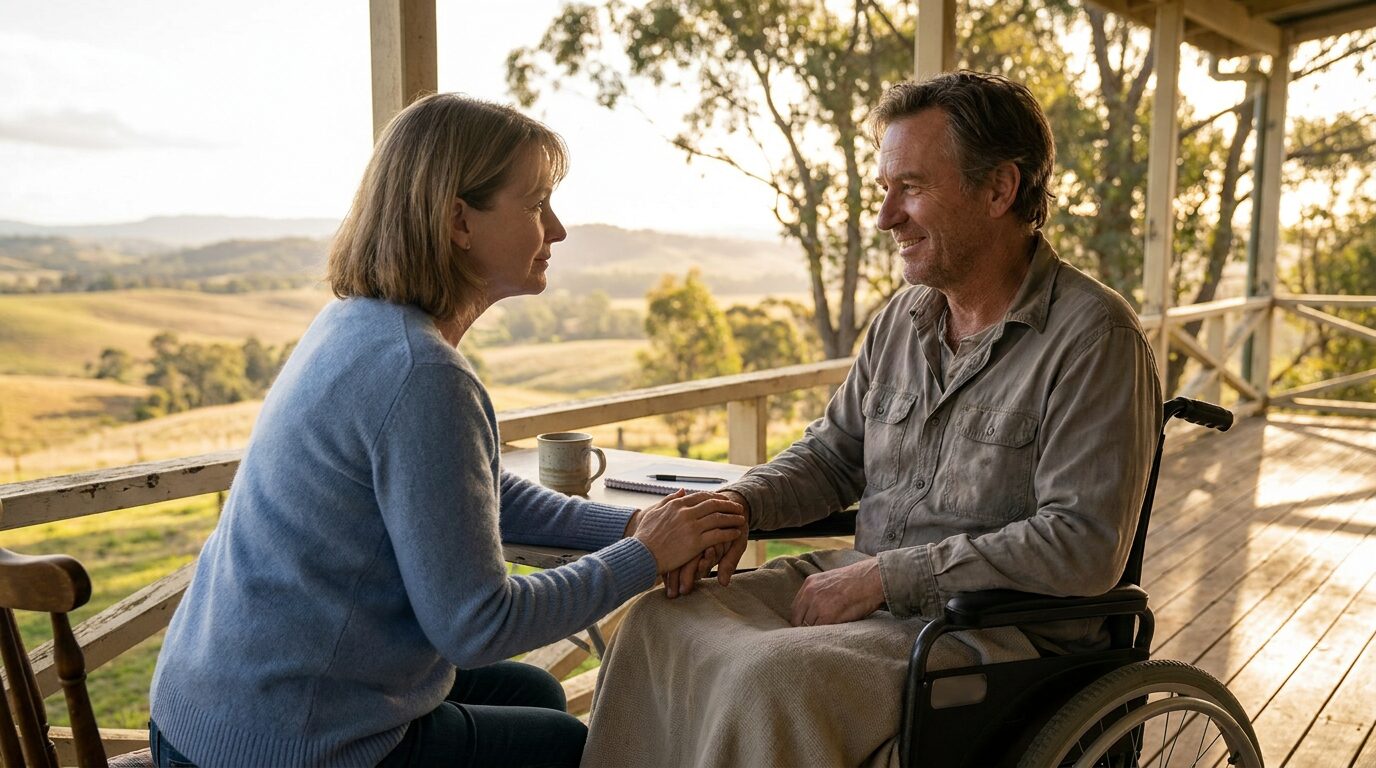
The widow starts dating eight months after the funeral, and the family group chat lights up. Seven months. Six. Someone mentions it at a holiday dinner with a studied neutrality that poisons the room. Nobody says the word too soon out loud, but it's in the air like a question no one wants to own. What none of them know — what she never figured out how to explain — is that the grief began the afternoon the oncologist said the word terminal. That the conversations happened at night, quietly, over months. That her husband asked her, specifically and more than once, not to be alone. That the two of them, together, made decisions that the family was never invited into.
Some couples facing terminal illness do something that most of their social world has no framework for: they negotiate the future of the surviving partner's emotional life while the dying partner is still present. Sometimes that means blessing a future relationship, abstractly. Sometimes it means inviting one into the present — a new connection, a support network, occasionally a sexual or romantic partnership — that begins before the death and continues after it. The form varies. What's consistent is the thing most people watching from the outside never see: that what looks like indecent speed is often the visible tip of a private process that started a long time ago.
Loneliness is not a neutral experience — it accelerates illness, compounds grief, and in widowhood specifically, it tends to arrive in a form that's been building for months or years before the death. The underlying premise in the grief literature is that a longer illness trajectory gives family members time for emotional and practical preparation, and that preparation, called anticipatory grief, is real and ongoing. One widow who lost her husband to cancer described beginning to grieve the day of his diagnosis — not giving up hope or love, she was careful to say, but accumulating grief, so that by the time death came she had, in her own words, sixteen months of grieving already under her belt. The outside world's timeline — death happens, mourning begins — doesn't match the interior one. It rarely does.
Grief counselors who work in palliative settings note that anticipatory grief can create space for intentional connection and shared meaning — time for unfinished business, relationship repair, expressions of love, legacy conversations. What gets less attention is that some of that "unfinished business" involves the surviving partner's future. The dying person has a stake in it too. They are often, quietly, trying to solve a problem: what happens to the person I love when I am gone?
The Gift the Dying Sometimes Give
There is a kind of care that moves in one direction by the end of a terminal illness — toward the patient, necessarily and appropriately. Spouse caregivers tend to maintain optimism and strong cohesion with their partner, while simultaneously repressing their own personal needs and feelings under the burden of care. The person who is dying watches this. The person who is dying knows what's coming for the person who stays. And some of them, in the months they have left, try to do something about it.
As one widow put it: people forget that when a spouse dies from cancer, the couple often had the conversations — not just one, but across weeks and months, in the private space of their home, giving each other permission to move forward: the dying partner accepting death, the surviving one accepting the life that would follow. Permission is the right word. It carries weight precisely because the relationship was real, the fidelity was real, and the permission is therefore meaningful — it's not an absence of grief, it's love moving forward through it.
For some couples, that permission takes a more active form. Rather than a deathbed blessing for some future unnamed relationship, the conversation becomes concrete: I want you to have someone now. I want to see you cared for. I don't want you learning to be alone for the first time when I'm already gone. This is where some couples arrive at consensual non-monogamy — not from ideology, not from dissatisfaction, but from love reorganizing itself around an unbearable constraint. Palliative care clinicians have observed that relationships at the end of life influence patients greatly, and that illness can enhance a patient's appreciation of the importance of loved ones and a wish to connect more deeply. For some dying partners, "connecting deeply" includes connecting the person they love to a support system sturdy enough to survive without them.
“What looks like indecent speed is often the visible tip of a private process that started a long time ago.”
What Anticipatory Grief Actually Does to a Relationship
It would be tidy to say that anticipatory grief — the grief that happens before the loss — serves as protective preparation, reducing the emotional blow when death finally comes. The evidence is more complicated. More recent empirical work indicates that pre-loss adjustment rarely substitutes for post-loss grief; researchers note that any "rehearsal" of bereavement cannot replicate the finality of death[3], and that continuing hope and caregiving responsibilities keep relatives emotionally invested until the very moment of loss. The grief before and the grief after are not the same grief, and one doesn't cancel the other.
Anticipatory grief commonly manifests as heightened psychological distress[1], including preoccupation with thoughts of death and separation, significant anxiety, mood instability, and impairments in daily functioning such as disrupted sleep and social withdrawal. The person living inside a terminal illness's long approach is not intact and waiting for the death to begin grieving. They are already exhausted, already in a kind of mourning, already negotiating the gap between the person who is still present and the life that will have to be built without them. That context matters when thinking about the decisions some couples make.
For some caregiving spouses, anticipatory grief intensifies anxiety, contributes to caregiver exhaustion, or leads to premature emotional detachment from the dying person[4] — shaped by caregiving demands, illness trajectory, attachment dynamics, and the availability of emotional and social support. Decisions made inside that pressure aren't made lightly. When a couple decides together to expand their support network — or their intimate circle — they are often doing so in direct response to that weight. The surviving partner is already carrying more than most people see.
The Architecture of Expanded Support
It's worth being precise about what "opening" a relationship under these circumstances can actually look like, because the word polyamory can carry assumptions that don't fit the terrain. Consensual non-monogamy takes numerous forms — polyamory, polyfidelity, open relationships[2], and others — each with different degrees of emotional commitment, sexual involvement, and relational structure. For couples in terminal illness contexts, the version that emerges is often quieter and more specific than any label suggests: a close friendship that deepens into emotional intimacy; a person who begins spending more nights, cooking dinners, sitting with the dying partner at appointments; a relationship that is honest, contained, and shaped around care more than anything else.
Some of these arrangements involve sexuality. Some don't. The dying partner may be present in them, grateful for them, or may have stepped back from physical intimacy due to illness and feel relief that their partner is not without that form of closeness. The specifics vary enormously. What's consistent is the structure underneath: these are negotiated arrangements, made with full knowledge by both partners, aimed at solving a real problem of care, connection, and continuity. That's a fundamentally different thing from infidelity, which operates through concealment and involves a betrayal of the primary bond rather than an extension of it.
The practical dimension is real too and shouldn't be sanitized away. Terminal illness affects individuals, but the line demarcating where one person begins and ends in a committed relationship is far more complicated than it appears — the tight weave of two people's lives means the selves merge in a long-term relationship and yet still remain separate. When the fabric starts to unravel on one side, the other side needs support from somewhere. A close friend who becomes a functional partner — in the logistical sense, in the emotional sense, in the practical everyday sense — is meeting a real need. That the relationship may also carry intimacy or care beyond friendship is often how deep support actually works. People who love each other sometimes fall into something harder to name. Inside a terminal diagnosis, some couples decide that naming it honestly is better than pretending it isn't happening.
The Timeline Nobody Else Shares
The cruelty of the outside judgment — too soon, too fast, disrespectful — is not just that it's wrong. It's that it applies a public timeline to a private reality the mourner lived through alone. The months when the relationship was renegotiated, when difficult conversations happened in hospital parking lots and 2 a.m. kitchens, when grief accumulated alongside ongoing love and ongoing presence — those months are invisible to everyone who wasn't in the room. The mourner emerges from them carrying a different kind of grief than the kind that announces itself at a funeral. Richer in some ways. More complex. Already partly metabolized.
What the observers see is a person dating. What they're looking at is the surface of something much older — a relationship that transformed while it was still alive, a grief that began at diagnosis, a love that tried to arrange itself so the person left behind wouldn't be destroyed by the leaving. There is no social script for this. The language we have — moving on, replacing, too soon — was built for a simpler story, one where love ends cleanly at death and grief is a tunnel you pass through before you're allowed to feel something else.
“The language we have was built for a simpler story — one where love ends cleanly at death and grief is a tunnel you pass through before you're allowed to feel something else.”
None of these arrangements are clean or painless. A new person who enters a dying couple's orbit carries their own grief too — grief at watching someone die, grief at the complex position they occupy, sometimes guilt at the role they're asked to hold. Attachment-informed work in grief counseling offers insight into how relational bonds shape the intensity and form of grief response, and that applies to every person in the system, not just the primary mourner. The expanded network isn't a solution to grief. It's a structure that might make grief survivable for more than one person.
What This Is Actually About
None of this is an argument for any particular arrangement. Plenty of couples facing terminal illness choose radical monogamy — a closing inward, a turning toward each other with everything they have, a decision that the time remaining is too precious to open to anyone else. That is also a form of care. The more accurate question isn't what qualities a surviving partner should have, but how the couple — as a unit — navigates the illness together. The answer is going to look different for every couple, shaped by their history, their attachment, their fears, and what they believe love is actually for.
What's harder to justify is the judgment that gets leveled from outside, in the absence of information about what the couple decided for themselves. The dying partner had agency. They used it. In some cases they used it to try to ensure that the person they loved most would be held by someone after they were gone. Calling that a betrayal of love requires misreading it almost completely. It is, in its own strange and unglamorous way, love doing the most deliberate thing it knows how to do: making arrangements.
References
- From Fear to Hope: Understanding Preparatory and Anticipatory Grief in Women with Cancer—A Public Health Approach to Integrating Screening, Compassionate Communication, and Psychological Support Strategies (pmc.ncbi.nlm.nih.gov)
Documents that anticipatory grief manifests as heightened psychological distress including anxiety, mood instability, and disrupted functioning in loved ones of dying patients. - Open Relationships, Nonconsensual Nonmonogamy, and Monogamy Among U.S. Adults: Findings from the 2012 National Survey of Sexual Health and Behavior (pmc.ncbi.nlm.nih.gov)
Provides taxonomy of consensual non-monogamy forms—polyamory, polyfidelity, open relationships—that the article uses to frame relationship structures in terminal illness contexts. - Anticipatory grief (en.wikipedia.org)
Establishes that anticipatory grief cannot replicate the finality of actual death, supporting the article's claim that pre-loss grief doesn't substitute for post-loss grief. - The National Board for Certified Counselors (nbcc.org)
Describes how anticipatory grief in caregivers can lead to premature emotional detachment from the dying person, illustrating the psychological pressures couples navigate.
About Elena Rivera
Elena Rivera writes about the hidden architecture of relationships — how attachment shapes conflict, why friendships quietly collapse without anyone deciding to let them, and the structural forces that make intimacy harder to maintain than most people expect. Her work focuses on what research reveals about the things people feel but rarely have language for in their closest relationships.
More like this

Ethical Unicorn Hunting Is Possible — But Almost Nobody Does It Right
Wanting a shared partner isn't the ethical failure. Building a triad where one person's exit requires two people's permission is.

The Hierarchy in Your Poly Relationship Is Hurting a Person You Chose to Love
Studies on hierarchical polyamory keep finding the same thing: secondary partners report lower attachment security and lower satisfaction — and calling the arrangement ethical doesn't change the math.

The Opening Agreement You Made Isn't the One You're Actually Living By
Most couples negotiate their open relationship once, then renegotiate it through behavior — and the gap between those two versions is where real harm quietly accumulates.