Anticipatory Grief
Anticipatory grief is the emotional mourning that starts before a loved one dies, often during a terminal illness, helping families prepare for loss and shaping their well-being.
Not to be confused with: Pre-loss Adjustment
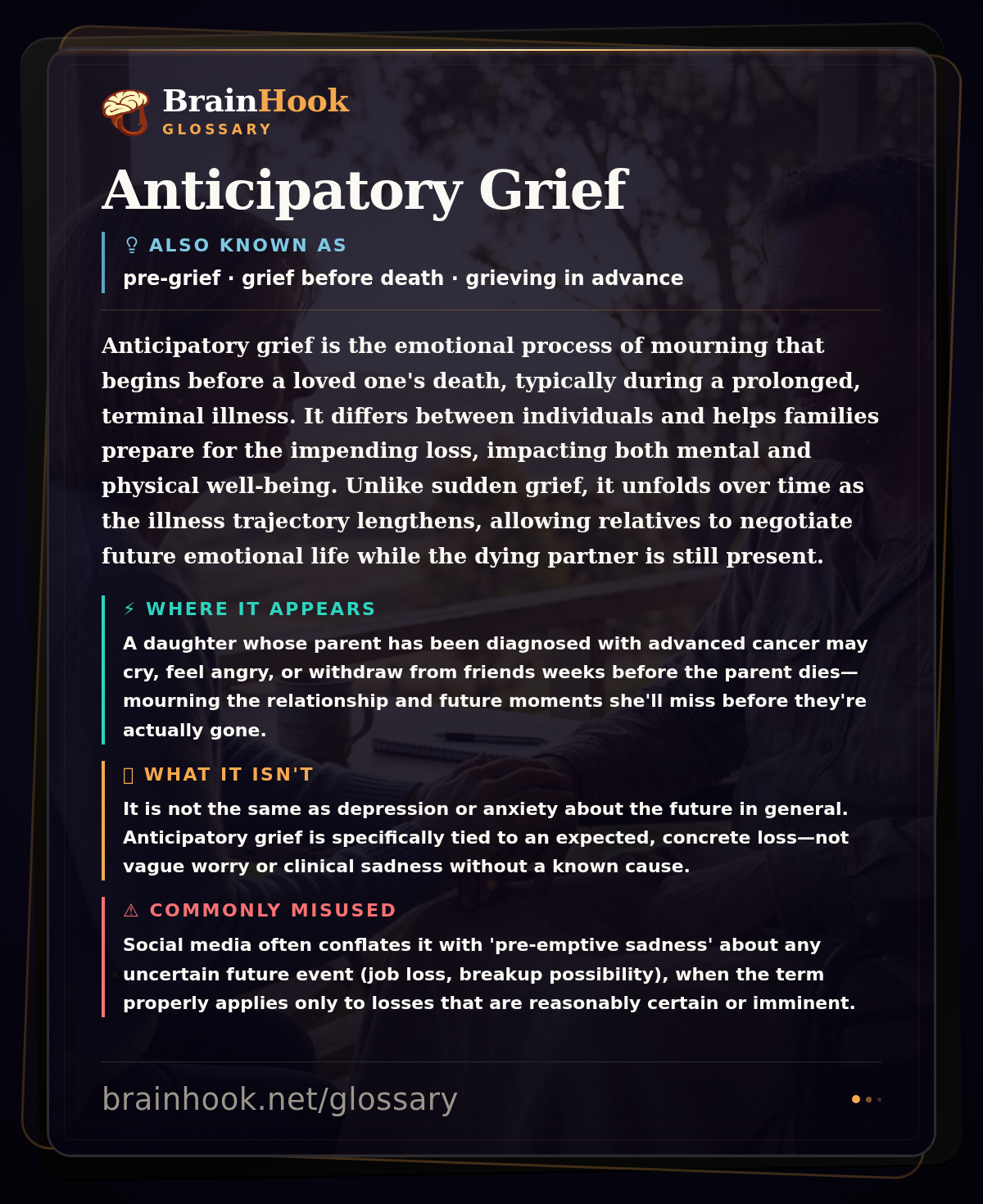
Anticipatory grief is the emotional process of mourning that begins before a loved one's death, typically during a prolonged, terminal illness. It differs between individuals and helps families prepare for the impending loss, impacting both mental and physical well-being. Unlike sudden grief, it unfolds over time as the illness trajectory lengthens, allowing relatives to negotiate future emotional life while the dying partner is still present.
What this means in real life
A daughter whose parent has been diagnosed with advanced cancer may cry, feel angry, or withdraw from friends weeks before the parent dies—mourning the relationship and future moments she'll miss before they're actually gone.
What it isn’t
It is not the same as depression or anxiety about the future in general. Anticipatory grief is specifically tied to an expected, concrete loss—not vague worry or clinical sadness without a known cause.
Commonly misused online
Social media often conflates it with 'pre-emptive sadness' about any uncertain future event (job loss, breakup possibility), when the term properly applies only to losses that are reasonably certain or imminent.