Pre-loss Adjustment
Pre-loss adjustment is the grief experienced before an impending loss, serving as protective preparation that rarely replaces the final emotional blow when death occurs.
Not to be confused with: Anticipatory Grief
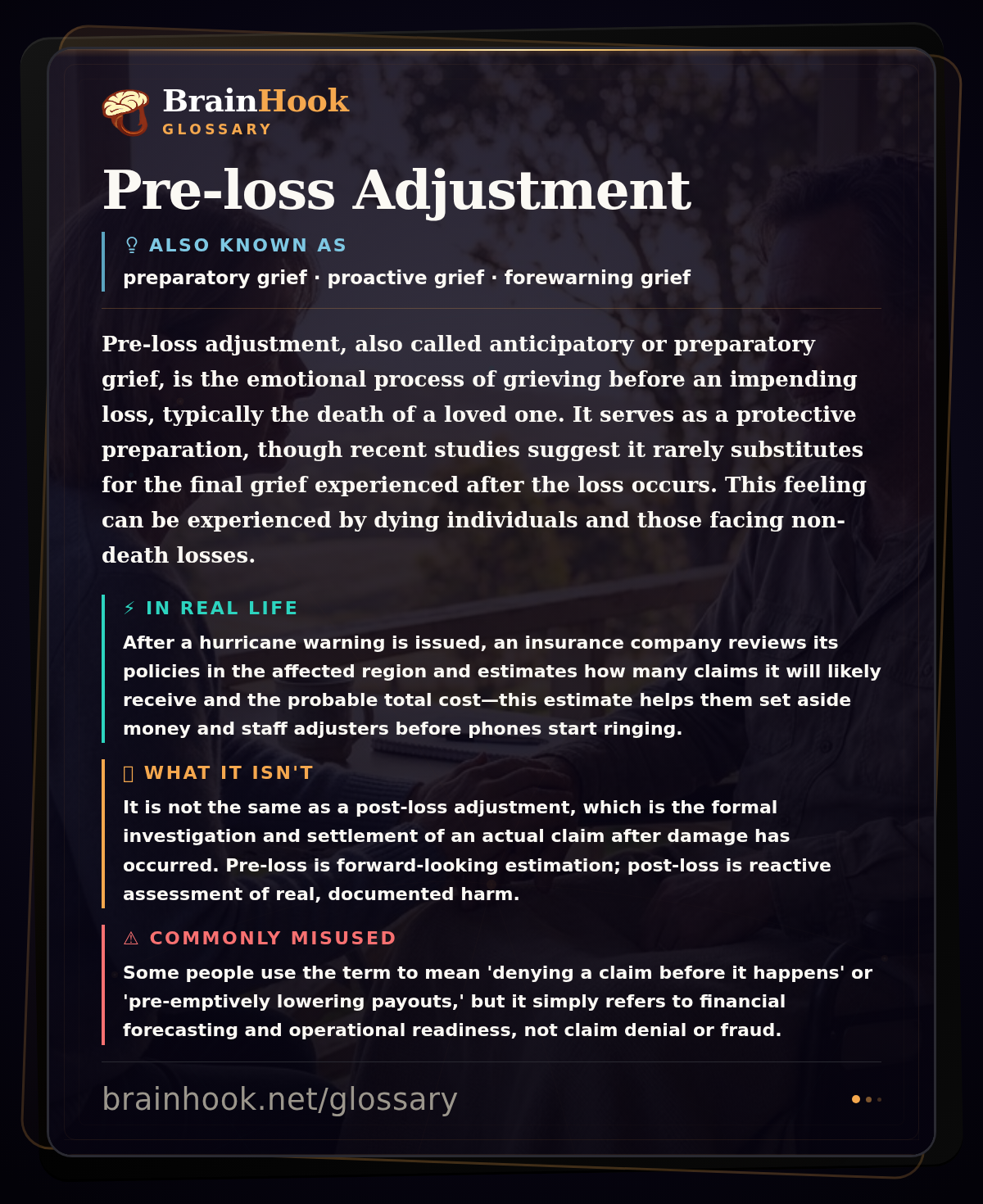
Pre-loss adjustment, also called anticipatory or preparatory grief, is the emotional process of grieving before an impending loss, typically the death of a loved one. It serves as a protective preparation, though recent studies suggest it rarely substitutes for the final grief experienced after the loss occurs. This feeling can be experienced by dying individuals and those facing non-death losses.
What this means in real life
After a hurricane warning is issued, an insurance company reviews its policies in the affected region and estimates how many claims it will likely receive and the probable total cost—this estimate helps them set aside money and staff adjusters before phones start ringing.
What it isn’t
It is not the same as a post-loss adjustment, which is the formal investigation and settlement of an actual claim after damage has occurred. Pre-loss is forward-looking estimation; post-loss is reactive assessment of real, documented harm.
Commonly misused online
Some people use the term to mean 'denying a claim before it happens' or 'pre-emptively lowering payouts,' but it simply refers to financial forecasting and operational readiness, not claim denial or fraud.