Tapping Your Card Doesn't Feel Like Spending — That's by Design
A new construct called 'Spendception' goes deeper than the old cashless effect story — and the mechanism it names says something uncomfortable about how modern payment systems are actually designed.
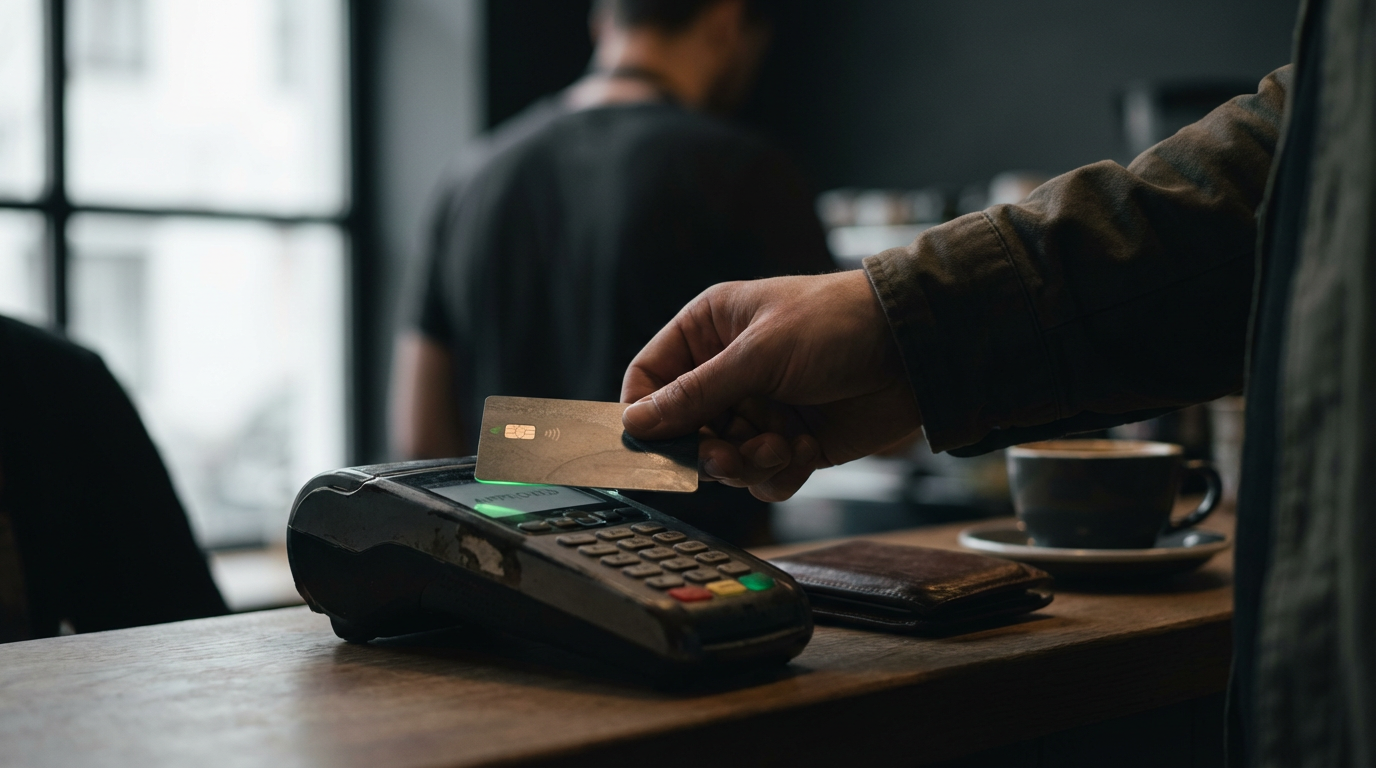
Think about the last time you handed someone a twenty-dollar bill for something you didn't especially need. There's a small, noticeable moment in that transaction — a breath of reluctance, maybe, or a quiet internal note that you are exchanging something real for something else. Now think about the last time you tapped your phone at a coffee counter without looking up from your conversation. Those two experiences feel almost categorically different, and not just in speed or convenience. One of them feels like spending. The other one barely feels like anything at all.
Researchers have been circling this observation for years under the umbrella of what's loosely called the cashless effect — the well-documented tendency for people to spend more freely when physical money isn't changing hands. The mechanism is usually described in terms of psychological pain: cash produces a distinct sensation of loss, a kind of spending pain[1] that slows you down, and digital payments dull that sensation. Useful framing. Not wrong. But also, it turns out, not quite complete.
A 2025 paper published in MDPI[3] introduced a construct with an odd, sticky name: Spendception. The term is doing something more specific than the cashless effect story typically does. It's not just that digital payments hurt less. It's that they produce a layered emotional detachment — a kind of nested unreality — that removes the psychological resistance to spending in ways that feel almost architecturally deliberate. The researchers were interested not only in whether digital payments change behavior, but in how the experience of paying gets systematically hollowed out, and whether that hollowing-out is accidental or designed.
The answer, if you follow the logic of the construct, is mostly the latter. And once you see the mechanism, a lot of ordinary financial behavior starts looking less like personal weakness and more like a predictable response to a system that was quietly optimized to produce it.
What Spendception Actually Describes
The cashless effect was always a reasonable shorthand, but it collapsed several distinct psychological processes into one phrase. Spendception tries to separate them out. The construct identifies something like a layering problem: each step you move away from physical currency adds another layer of abstraction between you and the felt reality of spending money. Cash is concrete. A debit card is one layer removed. A credit card is further. A digital wallet stored on a phone is further still. Buy-now-pay-later schemes, installment payments, and subscription auto-renewals push the experience of spending so far from the moment of enjoyment that the two barely feel connected at all.
This layering isn't just a neutral feature of modern payment technology. Each layer actively reduces what researchers in related fields call payment salience — the degree to which the act of paying registers as meaningful and worth slowing down for. When paying becomes invisible, or nearly so, the internal friction that normally moderates spending behavior drops alongside it. You are still spending. The math is identical. But the emotional experience of spending has been engineered to feel as close to nothing as the technology allows.
“The math of spending is unchanged. What changes is whether spending feels like anything at all.”
What the Spendception framing adds to the older research is an emphasis on intention. The abstraction layers in modern payment systems didn't emerge randomly. They were designed, iterated, and optimized by teams whose stated goal was often to reduce checkout friction — an innocent enough phrase that, translated into behavioral terms, means reducing the psychological signals that make people stop and reconsider. Faster checkout is a user experience win. It is also, functionally, a reduction in the moments where spending resistance naturally occurs.
The Brain's Accounting Is Not Neutral
There is a substantial body of work in behavioral economics on what's sometimes called mental accounting — the way people mentally categorize money into informal buckets that don't behave like the rational unified currency economists often assume. Cash feels different from card credit not because people have made a careful assessment but because the brain encodes them differently. Physical currency carries a kind of representational weight that a tap or a swipe doesn't. Research in this area consistently finds that people who pay cash tend to remember their purchases more accurately[2], feel more attached to the things they bought, and show more reluctance to overspend — not because they are more disciplined but because the payment experience itself left a stronger trace.
Digital payments, particularly the seamless contactless variety, leave a weaker trace. The memory of the transaction is shallower. The emotional registration is lower. And when that registration is low, the spending doesn't feel real in the same way, which means the normal self-regulatory loop — the one where you notice you've spent a lot, feel some degree of discomfort about it, and adjust — activates later, less often, or not at all. Spendception names this not just as a quirk of memory but as a structural feature of how these systems operate.
It's worth noting what this is not. It is not a story about weak-willed people who can't handle credit cards. It is a story about universal cognitive architecture being met by systems specifically designed to work around it. Almost everyone who uses modern payment technology experiences some version of this effect. The difference in outcomes across people comes down to awareness, financial situation, baseline habits, and — crucially — whether any external structure compensates for the reduced internal friction.
The Subscription Layer Is Its Own Category
If contactless payments represent one end of payment abstraction, recurring auto-charges represent something else entirely. Subscriptions do not merely reduce friction at the moment of payment — they eliminate the moment of payment almost completely. The charge happens in the background, often while you are asleep, attached to a card you may not think about daily, for a service you may not have used this month. The only signal that money left your account is a line in a statement you may or may not review.
“Subscriptions don't reduce the pain of paying. They schedule it for a moment when you're not watching.”
This is where Spendception becomes genuinely strange to think about, because the emotional detachment reaches its logical endpoint: spending that produces no felt experience whatsoever. Research on subscription economics consistently shows that people dramatically underestimate their total monthly subscription spend[4]. Not because they're careless, but because each individual charge is small enough to avoid scrutiny and the aggregate never presents itself as a single painful number. The human brain is quite good at registering large, discrete losses. It is much worse at tracking the slow bleed of a dozen small recurring ones.
Companies understand this. The entire subscription model is partly built on the finding that customers who might resist a large upfront price will absorb the same amount in monthly increments almost indefinitely, especially once the payment becomes automatic and invisible. The exit is also deliberately designed to be harder than the entry — cancellation flows buried in menus, retention offers inserted mid-process, the quiet psychological bet that most people will tolerate a service they've half-forgotten rather than do the small work of ending it.
Why Financial Avoidance Gets Worse in a Cashless World
There is a well-documented phenomenon in financial psychology that researchers sometimes call financial avoidance: the tendency to not look at account balances, skip budget reviews, ignore card statements, and generally maintain a strategic not-knowing about where things stand. It tends to cluster with financial anxiety — the more afraid someone is of what the numbers will show, the more motivated they become to avoid finding out. This is not laziness. It is a self-protective response, and a deeply human one.
What Spendception suggests is that digital payment systems may be quietly worsening this loop. When spending doesn't feel like anything — when individual transactions leave no emotional trace — the overall shape of your spending becomes harder to track from the inside. You can't rely on felt memory to give you a rough sense of whether you've been spending heavily this month. The internal accounting that used to be imprecise but present has been further degraded by abstraction. So the person who was already anxious about money and inclined to avoid their accounts now also lacks the ambient felt sense of their own behavior that cash transactions used to provide.
This creates a genuinely difficult situation: the payment technology has removed both the friction that slows spending and the emotional residue that might prompt a recalibration later. You spend more easily. You remember it less vividly. The discomfort that would normally motivate a self-audit arrives later, if it arrives at all. And for someone already predisposed to financial avoidance, later might mean never — not out of irresponsibility but because the system has been arranged so that the moments of natural reckoning keep getting pushed further away.
“Cash used to be its own accounting system, imprecise but felt. We gave that up for convenience and didn't notice what left with it.”
What You Can Actually Do With This
The honest answer is that you are probably not going back to cash, and nobody is seriously suggesting you should. The convenience of digital payments is real and the argument for eliminating it on psychological grounds is a hard sell. But understanding Spendception as a structural feature rather than a personal failing does open up some practical angles that don't require returning to 1987.
The most useful intervention the research points toward is reintroducing friction deliberately, at the design level of your own financial life rather than relying on the felt experience of transactions that have been optimized to feel like nothing. That can look like a lot of things. Some people set up a rule that any purchase above a certain threshold requires a separate confirmation step — a second log-in, a brief wait, a manual note. Not because the rule will catch every impulse but because it recreates a moment of registration that seamless payment design removed. Others maintain a rough weekly spending audit not to punish themselves but to give the numbers a chance to feel real again, to reattach the abstract line items to something that registers emotionally.
On subscriptions specifically, the evidence is fairly clear that periodic audits produce meaningful savings for most people — not because people are consciously hiding the charges from themselves but because the structure of subscription billing is built to prevent aggregation. Pulling all recurring charges into one visible list, occasionally, does something the individual monthly charges cannot: it makes the total feel like a number instead of a series of imperceptible drips.
The Deeper Discomfort
What makes Spendception uncomfortable as a concept is the implication sitting at its center. Personal finance culture spends enormous energy on self-discipline, habits, mindset, and behavior change — all of which put the locus of control firmly inside the individual. That framing is partly right and partly self-serving, because it draws attention away from the fact that the environments shaping financial behavior are not neutral. They are designed. The checkout flow on a retail app, the auto-renewal default, the one-tap purchase button, the invisible background subscription charge — these are not accidents of technology. They are the product of deliberate optimization toward a specific outcome, and that outcome is more spending with less resistance.
None of that makes self-awareness useless. Understanding why tapping your card feels like nothing — understanding that the feeling is manufactured, not incidental — is still genuinely valuable. It changes what you're working with. Instead of concluding that you have no impulse control or no financial discipline, you can recognize that you are navigating a payment environment that has been specifically tuned to produce the behavior you're trying to moderate. That is a different problem, and it points toward different solutions: structural ones, environmental ones, friction-adding ones, not just motivational ones. The behavior you want to change was designed into the system. The change probably needs to be designed too.
References
- Paying in a blink of an eye: it hurts less, but you spend more (sciencedirect.com)
Establishes the concept of 'spending pain' as the psychological mechanism underlying the cashless effect that the article builds upon. - remember their purchases more accurately (www-2.rotman.utoronto.ca)
Provides research evidence that cash payments produce stronger memory encoding and greater reluctance to overspend compared to digital payments. - Spendception: The Psychological Impact of Digital Payments on Consumer Purchase Behavior and Impulse Buying (mdpi.com)
Introduces the Spendception construct that the article uses as its central framework for explaining layered emotional detachment in digital payments. - Subscription Service Statistics and Costs (crresearch.com)
Documents that consumers dramatically underestimate their total monthly subscription spending, supporting the article's claim about subscription payment invisibility.
About Priya Shah
Priya Shah writes about the psychology of money — why financial threat hijacks the same attentional systems as physical danger, why saving feels impossible when the brain is running triage, and how scarcity reshapes cognition in ways that compound over time. Her work focuses on what's actually happening neurologically and emotionally underneath the surface of financial behavior.
More like this

You're Not Canceling Netflix. You're Taking Back Control.
A new consumer study reveals that people aren't cutting back on spending — they're fleeing a specific feeling, and psychology has a precise name for it.

Retail Therapy Isn't Weakness. It's a Regulation Strategy That Costs Too Much.
A 2025 study confirmed what stressed shoppers already knew: emotional spending is a deliberate regulation strategy — which raises an uglier question about why it's often the most available one.
Your Unpredictable Paycheck Is Rewriting How Your Brain Prioritizes Everything
New research confirms what millions of gig workers already feel in their bodies: income volatility isn't a cash-flow problem — it's a cognition problem, and it's reshaping what the brain treats as real.