Every Lebanon Ceasefire Gets the Same Treatment: Israel Bombs Through It
Israel struck Lebanon again today, killing dozens more — and Iran answered by closing the Strait of Hormuz, threatening to unravel the fragile U.S.-Iran accord before the ink was dry.
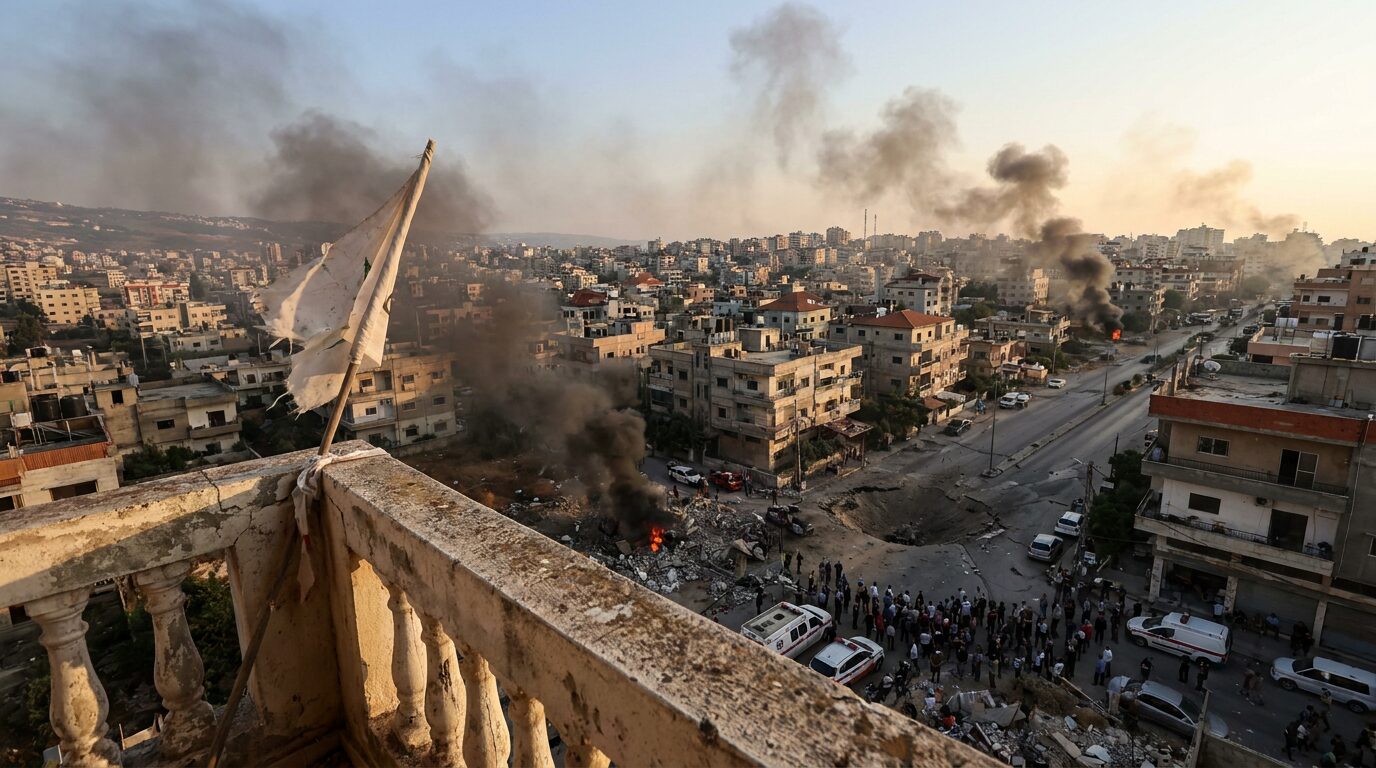
There is a ritual to this now. A ceasefire is announced. Officials on multiple continents use words like "fragile" and "historic" and "hopeful." Then Israel strikes Lebanon, and the bodies are counted, and the international community issues a statement, and everyone resets for the next round. Today is another round.
On Saturday morning, Israeli strikes on southern Lebanon killed at least 16 people, including two children, hours after reports emerged of a ceasefire agreement there. That was the opening salvo. It followed a day in which Israeli airstrikes had killed at least 47 people in Lebanon since midnight, the Lebanese health ministry reported.[2] Iran dealt two quick blows to the interim agreement with the United States on Saturday, angered by Israel's continued attacks in Lebanon, saying it had closed the Strait of Hormuz and announcing that while its negotiators were going to Switzerland for talks, not much is likely to happen there.
The mechanism underneath this is not complicated. Israel, which was not consulted in the negotiations that led to this week's U.S. memorandum of understanding with Iran, has bristled at the apparent requirement that it halt its campaign in Lebanon. Netanyahu's government has treated every ceasefire as a suggestion, every international rebuke as background noise, and every dead Lebanese civilian as, at most, a talking point to be managed. This is not a new policy. It is a consistent one.
The Ceasefire Israel Never Intended to Honor
To understand today, you need the context that Western media keeps struggling to provide. The November 2024 ceasefire — the one that was supposed to end the Israel-Hezbollah war — was violated almost from the start.[3] The United Nations Interim Force in Lebanon (UNIFIL) reported that Israel has violated the ceasefire more than 10,000 times[4] since November 2024. That is not a typo. Ten thousand violations. Since the ceasefire came into force, the Lebanese Armed Forces have recorded almost daily violations and the Israel Defense Forces have been quoted as confirming over 500 airstrikes on what it alleges are Hezbollah targets.
The UN has publicly documented four incidents[1] of projectiles fired by armed groups in Lebanon towards Israel during and after the ceasefire, none of which resulted in casualties. Lebanese authorities report that 331 people have been killed and 945 injured since the ceasefire began. The asymmetry is stark, and it matters for understanding what "ceasefire violations" actually means in practice.
“Ten thousand ceasefire violations by one side. Four rocket incidents by the other, with zero casualties. And yet the international conversation treats this as a dispute between two equally intransigent parties.”
The UN Special Rapporteur on extrajudicial executions, Morris Tidball-Binz, put it plainly: "This is not an isolated incident but part of a disturbing pattern of lethal strikes in populated areas by Israel, and of total disregard for the ceasefire and for Lebanese peace efforts." He went further, stating that these repeated attacks on civilians and civilian objects are war crimes and a violation of the UN Charter. The UN rights office confirmed that at least 127 civilians had been killed in IDF strikes in Lebanon since the Israel-Hezbollah ceasefire took effect a year ago.
The destruction was carried out by the Israeli military with manually laid explosives and bulldozers both before and after a ceasefire between Israel and Hezbollah that took effect on 27 November 2024, while the Israeli military had full control of the relevant areas and without apparent "imperative military necessity" — the standard required under international humanitarian law to justify the destruction of civilian or cultural property outside the context of attacks. Amnesty International concluded these actions violated applicable rules of international humanitarian law.
The Hormuz Play: What Iran's Closure Actually Means
Iran's response today was to pull the most powerful lever it has. Iran's top joint military command said on Saturday morning that it will close the Strait of Hormuz, a major oil trading corridor, due to ongoing Israeli strikes in Lebanon during a ceasefire agreement. The Iranian military's statement framed it explicitly as a consequence of American complicity: Iran's Khatam al-Anbiya Central Headquarters said that because the U.S. has failed to rein in Israel's attacks elsewhere in the region, the temporary peace deal had been violated.
The strategic weight of this move is real. The Strait of Hormuz provides the only sea passage from the Persian Gulf to the open ocean and is one of the world's most strategically important choke points. During 2023–2025, 20% of the world's liquefied natural gas and 25% of seaborne oil trade passed through the strait annually. It is a major route of petroleum products for Europe and Asia and is critical for Europe's energy supply. It is also the only maritime route for several Gulf countries including the UAE, Qatar, Bahrain, Kuwait, and Iraq, and disruption to the strait can cause severe supply shortages.
The immediate picture is murky in the way that modern geopolitical crises always are — everyone with a stake in a different answer is issuing contradictory statements. The claim directly contradicts comments made just hours earlier by Iran's foreign ministry, which told Tasnim that shipping through the strait was "operating normally" and denied any closure. U.S. Vice President JD Vance told Fox News in a live interview that "the straits really are open," pointing to ongoing efforts to keep shipping lanes clear. He said: "We are not seeing any evidence that the Iranians are still closing down the Strait of Hormuz." Meanwhile, U.S. Central Command said Saturday that passage through the strait "increased" as U.S. forces "continued operating in the general area to support freedom of navigation," claiming 55 merchant ships transited, moving more than 17 million barrels of oil to global markets.
The conflicting signals are themselves data. When a crisis produces this many simultaneous and incompatible official statements, it usually means the situation is genuinely unstable and that multiple powerful actors are trying to shape perception faster than facts can travel. Tasnim is a semi-official Iranian news agency associated with the country's Islamic Revolutionary Guard Corps, meaning its reporting often reflects military or hardline positions rather than unified government policy. Iran's government and its military are not necessarily speaking with one voice — which is precisely what makes this moment dangerous.
Netanyahu's Veto Over American Diplomacy
Here is the structural problem that no amount of careful phrasing will obscure: Israel is not a party to the U.S.-Iran memorandum of understanding. It did not sign it. It does not endorse it. And yet its actions — bombing Lebanon while ceasefire negotiations are supposedly in progress — have repeatedly threatened to detonate it. U.S. Vice President JD Vance was initially set to travel to Switzerland for a first round of technical talks with Tehran on Friday, but the negotiations were postponed as Iran sought guarantees that hostilities in Lebanon would end. Iran's conditions for sitting at the table include Israel stopping its strikes. Israel kept striking. Vance canceled his trip.
This is not an accident of miscommunication. Israeli Prime Minister Benjamin Netanyahu asserted that the U.S.-Israel-Iran ceasefire does not apply to Lebanon, contradicting mediator Pakistani Prime Minister Shehbaz Sharif's announcement. CBS News spoke to diplomats who agreed that initially President Donald Trump had included Lebanon in the ceasefire, and even Israel had initially agreed to these terms. However, the United States changed its position after a phone call between Trump and Israeli Prime Minister Benjamin Netanyahu. One phone call. That is how quickly the terms of a regional peace deal can be rewritten.
“The United States changed its position on including Lebanon in the ceasefire after a single phone call between Trump and Netanyahu. That is not diplomacy. That is a veto.”
What this reveals is not just the Netanyahu government's bad faith — that is well established at this point — but the structural dependency the United States has built into its own foreign policy. When a foreign leader can unilaterally alter the terms of an American-brokered peace agreement with a phone call, the U.S. is not conducting diplomacy. It is providing diplomatic cover. Israeli officials have voiced anger at the U.S.-Iran pact, saying it does not go far enough to address Israeli concerns over Iran's nuclear programme. But a government that refuses to honor agreements it dislikes while expecting the United States to shield it from consequences is not a partner. It is a client extracting unconditional support.
The Pattern Is the Policy
By mid-2026, more than 3,500 women, men, and children were killed by Israeli strikes in Lebanon between March 2 and June 4 of this year, according to Lebanon's Ministry of Public Health, which said more than 10,000 Lebanese people had also been wounded during that time period. That is on top of the casualties from the November 2024 ceasefire period. The war has precipitated a still-developing humanitarian crisis, resulted in deaths of more than 3,700 people from Israeli strikes in Lebanon, seen the forced displacement of over 1 million people — more than 20% of the country's population — and entailed the deployment of matériel and tactics that potentially constitute war crimes or crimes against humanity.
Middle East Institute senior fellow Brian Katulis noted that multiple ceasefires had been breached since November 2024. The latest ceasefire went into effect on April 17 and was renewed on Thursday. "These ceasefires between Israel and Hezbollah essentially have been quite tenuous, and they've been broken almost on a daily basis over the last few weeks," he said. This is the situation that the word "fragile" is being asked to describe. It is doing a lot of work.
Diplomacy requires parties that believe they will face costs for defection. When one party has concluded — correctly, based on years of evidence — that its patron will absorb the diplomatic fallout from any action it takes, the ceasefire is decorative. It is a photo op that resets the clock between bombardments. The people of Lebanon have been living inside that clock for months. Today it reset again. The question worth asking is not whether the next ceasefire will hold. It is what changes — in Washington's calculus, in the international architecture of accountability, in the cost structure for impunity — if it doesn't.
References
- Un Experts Warn Against Continued Violations Ceasefire Lebanon And Urge Protection Civilians (reliefweb.int)
Provides evidence of four projectile incidents fired by armed groups in Lebanon toward Israel during and after the ceasefire, with no resulting casualties. - Lebanon Israel Attacks (nytimes.com)
Provides the death toll of 47 people killed in Lebanese airstrikes since midnight, establishing the scale of Israeli strikes on the day discussed. - 2024 Israel–Lebanon ceasefire agreement (en.wikipedia.org)
Confirms the November 27, 2024 ceasefire agreement between Israel, Lebanon, and mediating countries including the United States. - UNIFIL records over 10,000 Israeli violations of UNSC Resolution 1701 since ceasefire: spokesperson (english.news.cn)
Documents UNIFIL's record of over 10,000 Israeli violations of UN Resolution 1701 since the ceasefire took effect, including air violations and activities north of the Blue Line.
About Rafael Tomlin
Rafael Tomlin writes about current politics from a fiercely populist perspective: pro-worker, pro-renter, anti-billionaire capture, anti-authoritarian, and deeply hostile to the machinery that turns public life into cruelty for profit. His work focuses on power, policy, class, democracy, corruption, and who actually pays when political theater becomes law.
More like this
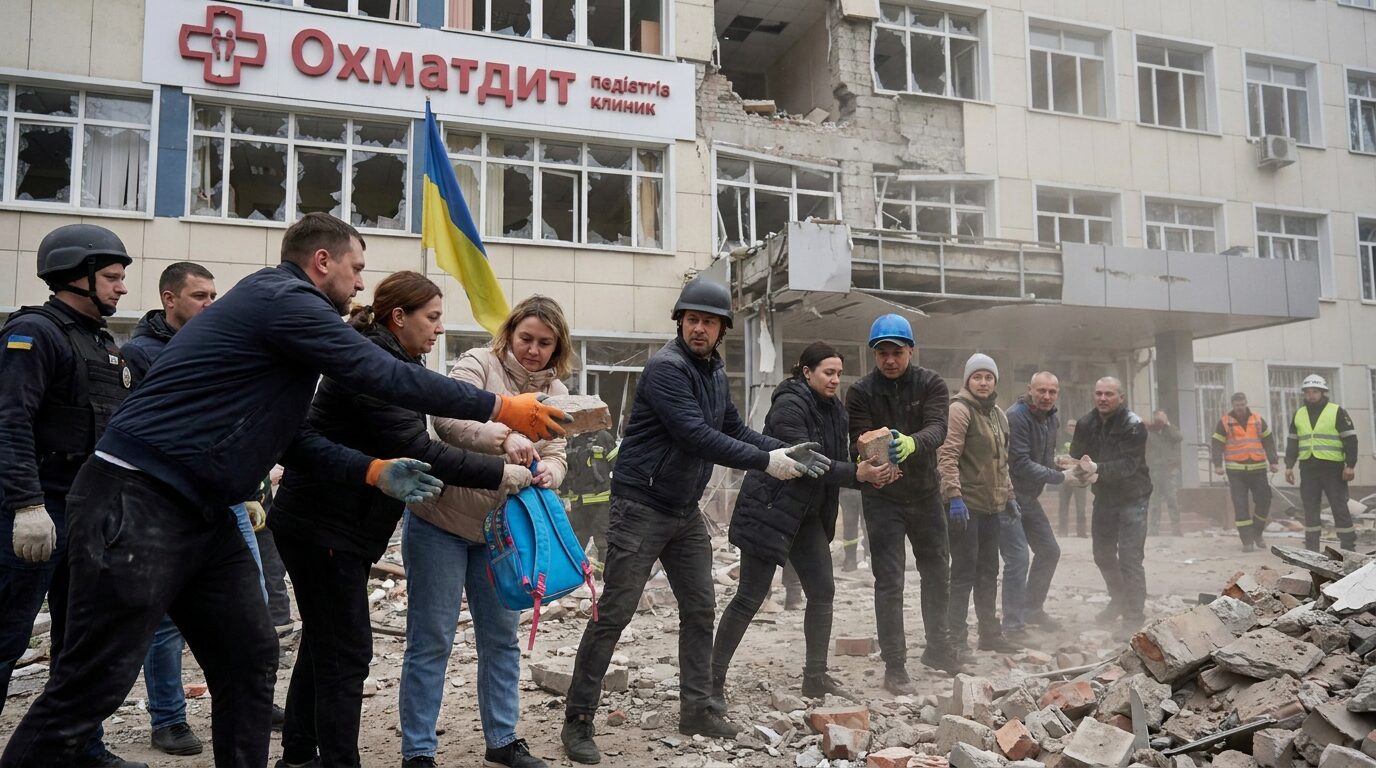
Russia Has Been Bombing Ukrainian Children for Years. The World Keeps Counting the Bodies.
The attacks keep coming, the death tolls keep varying, and the international response keeps falling just short of the pressure needed to stop any of it.

Washington Is Writing the Rules for Frontier AI Without Calling Them Rules
The White House is finalizing a pre-release review framework for the most powerful AI models ever built — and the benchmarks that determine who qualifies are secret.
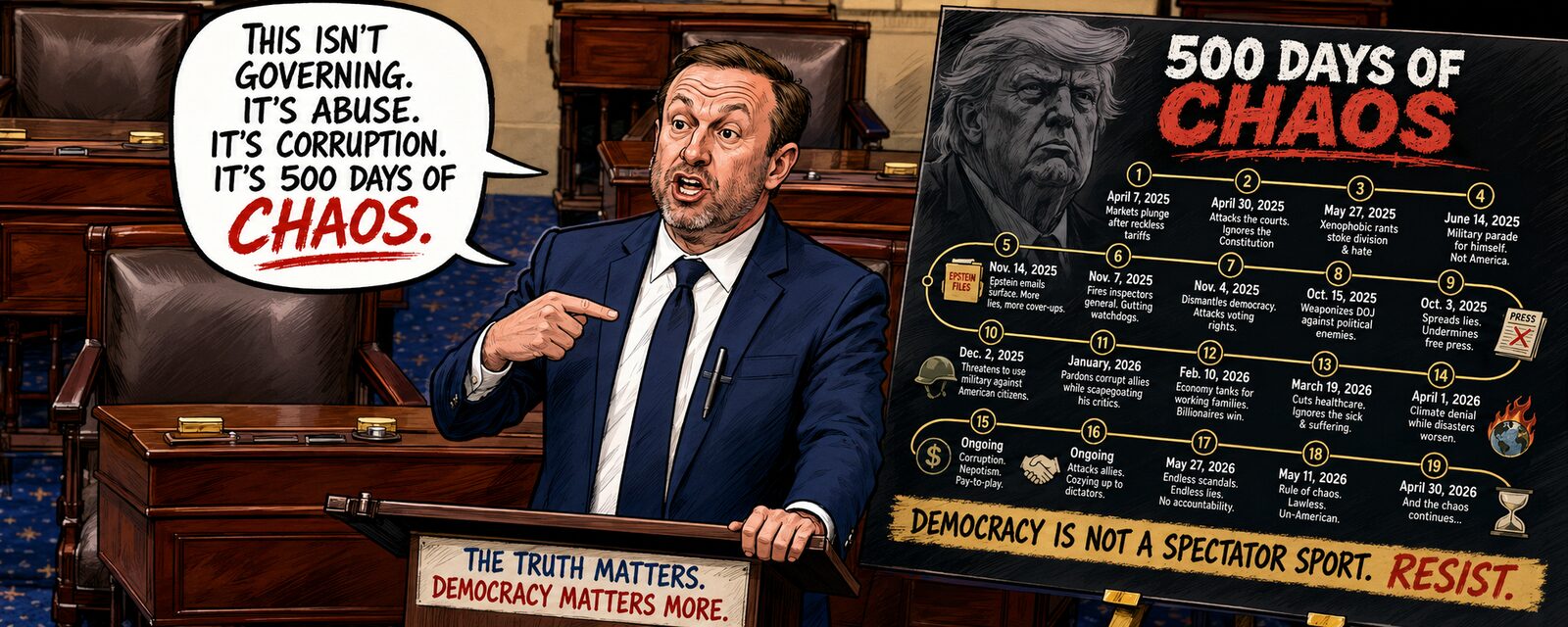
The White House Is a Corruption Machine. Senator Murphy Just Documented Every Moving Part.
Senator Chris Murphy just spent half an hour on the Senate floor reading a documented timeline of corruption — and the pattern it reveals is worse than any single scandal.