UN Charter
The UN Charter is the foundational constitution of the United Nations, established in 1945 to maintain international peace and define the rights and obligations of all member states.
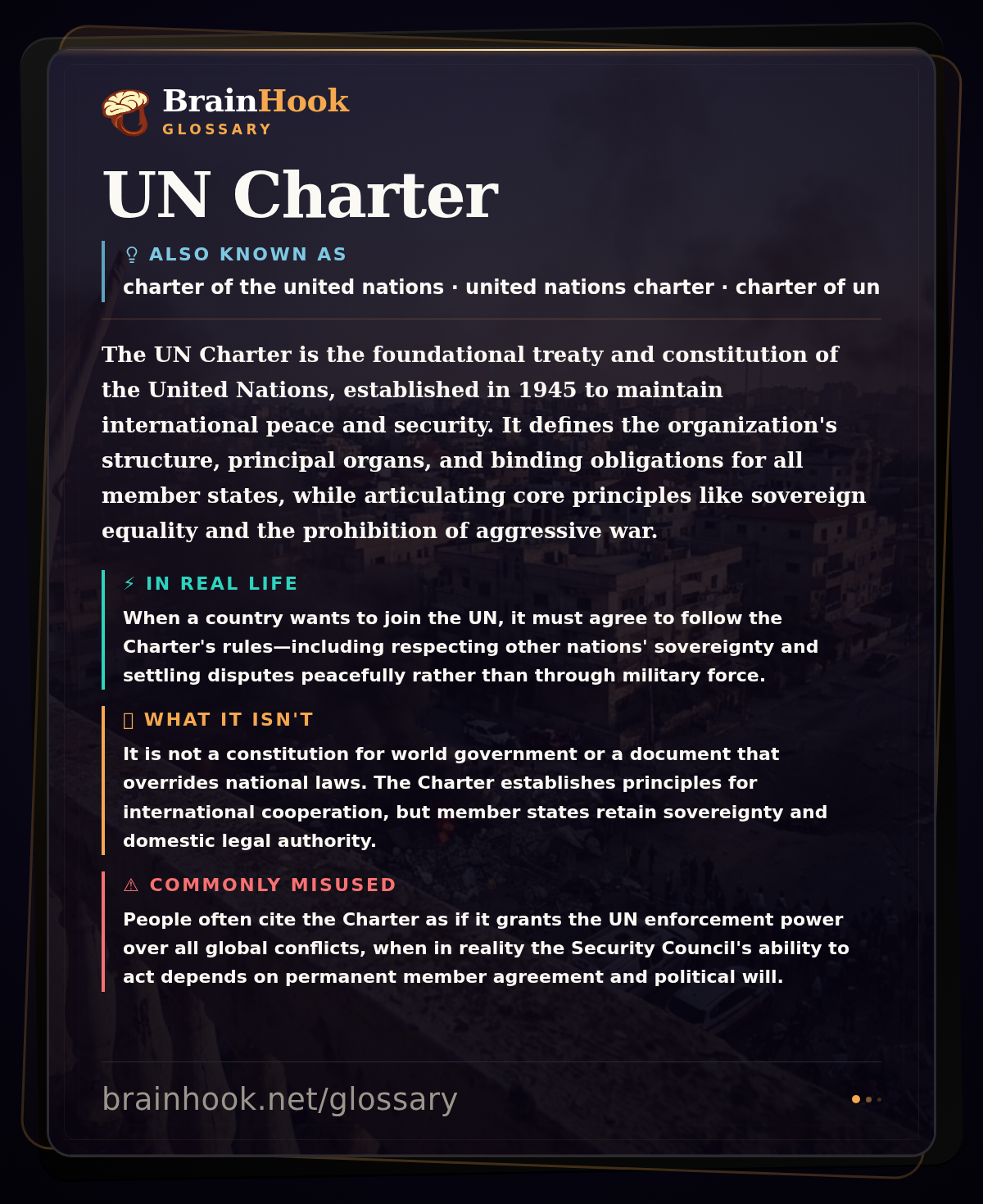
The UN Charter is the foundational treaty and constitution of the United Nations, established in 1945 to maintain international peace and security. It defines the organization's structure, principal organs, and binding obligations for all member states, while articulating core principles like sovereign equality and the prohibition of aggressive war.
What this means in real life
When a country wants to join the UN, it must agree to follow the Charter's rules—including respecting other nations' sovereignty and settling disputes peacefully rather than through military force.
What it isn’t
It is not a constitution for world government or a document that overrides national laws. The Charter establishes principles for international cooperation, but member states retain sovereignty and domestic legal authority.
Commonly misused online
People often cite the Charter as if it grants the UN enforcement power over all global conflicts, when in reality the Security Council's ability to act depends on permanent member agreement and political will.