Parental Conditional Regard
A parenting style where love feels like a transaction: affection is given only when the child meets specific goals, and withheld as punishment for failure, creating chronic anxiety about adequacy.
Not to be confused with: Contingent Love
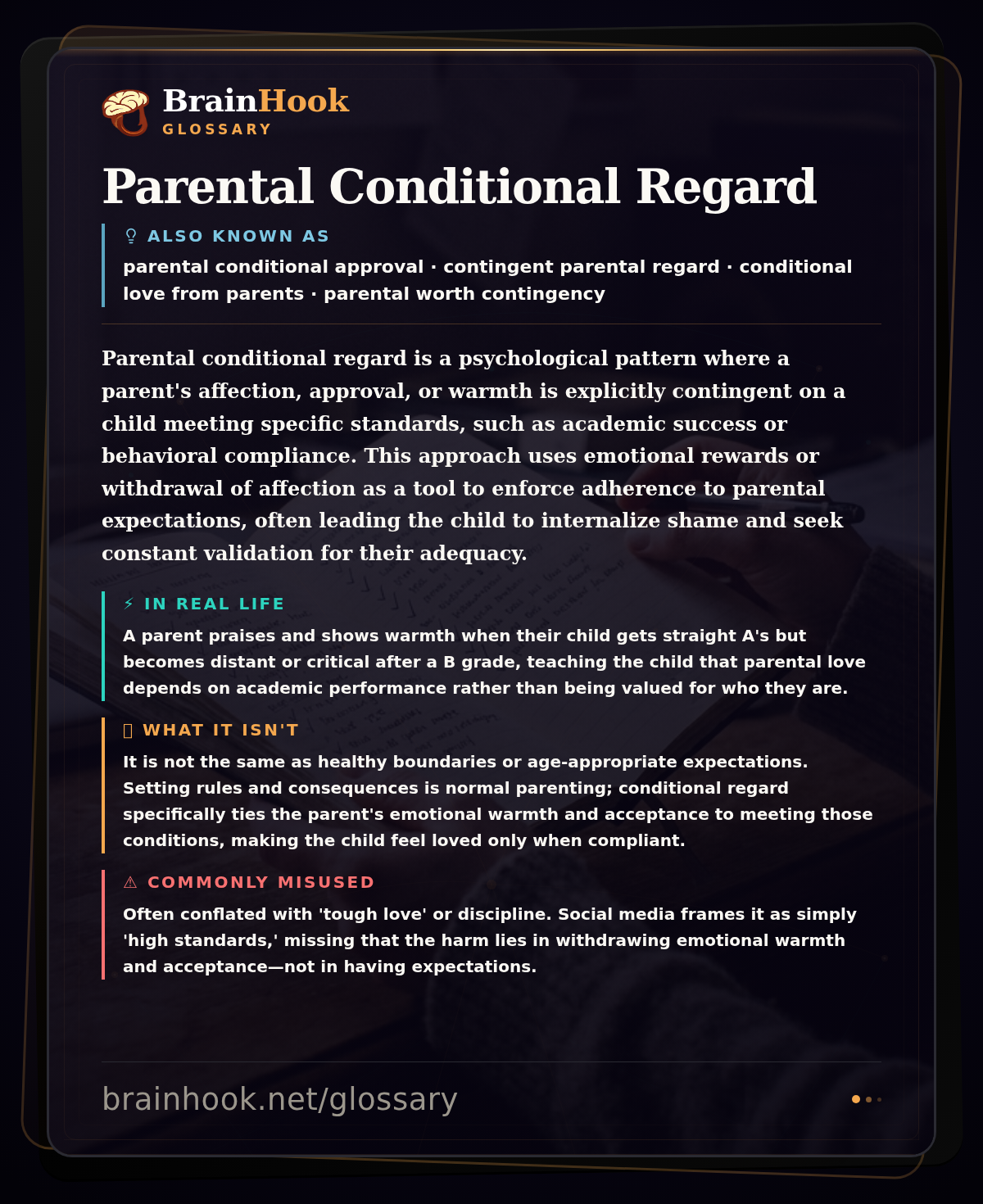
Parental conditional regard is a psychological pattern where a parent's affection, approval, or warmth is explicitly contingent on a child meeting specific standards, such as academic success or behavioral compliance. This approach uses emotional rewards or withdrawal of affection as a tool to enforce adherence to parental expectations, often leading the child to internalize shame and seek constant validation for their adequacy.
What this means in real life
A parent praises and shows warmth when their child gets straight A's but becomes distant or critical after a B grade, teaching the child that parental love depends on academic performance rather than being valued for who they are.
What it isn’t
It is not the same as healthy boundaries or age-appropriate expectations. Setting rules and consequences is normal parenting; conditional regard specifically ties the parent's emotional warmth and acceptance to meeting those conditions, making the child feel loved only when compliant.
Commonly misused online
Often conflated with 'tough love' or discipline. Social media frames it as simply 'high standards,' missing that the harm lies in withdrawing emotional warmth and acceptance—not in having expectations.
Based on 3 reference sources, including government sources. Last verified July 12, 2026.