Contingent Love
Contingent love is affection withheld until a person performs or complies, treating warmth as a reward rather than a given. It signals you are acceptable only when you succeed or meet expectations.
Not to be confused with: Parental Conditional Regard
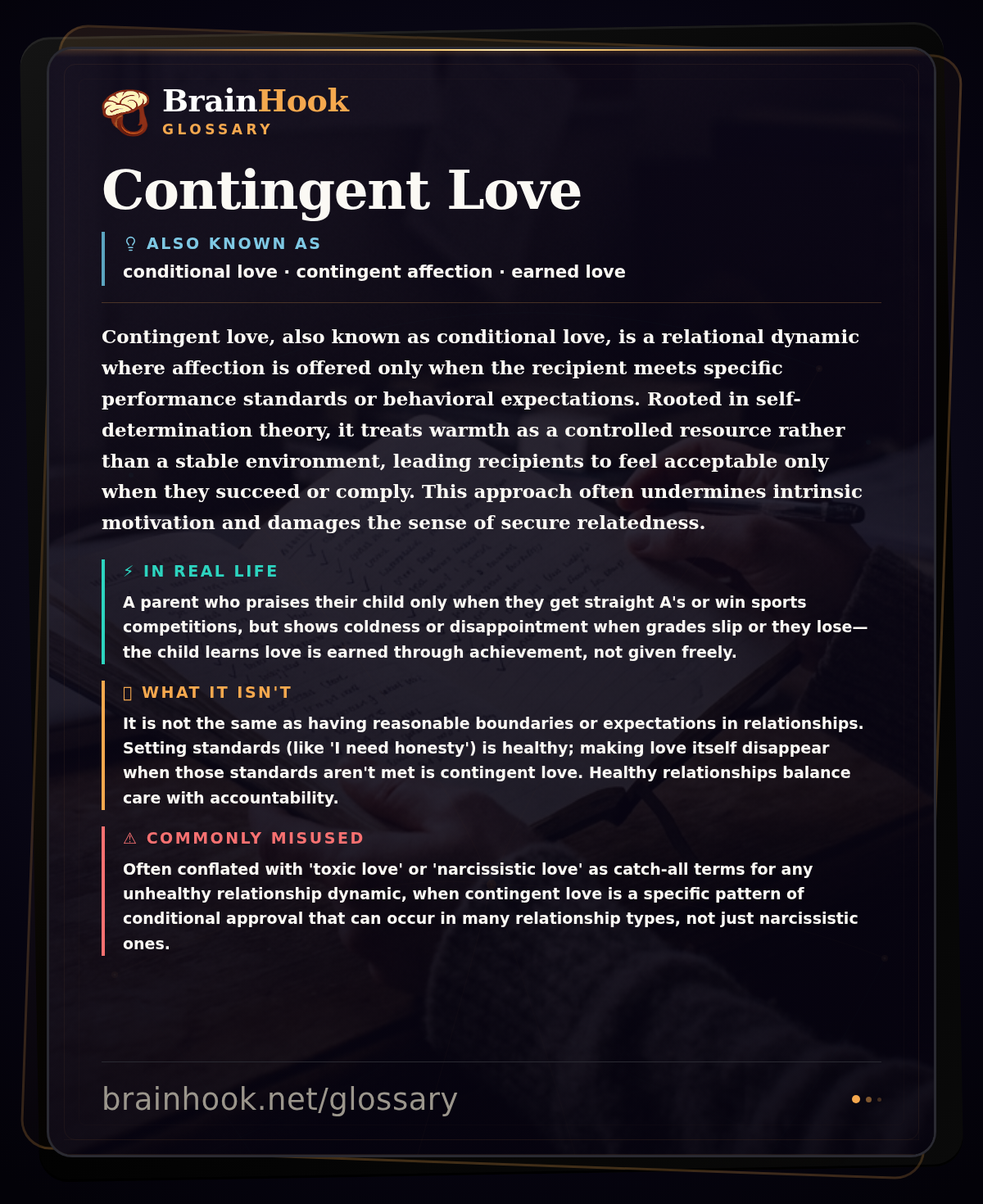
Contingent love, also known as conditional love, is a relational dynamic where affection is offered only when the recipient meets specific performance standards or behavioral expectations. Rooted in self-determination theory, it treats warmth as a controlled resource rather than a stable environment, leading recipients to feel acceptable only when they succeed or comply. This approach often undermines intrinsic motivation and damages the sense of secure relatedness.
What this means in real life
A parent who praises their child only when they get straight A's or win sports competitions, but shows coldness or disappointment when grades slip or they lose—the child learns love is earned through achievement, not given freely.
What it isn’t
It is not the same as having reasonable boundaries or expectations in relationships. Setting standards (like 'I need honesty') is healthy; making love itself disappear when those standards aren't met is contingent love. Healthy relationships balance care with accountability.
Commonly misused online
Often conflated with 'toxic love' or 'narcissistic love' as catch-all terms for any unhealthy relationship dynamic, when contingent love is a specific pattern of conditional approval that can occur in many relationship types, not just narcissistic ones.
Based on 1 reference source, including peer-reviewed research. Last verified July 12, 2026.