Dysbiosis
Dysbiosis is a microbial imbalance where diversity drops and function falters. It often stems from a broken host barrier, sparking chronic inflammation and disrupting immune control in tissues like the gut.
Not to be confused with: Gut Dysbiosis
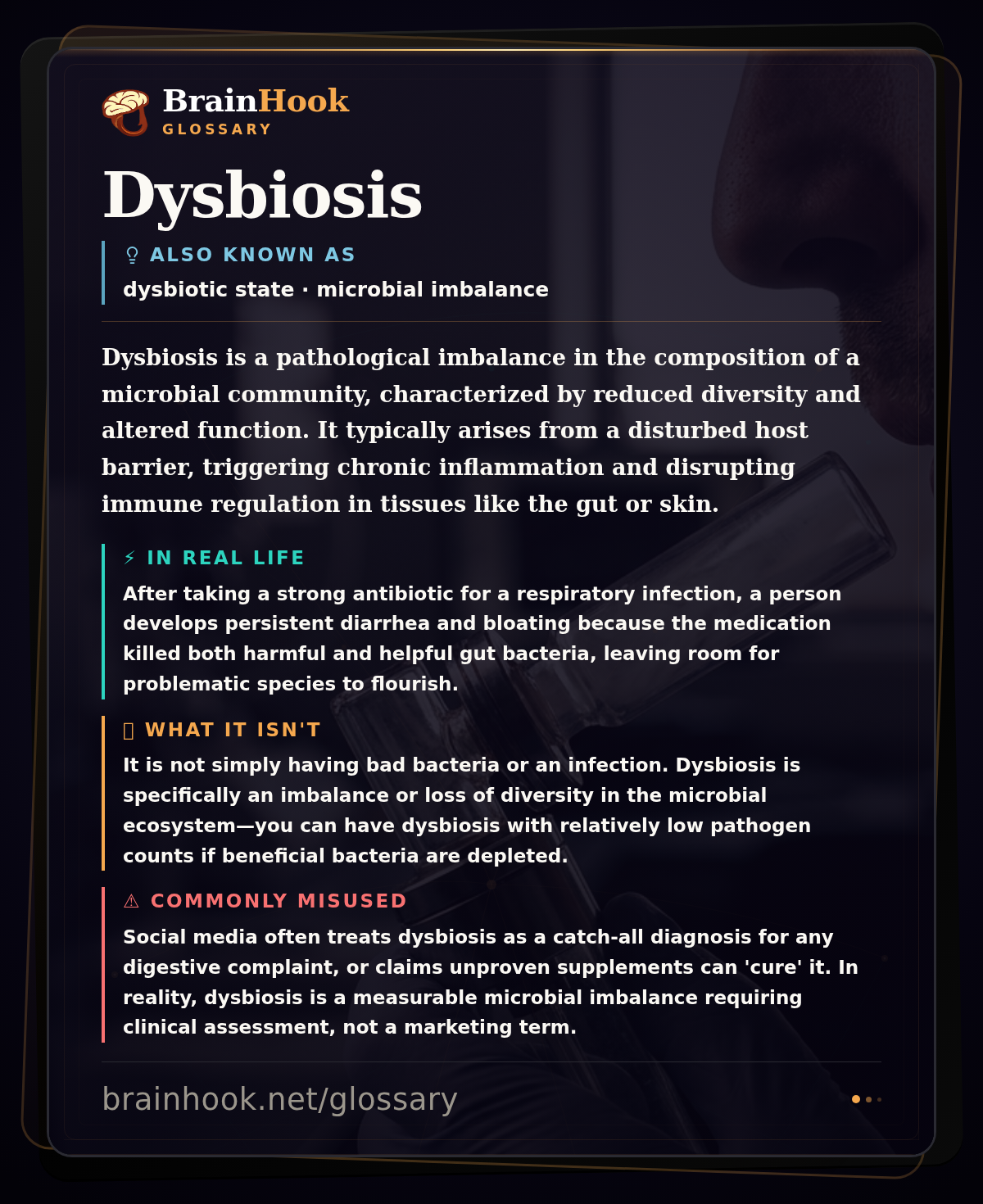
Dysbiosis is a pathological imbalance in the composition of a microbial community, characterized by reduced diversity and altered function. It typically arises from a disturbed host barrier, triggering chronic inflammation and disrupting immune regulation in tissues like the gut or skin.
What this means in real life
After taking a strong antibiotic for a respiratory infection, a person develops persistent diarrhea and bloating because the medication killed both harmful and helpful gut bacteria, leaving room for problematic species to flourish.
What it isn’t
It is not simply having bad bacteria or an infection. Dysbiosis is specifically an imbalance or loss of diversity in the microbial ecosystem—you can have dysbiosis with relatively low pathogen counts if beneficial bacteria are depleted.
Commonly misused online
Social media often treats dysbiosis as a catch-all diagnosis for any digestive complaint, or claims unproven supplements can 'cure' it. In reality, dysbiosis is a measurable microbial imbalance requiring clinical assessment, not a marketing term.
Based on 1 reference source, including primary sources. Last verified July 12, 2026.