Deterrence Theory
The idea that people avoid crime by calculating whether punishment risk outweighs the benefit—a rational-choice model of deterrence.
Not to be confused with: Deterrent
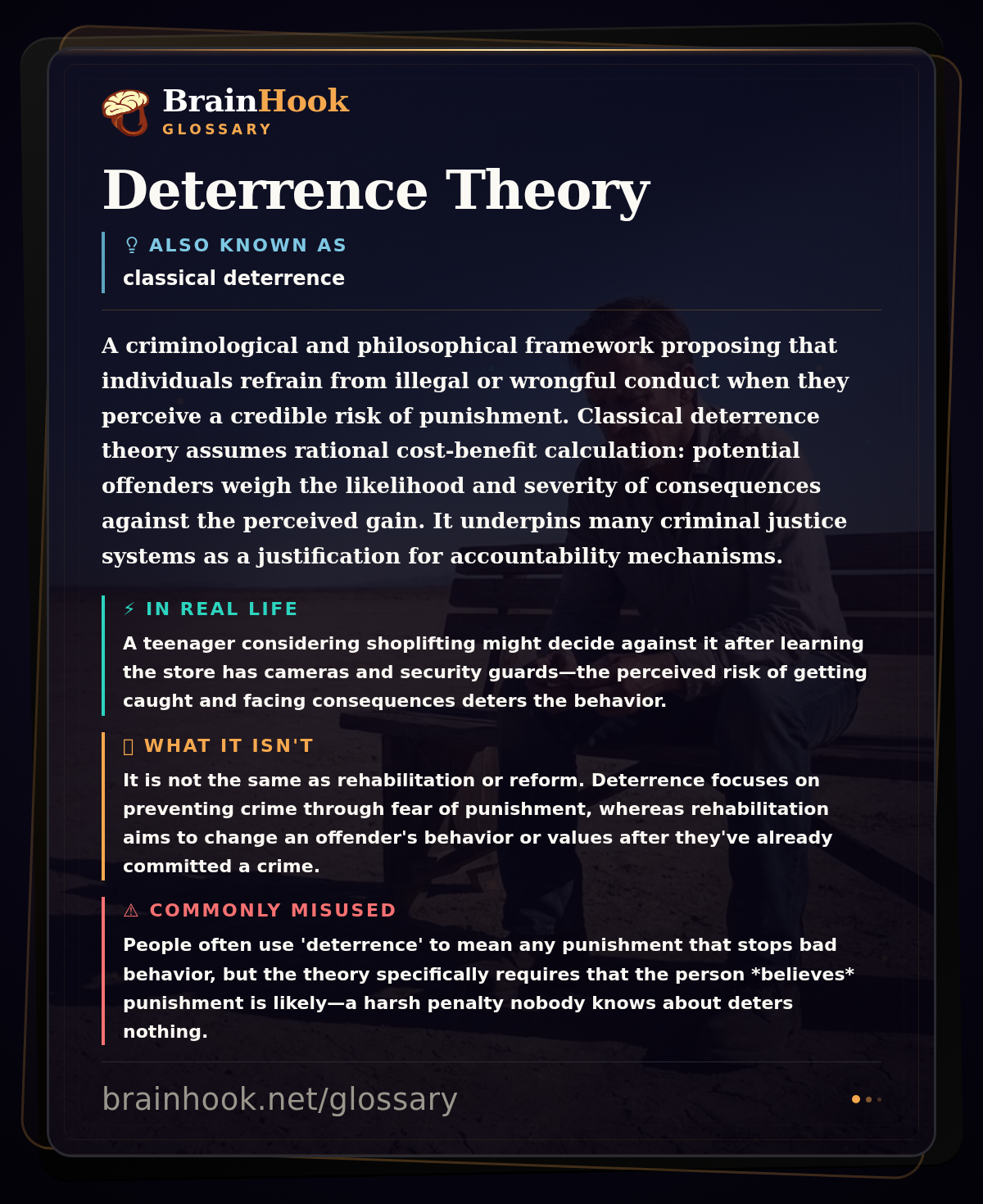
A criminological and philosophical framework proposing that individuals refrain from illegal or wrongful conduct when they perceive a credible risk of punishment. Classical deterrence theory assumes rational cost-benefit calculation: potential offenders weigh the likelihood and severity of consequences against the perceived gain. It underpins many criminal justice systems as a justification for accountability mechanisms.
What this means in real life
A teenager considering shoplifting might decide against it after learning the store has cameras and security guards—the perceived risk of getting caught and facing consequences deters the behavior.
What it isn’t
It is not the same as rehabilitation or reform. Deterrence focuses on preventing crime through fear of punishment, whereas rehabilitation aims to change an offender's behavior or values after they've already committed a crime.
Commonly misused online
People often use 'deterrence' to mean any punishment that stops bad behavior, but the theory specifically requires that the person *believes* punishment is likely—a harsh penalty nobody knows about deters nothing.