Cognitive Assets
Internal mental resources like attention and judgment that workers use to handle complex, ambiguous tasks and build expertise in skilled work.
Not to be confused with: Cognitive and Emotional Resources
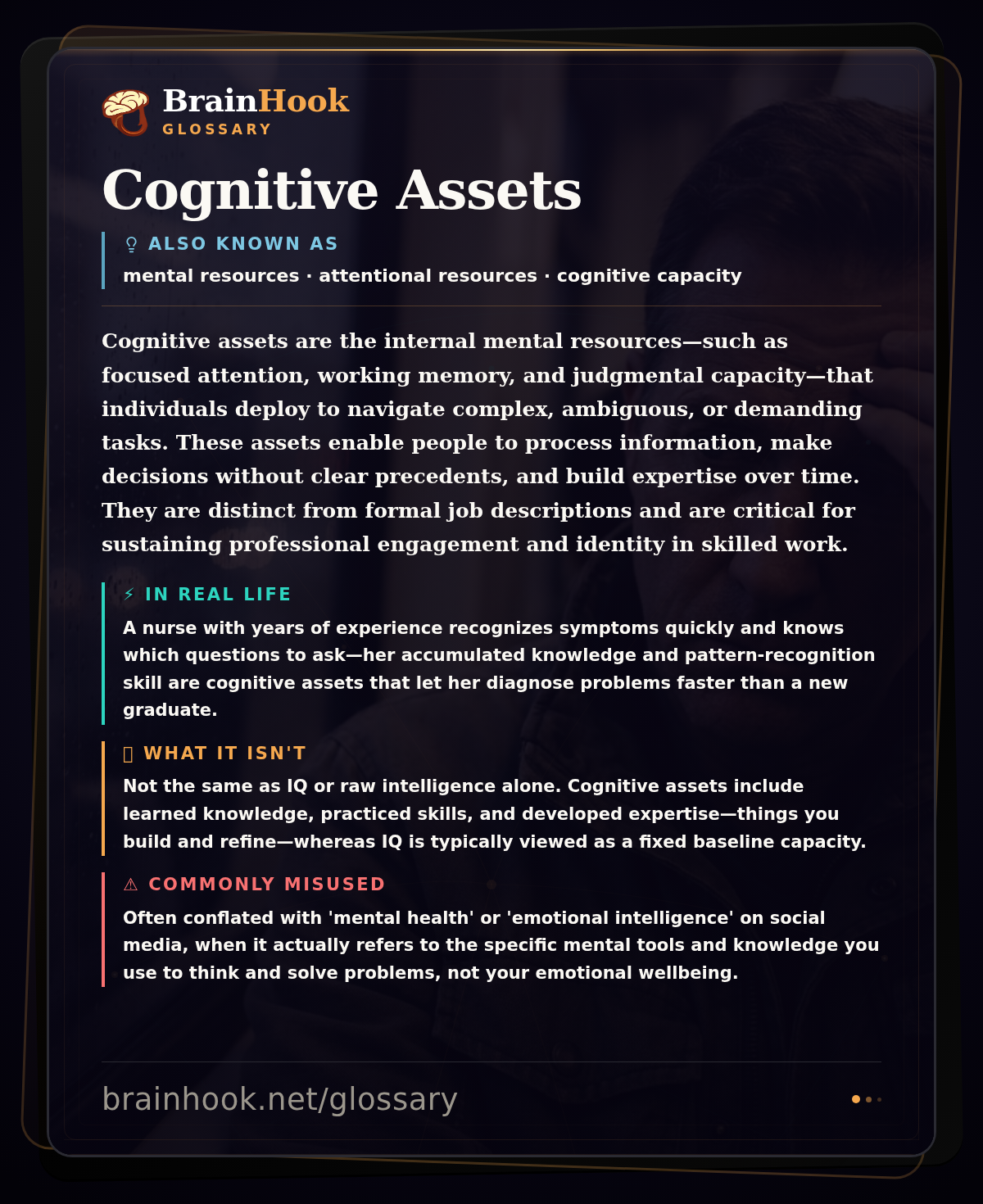
Cognitive assets are the internal mental resources—such as focused attention, working memory, and judgmental capacity—that individuals deploy to navigate complex, ambiguous, or demanding tasks. These assets enable people to process information, make decisions without clear precedents, and build expertise over time. They are distinct from formal job descriptions and are critical for sustaining professional engagement and identity in skilled work.
What this means in real life
A nurse with years of experience recognizes symptoms quickly and knows which questions to ask—her accumulated knowledge and pattern-recognition skill are cognitive assets that let her diagnose problems faster than a new graduate.
What it isn’t
Not the same as IQ or raw intelligence alone. Cognitive assets include learned knowledge, practiced skills, and developed expertise—things you build and refine—whereas IQ is typically viewed as a fixed baseline capacity.
Commonly misused online
Often conflated with 'mental health' or 'emotional intelligence' on social media, when it actually refers to the specific mental tools and knowledge you use to think and solve problems, not your emotional wellbeing.
Based on 1 reference source, including Wikipedia. Last verified July 12, 2026.