Algorithmic Transparency
Algorithmic transparency means revealing how automated systems make decisions and what data they use. It ensures users can understand the logic behind algorithmic actions without guaranteeing the outcomes are fair.
Not to be confused with: Algorithmic Accountability
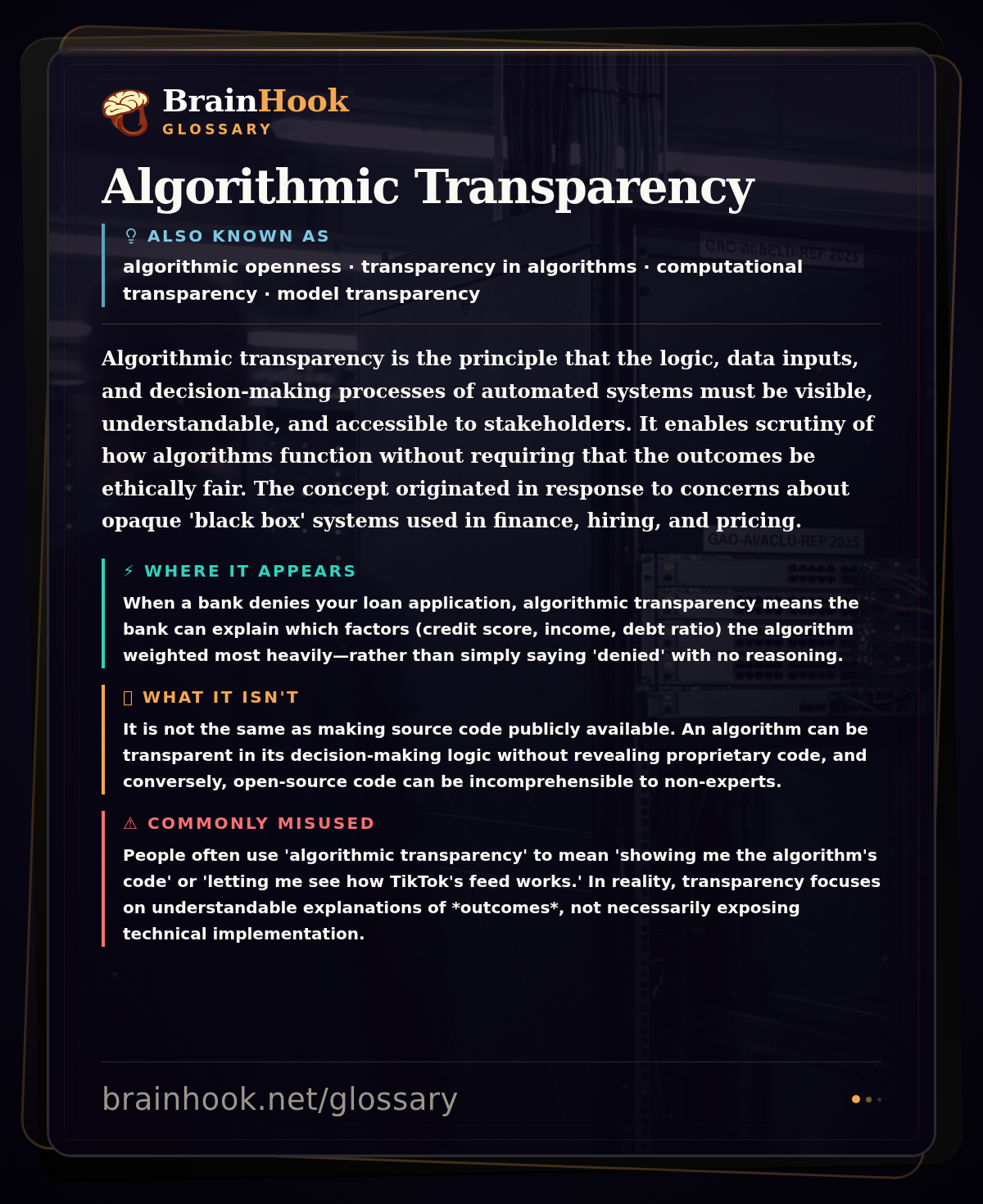
Algorithmic transparency is the principle that the logic, data inputs, and decision-making processes of automated systems must be visible, understandable, and accessible to stakeholders. It enables scrutiny of how algorithms function without requiring that the outcomes be ethically fair. The concept originated in response to concerns about opaque 'black box' systems used in finance, hiring, and pricing.
What this means in real life
When a bank denies your loan application, algorithmic transparency means the bank can explain which factors (credit score, income, debt ratio) the algorithm weighted most heavily—rather than simply saying 'denied' with no reasoning.
What it isn’t
It is not the same as making source code publicly available. An algorithm can be transparent in its decision-making logic without revealing proprietary code, and conversely, open-source code can be incomprehensible to non-experts.
Commonly misused online
People often use 'algorithmic transparency' to mean 'showing me the algorithm's code' or 'letting me see how TikTok's feed works.' In reality, transparency focuses on understandable explanations of *outcomes*, not necessarily exposing technical implementation.
Based on 3 reference sources, including government sources. Last verified July 12, 2026.