Algorithmic Accountability
The requirement that automated systems used to make workplace decisions be transparent, explainable, and subject to human oversight and challenge.
Not to be confused with: Algorithmic Transparency
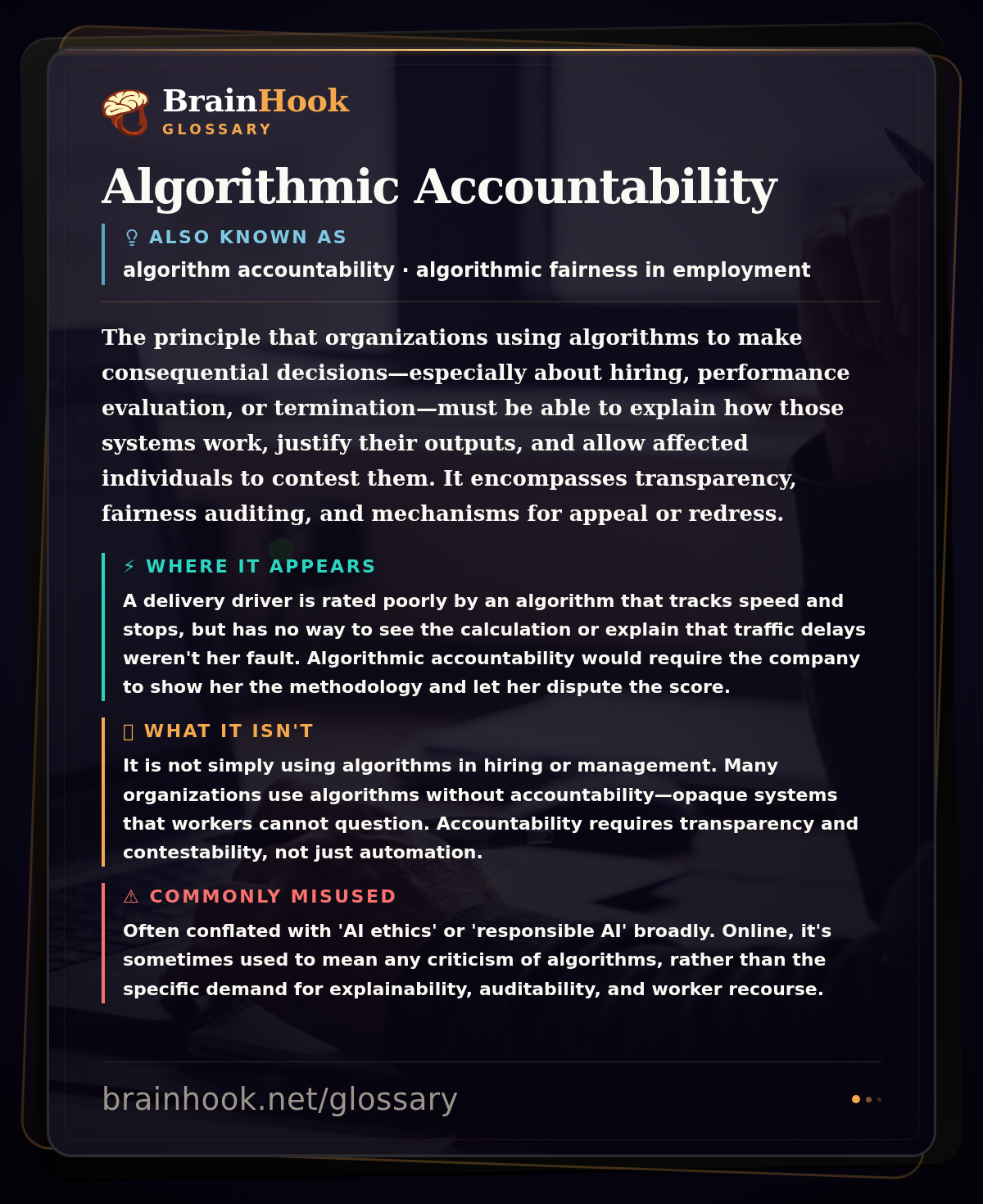
The principle that organizations using algorithms to make consequential decisions—especially about hiring, performance evaluation, or termination—must be able to explain how those systems work, justify their outputs, and allow affected individuals to contest them. It encompasses transparency, fairness auditing, and mechanisms for appeal or redress.
What this means in real life
A delivery driver is rated poorly by an algorithm that tracks speed and stops, but has no way to see the calculation or explain that traffic delays weren't her fault. Algorithmic accountability would require the company to show her the methodology and let her dispute the score.
What it isn’t
It is not simply using algorithms in hiring or management. Many organizations use algorithms without accountability—opaque systems that workers cannot question. Accountability requires transparency and contestability, not just automation.
Commonly misused online
Often conflated with 'AI ethics' or 'responsible AI' broadly. Online, it's sometimes used to mean any criticism of algorithms, rather than the specific demand for explainability, auditability, and worker recourse.
Based on 2 reference sources, including primary sources. Last verified July 16, 2026.