Veto Power
In polyamory, this is the authority for an existing partner to reject a new relationship or block a secondary partner's access to time and energy. It allows one partner to say "no" to a proposed relationship, often reinforcing the structural advantages of an established couple.
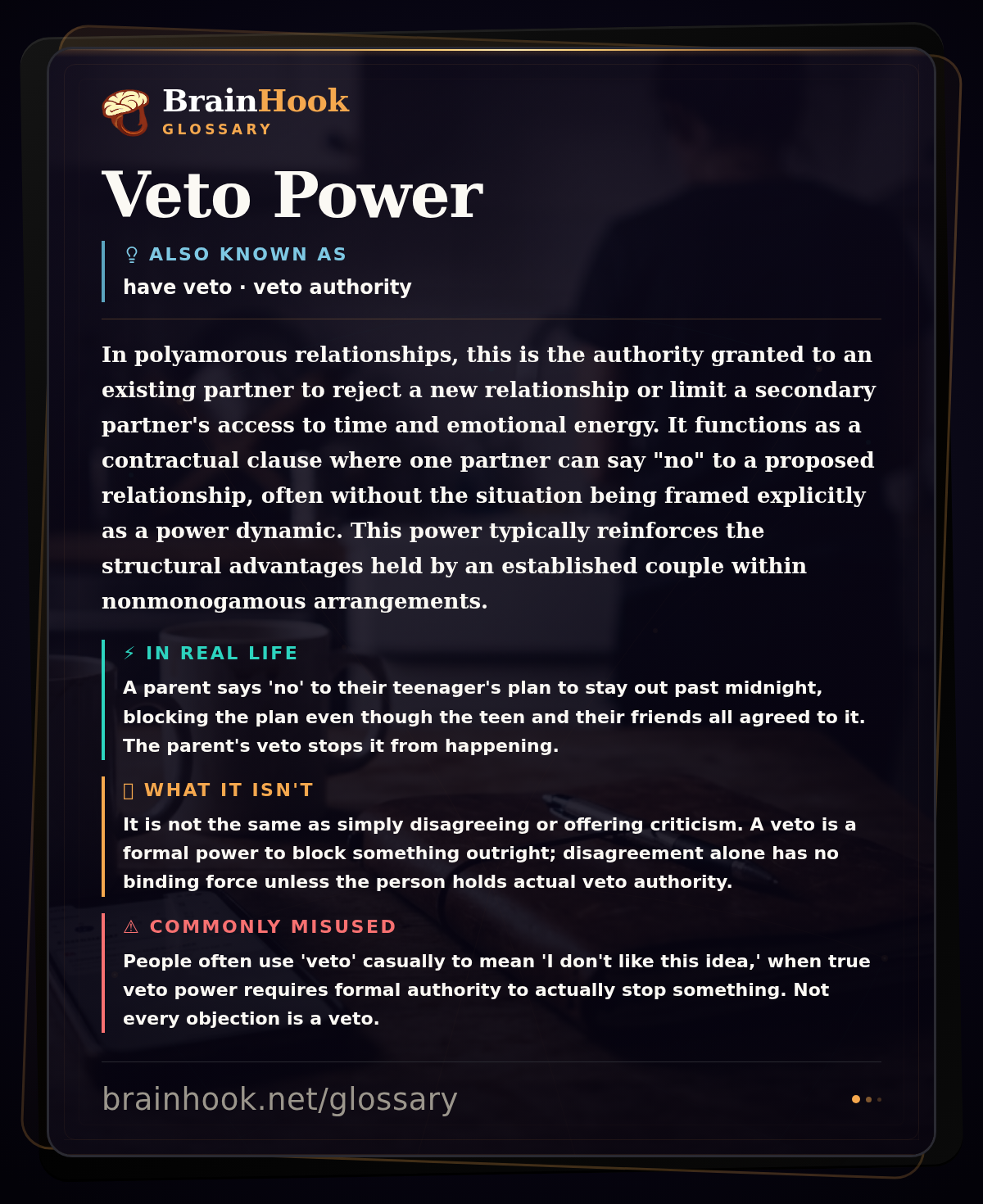
In polyamorous relationships, this is the authority granted to an existing partner to reject a new relationship or limit a secondary partner's access to time and emotional energy. It functions as a contractual clause where one partner can say "no" to a proposed relationship, often without the situation being framed explicitly as a power dynamic. This power typically reinforces the structural advantages held by an established couple within nonmonogamous arrangements.
What this means in real life
A parent says 'no' to their teenager's plan to stay out past midnight, blocking the plan even though the teen and their friends all agreed to it. The parent's veto stops it from happening.
What it isn’t
It is not the same as simply disagreeing or offering criticism. A veto is a formal power to block something outright; disagreement alone has no binding force unless the person holds actual veto authority.
Commonly misused online
People often use 'veto' casually to mean 'I don't like this idea,' when true veto power requires formal authority to actually stop something. Not every objection is a veto.
Based on 3 reference sources, including Wikipedia. Last verified July 11, 2026.