Tumor Necrosis Factor-alpha
TNF-α is a key pro-inflammatory cytokine that drives immune cell activation and tissue damage in conditions like IBD, often targeted by drugs to reduce inflammation.
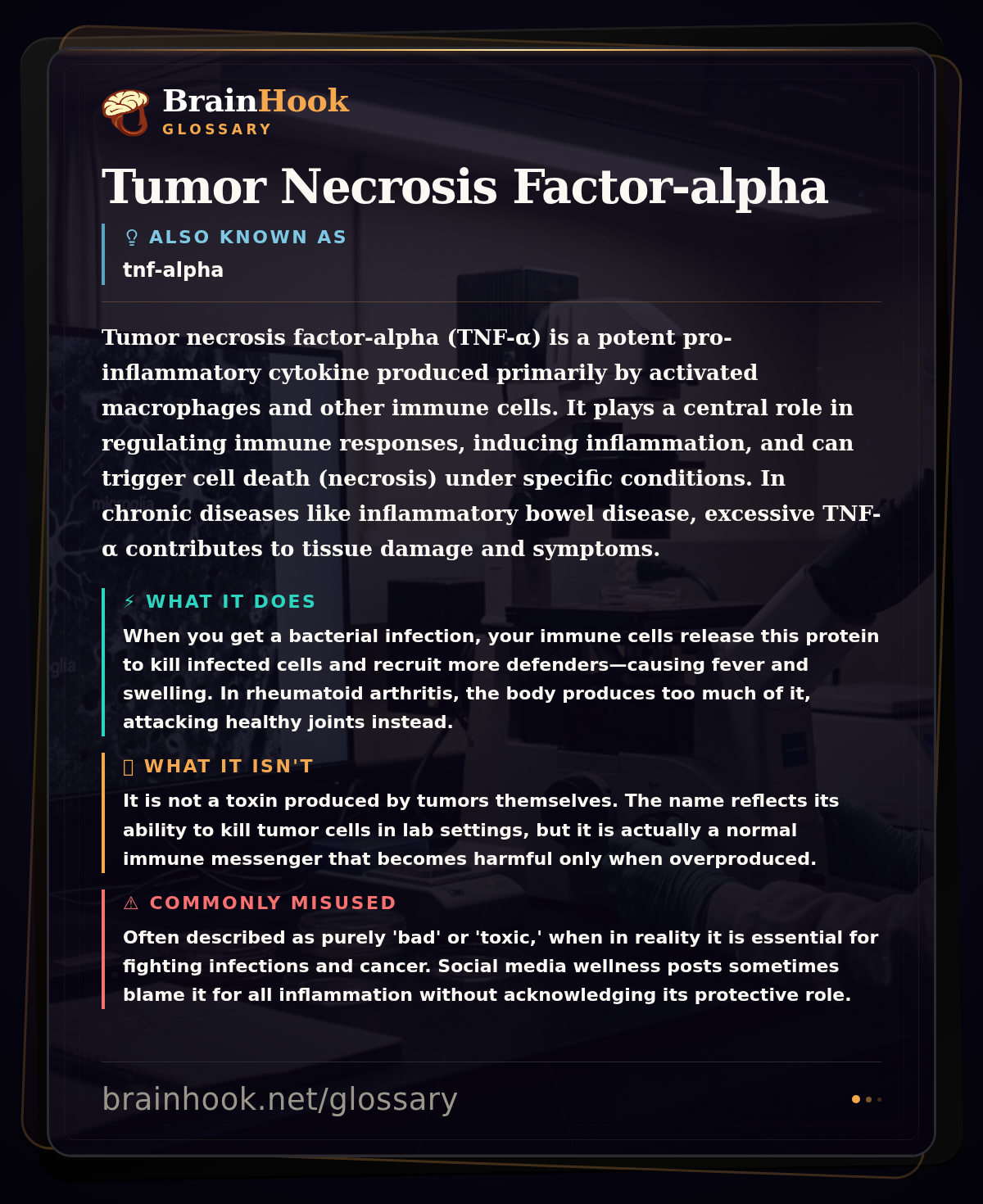
Tumor necrosis factor-alpha (TNF-α) is a potent pro-inflammatory cytokine produced primarily by activated macrophages and other immune cells. It plays a central role in regulating immune responses, inducing inflammation, and can trigger cell death (necrosis) under specific conditions. In chronic diseases like inflammatory bowel disease, excessive TNF-α contributes to tissue damage and symptoms.
What this means in real life
When you get a bacterial infection, your immune cells release this protein to kill infected cells and recruit more defenders—causing fever and swelling. In rheumatoid arthritis, the body produces too much of it, attacking healthy joints instead.
What it isn’t
It is not a toxin produced by tumors themselves. The name reflects its ability to kill tumor cells in lab settings, but it is actually a normal immune messenger that becomes harmful only when overproduced.
Commonly misused online
Often described as purely 'bad' or 'toxic,' when in reality it is essential for fighting infections and cancer. Social media wellness posts sometimes blame it for all inflammation without acknowledging its protective role.