Threat Model
A systematic assessment of potential dangers, attackers, or risks that could harm a system, person, or organization—and how they might strike.
Not to be confused with: Threat Assessment
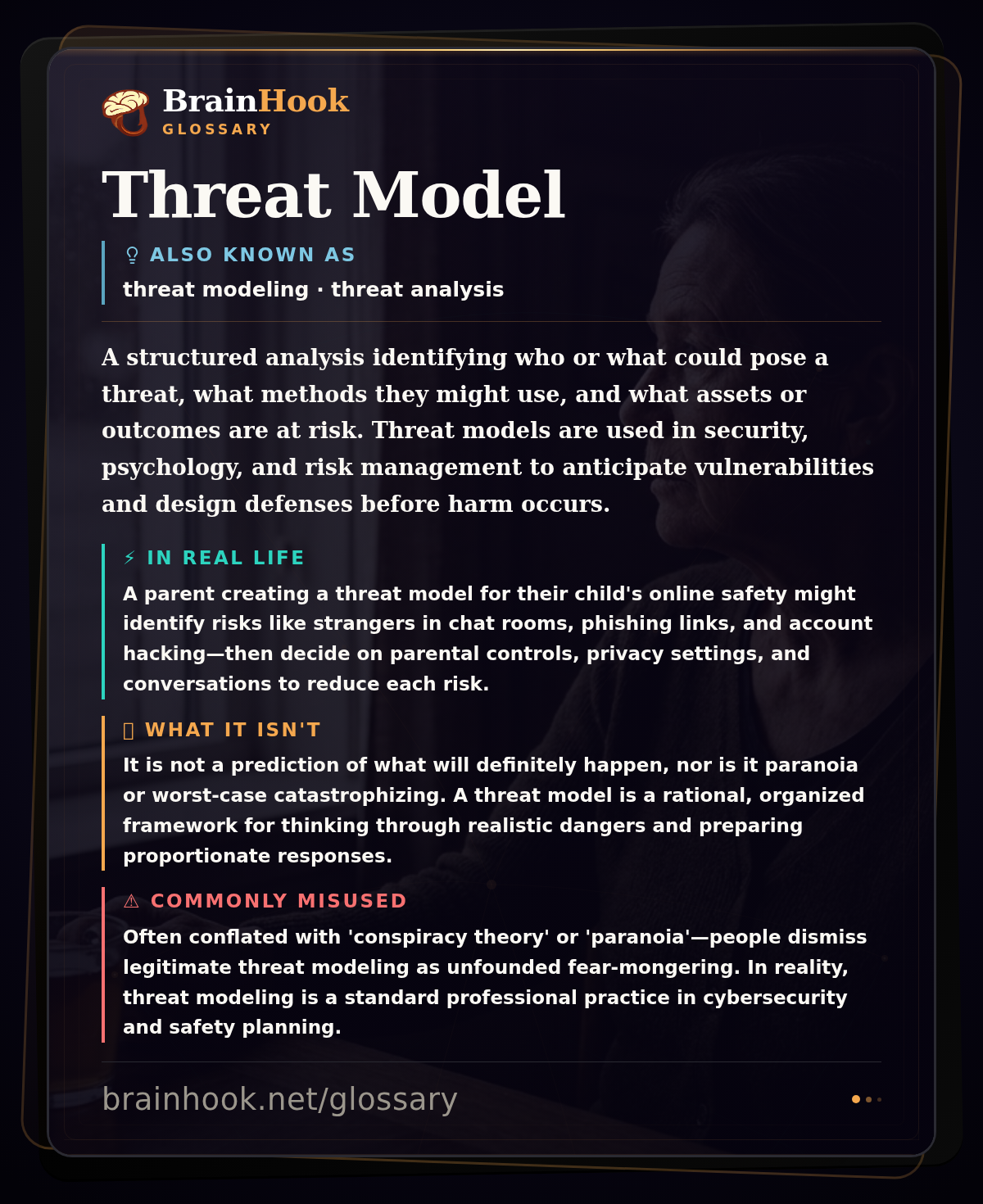
A structured analysis identifying who or what could pose a threat, what methods they might use, and what assets or outcomes are at risk. Threat models are used in security, psychology, and risk management to anticipate vulnerabilities and design defenses before harm occurs.
What this means in real life
A parent creating a threat model for their child's online safety might identify risks like strangers in chat rooms, phishing links, and account hacking—then decide on parental controls, privacy settings, and conversations to reduce each risk.
What it isn’t
It is not a prediction of what will definitely happen, nor is it paranoia or worst-case catastrophizing. A threat model is a rational, organized framework for thinking through realistic dangers and preparing proportionate responses.
Commonly misused online
Often conflated with 'conspiracy theory' or 'paranoia'—people dismiss legitimate threat modeling as unfounded fear-mongering. In reality, threat modeling is a standard professional practice in cybersecurity and safety planning.