Thermal Deoxygenation
Thermal deoxygenation is when warming ocean water loses the ability to hold dissolved oxygen, driven by rising temperatures. It's a basic chemistry rule: warmer water holds less gas.
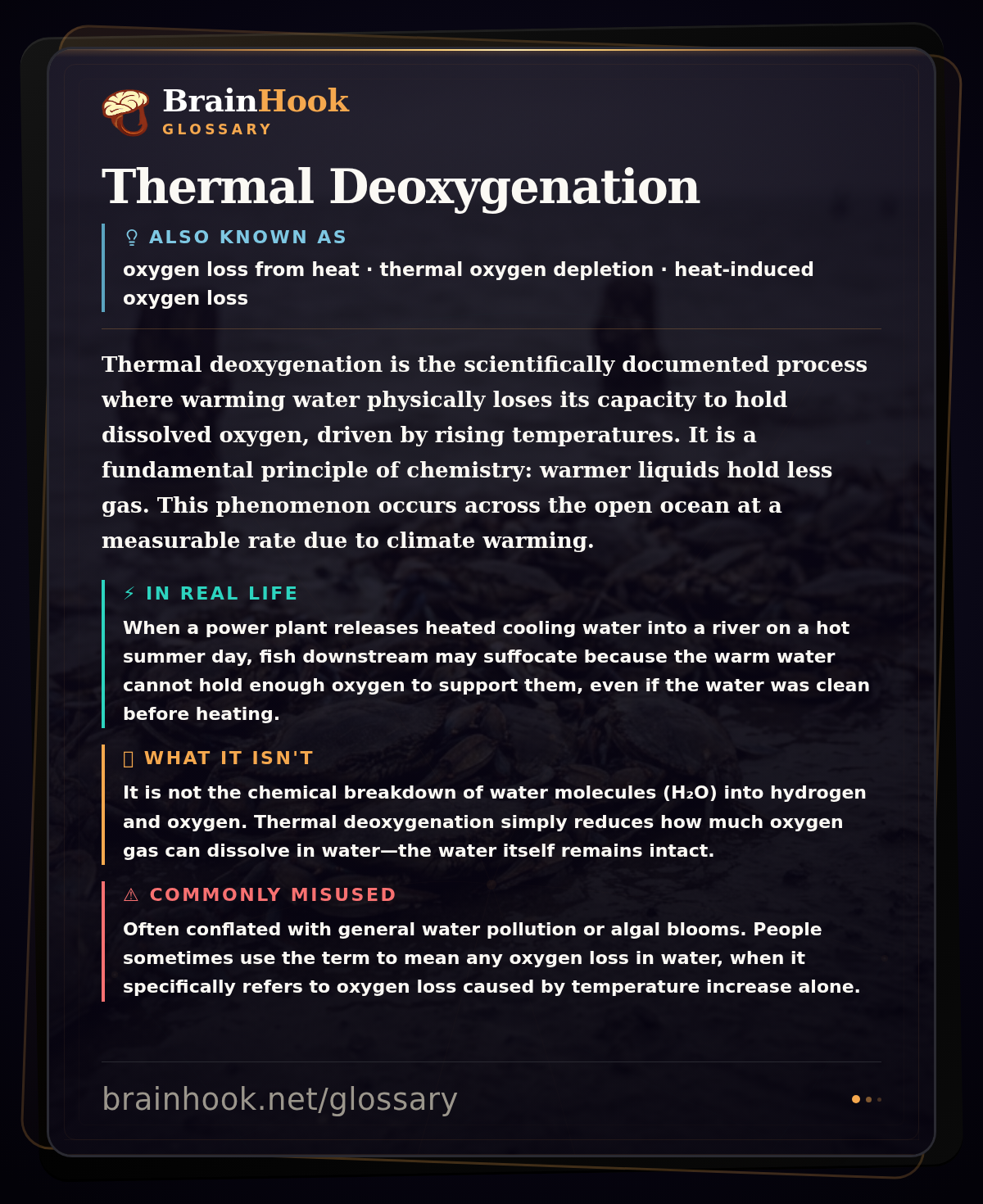
Thermal deoxygenation is the scientifically documented process where warming water physically loses its capacity to hold dissolved oxygen, driven by rising temperatures. It is a fundamental principle of chemistry: warmer liquids hold less gas. This phenomenon occurs across the open ocean at a measurable rate due to climate warming.
What this means in real life
When a power plant releases heated cooling water into a river on a hot summer day, fish downstream may suffocate because the warm water cannot hold enough oxygen to support them, even if the water was clean before heating.
What it isn’t
It is not the chemical breakdown of water molecules (H₂O) into hydrogen and oxygen. Thermal deoxygenation simply reduces how much oxygen gas can dissolve in water—the water itself remains intact.
Commonly misused online
Often conflated with general water pollution or algal blooms. People sometimes use the term to mean any oxygen loss in water, when it specifically refers to oxygen loss caused by temperature increase alone.
Based on 1 reference source, including primary sources. Last verified July 12, 2026.