Therapeutic Pessimism
A clinician's belief that a patient with a personality disorder cannot meaningfully improve or change, leading to reduced treatment effort or pessimistic prognosis.
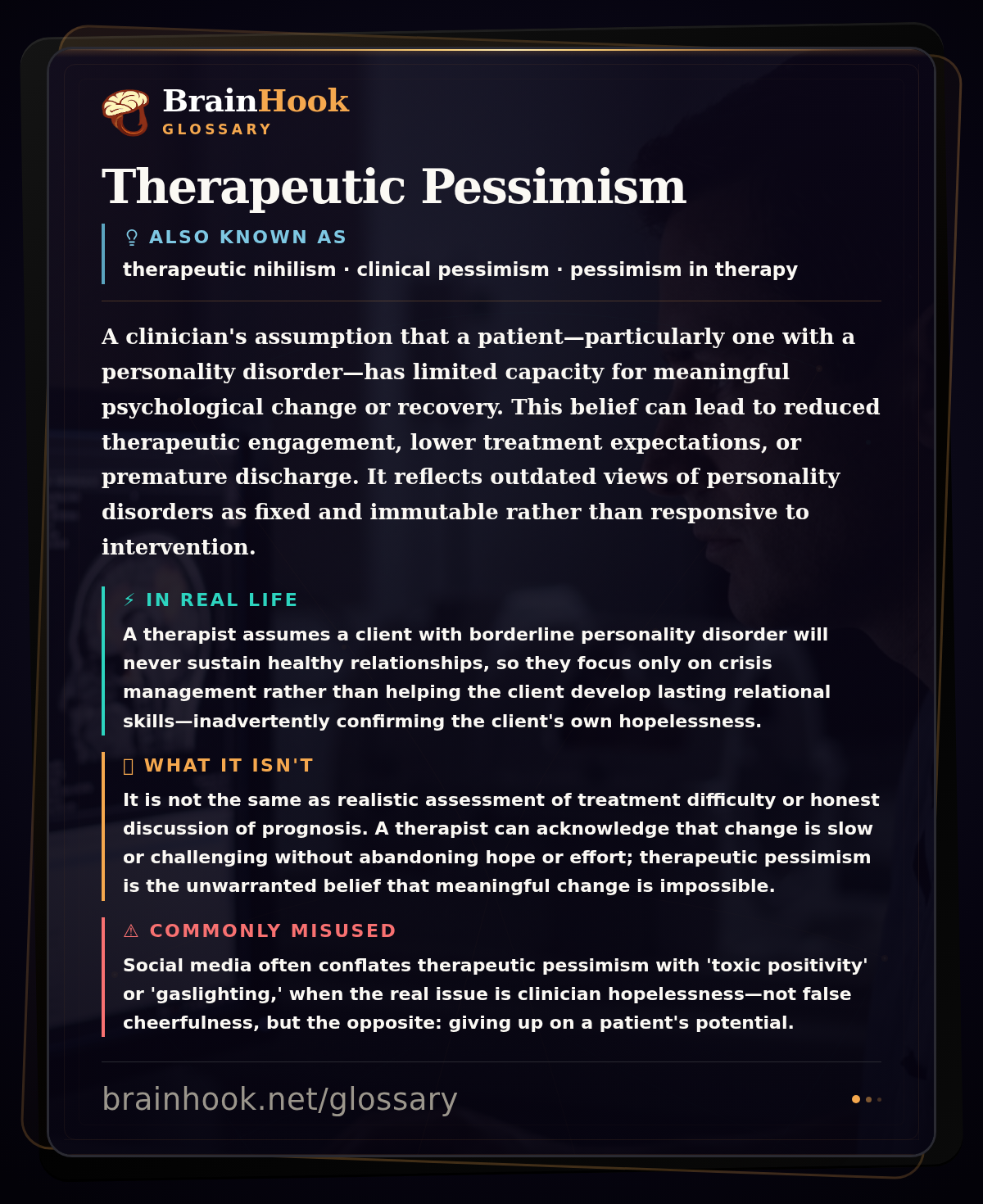
A clinician's assumption that a patient—particularly one with a personality disorder—has limited capacity for meaningful psychological change or recovery. This belief can lead to reduced therapeutic engagement, lower treatment expectations, or premature discharge. It reflects outdated views of personality disorders as fixed and immutable rather than responsive to intervention.
What this means in real life
A therapist assumes a client with borderline personality disorder will never sustain healthy relationships, so they focus only on crisis management rather than helping the client develop lasting relational skills—inadvertently confirming the client's own hopelessness.
What it isn’t
It is not the same as realistic assessment of treatment difficulty or honest discussion of prognosis. A therapist can acknowledge that change is slow or challenging without abandoning hope or effort; therapeutic pessimism is the unwarranted belief that meaningful change is impossible.
Commonly misused online
Social media often conflates therapeutic pessimism with 'toxic positivity' or 'gaslighting,' when the real issue is clinician hopelessness—not false cheerfulness, but the opposite: giving up on a patient's potential.
Based on 1 reference source, including NIH material. Last verified July 16, 2026.