Theological Conformity
Pressure to adopt and publicly affirm a specific set of religious beliefs without question or deviation, often enforced by institutions or communities.
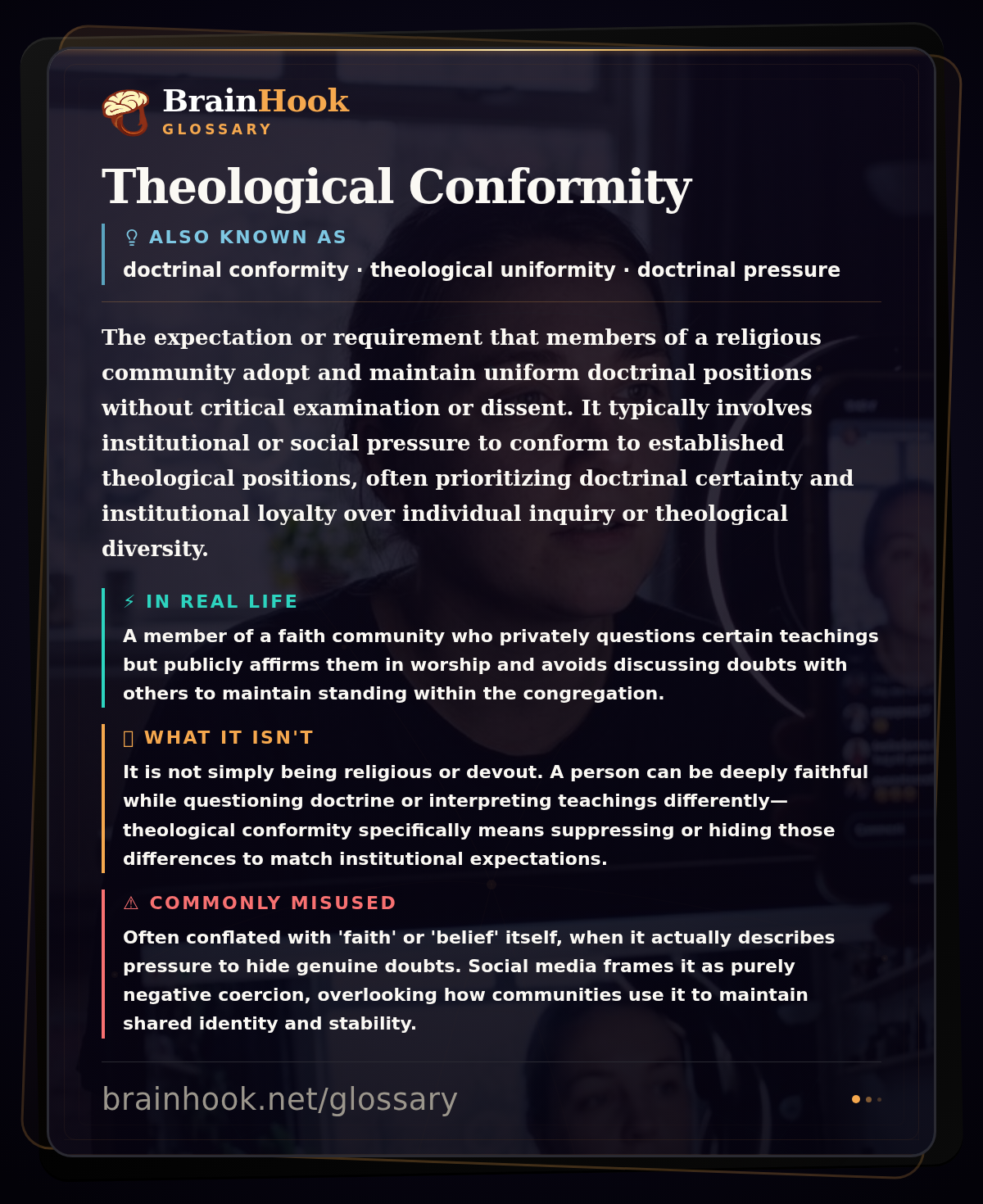
The expectation or requirement that members of a religious community adopt and maintain uniform doctrinal positions without critical examination or dissent. It typically involves institutional or social pressure to conform to established theological positions, often prioritizing doctrinal certainty and institutional loyalty over individual inquiry or theological diversity.
What this means in real life
A member of a faith community who privately questions certain teachings but publicly affirms them in worship and avoids discussing doubts with others to maintain standing within the congregation.
What it isn’t
It is not simply being religious or devout. A person can be deeply faithful while questioning doctrine or interpreting teachings differently—theological conformity specifically means suppressing or hiding those differences to match institutional expectations.
Commonly misused online
Often conflated with 'faith' or 'belief' itself, when it actually describes pressure to hide genuine doubts. Social media frames it as purely negative coercion, overlooking how communities use it to maintain shared identity and stability.