Source Monitoring
Source monitoring is the mental process of tracking where a memory or thought came from—separating what you imagined from what you actually experienced—to ensure your recollections are accurate and reliable.
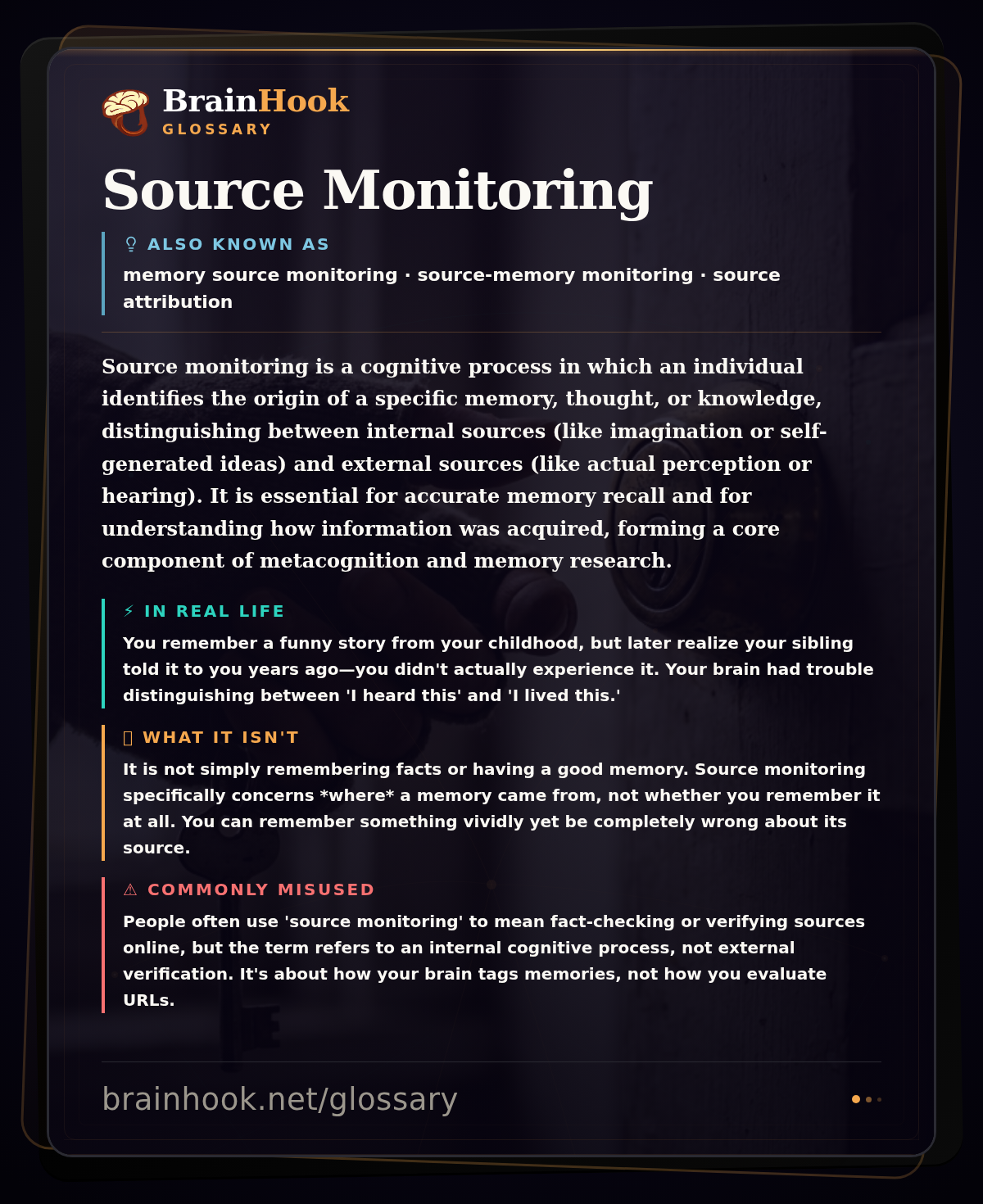
Source monitoring is a cognitive process in which an individual identifies the origin of a specific memory, thought, or knowledge, distinguishing between internal sources (like imagination or self-generated ideas) and external sources (like actual perception or hearing). It is essential for accurate memory recall and for understanding how information was acquired, forming a core component of metacognition and memory research.
What this means in real life
You remember a funny story from your childhood, but later realize your sibling told it to you years ago—you didn't actually experience it. Your brain had trouble distinguishing between 'I heard this' and 'I lived this.'
What it isn’t
It is not simply remembering facts or having a good memory. Source monitoring specifically concerns *where* a memory came from, not whether you remember it at all. You can remember something vividly yet be completely wrong about its source.
Commonly misused online
People often use 'source monitoring' to mean fact-checking or verifying sources online, but the term refers to an internal cognitive process, not external verification. It's about how your brain tags memories, not how you evaluate URLs.