Serology
Serology is the diagnostic study of antibodies in blood serum, used to confirm past infections or immune responses. In forensics, it identifies blood types to link suspects to crime scenes.
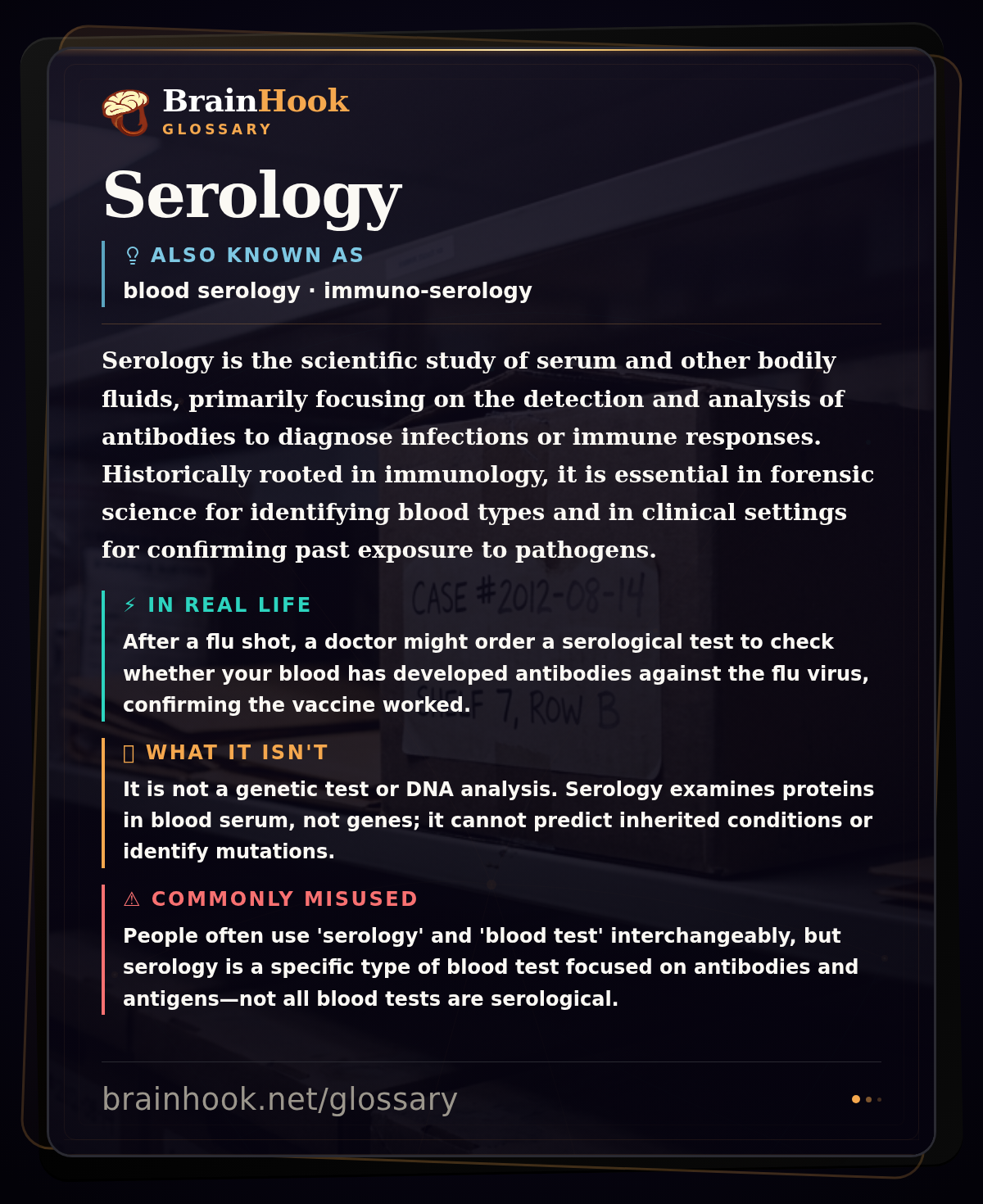
Serology is the scientific study of serum and other bodily fluids, primarily focusing on the detection and analysis of antibodies to diagnose infections or immune responses. Historically rooted in immunology, it is essential in forensic science for identifying blood types and in clinical settings for confirming past exposure to pathogens.
What this means in real life
After a flu shot, a doctor might order a serological test to check whether your blood has developed antibodies against the flu virus, confirming the vaccine worked.
What it isn’t
It is not a genetic test or DNA analysis. Serology examines proteins in blood serum, not genes; it cannot predict inherited conditions or identify mutations.
Commonly misused online
People often use 'serology' and 'blood test' interchangeably, but serology is a specific type of blood test focused on antibodies and antigens—not all blood tests are serological.