Resource Depletion
Resource depletion is when we use up natural resources faster than nature can replace them, causing a sharp drop in available supplies like water, oil, or forests.
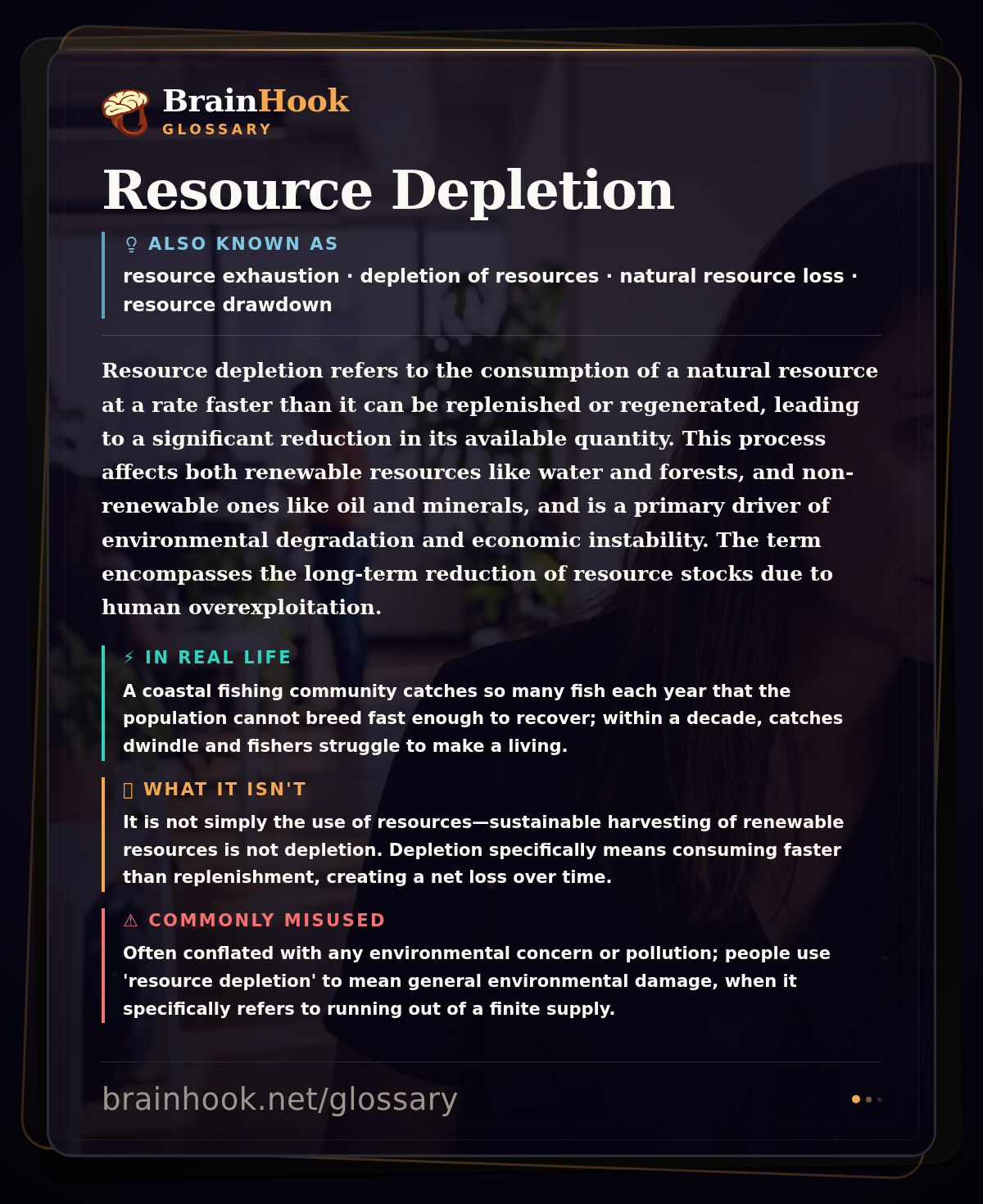
Resource depletion refers to the consumption of a natural resource at a rate faster than it can be replenished or regenerated, leading to a significant reduction in its available quantity. This process affects both renewable resources like water and forests, and non-renewable ones like oil and minerals, and is a primary driver of environmental degradation and economic instability. The term encompasses the long-term reduction of resource stocks due to human overexploitation.
What this means in real life
A coastal fishing community catches so many fish each year that the population cannot breed fast enough to recover; within a decade, catches dwindle and fishers struggle to make a living.
What it isn’t
It is not simply the use of resources—sustainable harvesting of renewable resources is not depletion. Depletion specifically means consuming faster than replenishment, creating a net loss over time.
Commonly misused online
Often conflated with any environmental concern or pollution; people use 'resource depletion' to mean general environmental damage, when it specifically refers to running out of a finite supply.