Radiometric Dating
A method of determining an object's age by measuring the decay of radioactive elements within it, like uranium turning into lead over time.
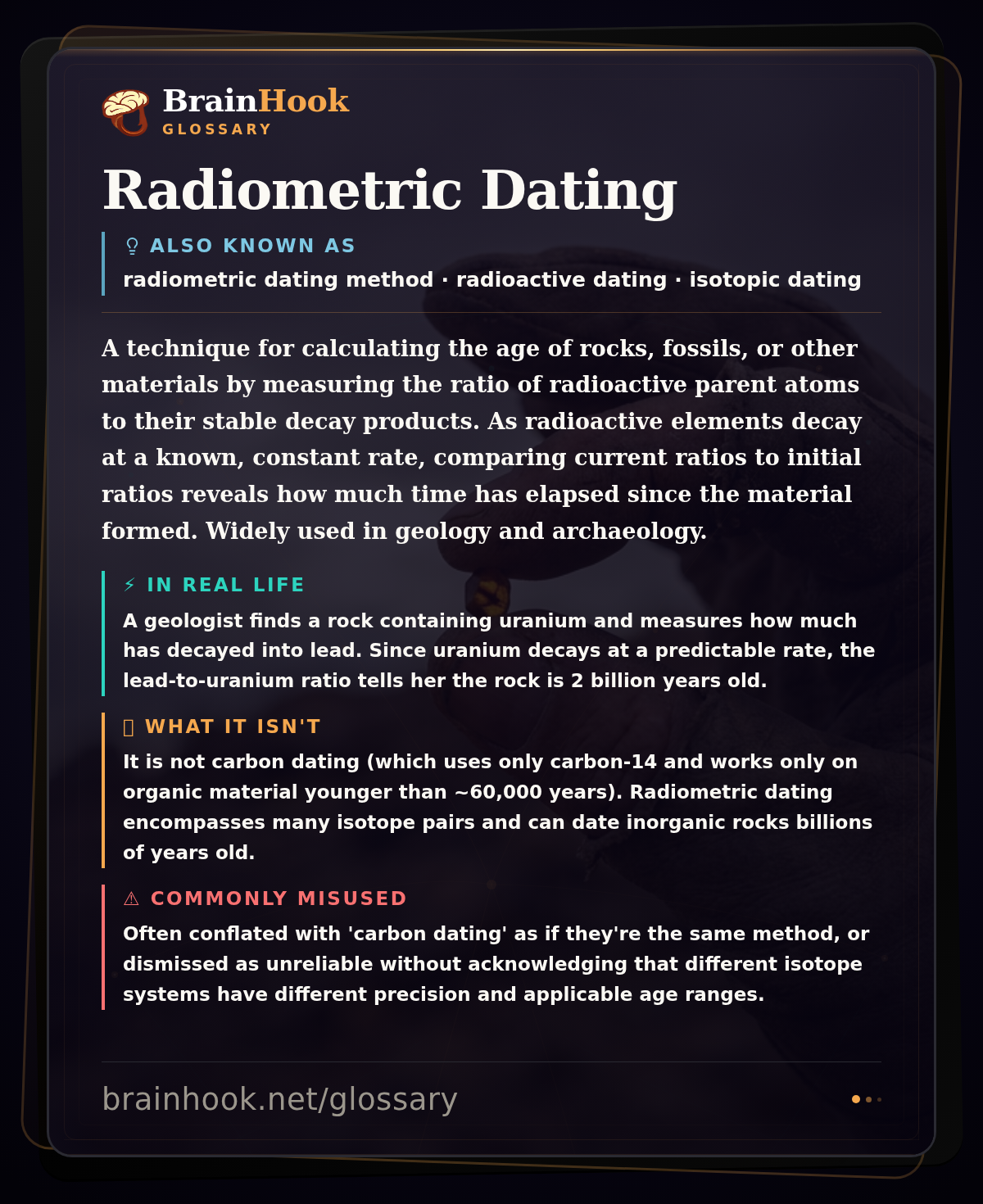
A technique for calculating the age of rocks, fossils, or other materials by measuring the ratio of radioactive parent atoms to their stable decay products. As radioactive elements decay at a known, constant rate, comparing current ratios to initial ratios reveals how much time has elapsed since the material formed. Widely used in geology and archaeology.
What this means in real life
A geologist finds a rock containing uranium and measures how much has decayed into lead. Since uranium decays at a predictable rate, the lead-to-uranium ratio tells her the rock is 2 billion years old.
What it isn’t
It is not carbon dating (which uses only carbon-14 and works only on organic material younger than ~60,000 years). Radiometric dating encompasses many isotope pairs and can date inorganic rocks billions of years old.
Commonly misused online
Often conflated with 'carbon dating' as if they're the same method, or dismissed as unreliable without acknowledging that different isotope systems have different precision and applicable age ranges.
Based on 1 reference source, including Wikipedia. Last verified July 16, 2026.