Radiolysis
Radiolysis is the breakdown of molecules triggered by ionizing radiation, which breaks chemical bonds and creates reactive fragments.
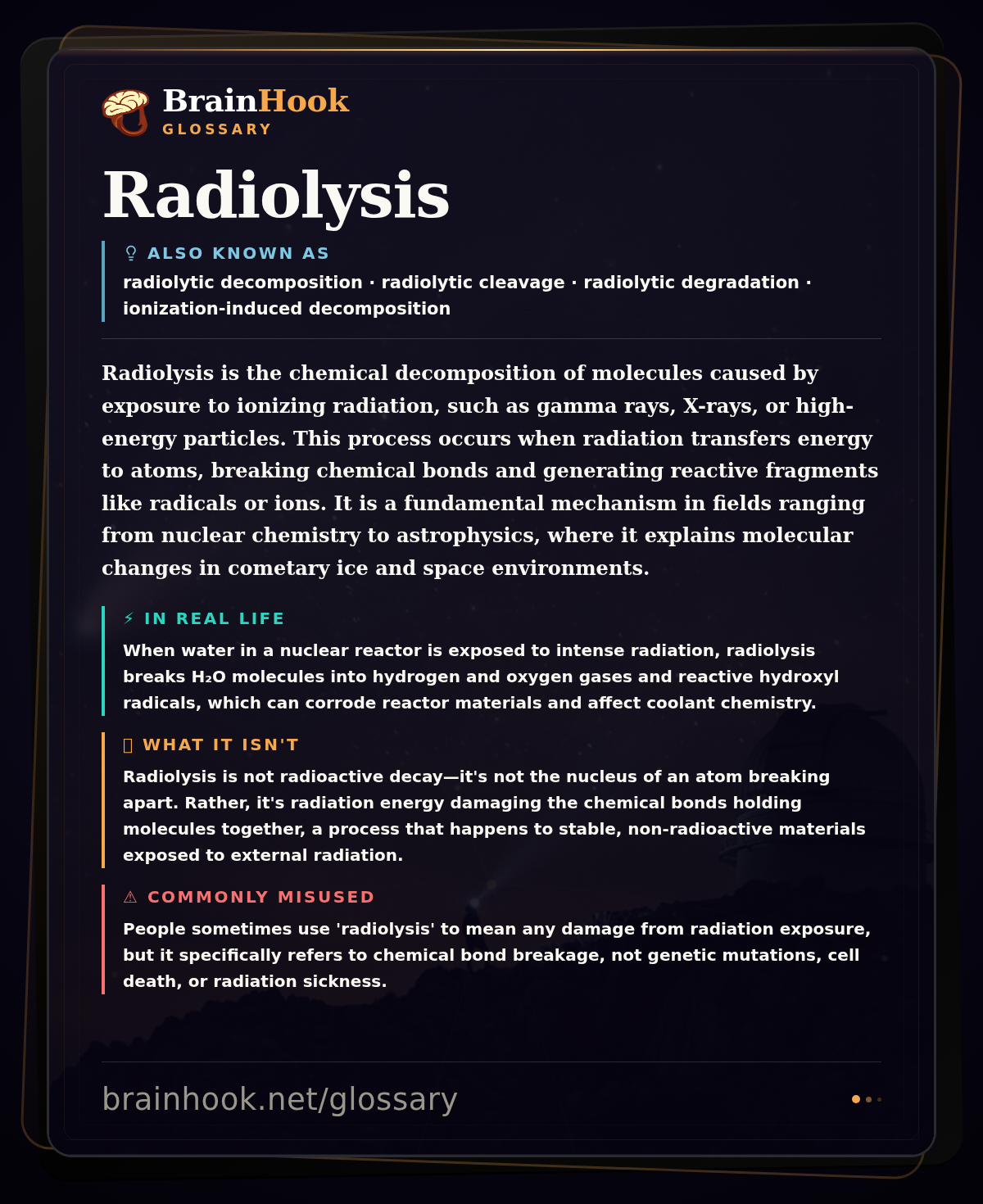
Radiolysis is the chemical decomposition of molecules caused by exposure to ionizing radiation, such as gamma rays, X-rays, or high-energy particles. This process occurs when radiation transfers energy to atoms, breaking chemical bonds and generating reactive fragments like radicals or ions. It is a fundamental mechanism in fields ranging from nuclear chemistry to astrophysics, where it explains molecular changes in cometary ice and space environments.
What this means in real life
When water in a nuclear reactor is exposed to intense radiation, radiolysis breaks H₂O molecules into hydrogen and oxygen gases and reactive hydroxyl radicals, which can corrode reactor materials and affect coolant chemistry.
What it isn’t
Radiolysis is not radioactive decay—it's not the nucleus of an atom breaking apart. Rather, it's radiation energy damaging the chemical bonds holding molecules together, a process that happens to stable, non-radioactive materials exposed to external radiation.
Commonly misused online
People sometimes use 'radiolysis' to mean any damage from radiation exposure, but it specifically refers to chemical bond breakage, not genetic mutations, cell death, or radiation sickness.