Prosecutorial Misconduct
When a prosecutor breaks legal rules or acts dishonestly during a case—hiding evidence, lying in court, or pressuring witnesses—undermining the fairness of the trial.
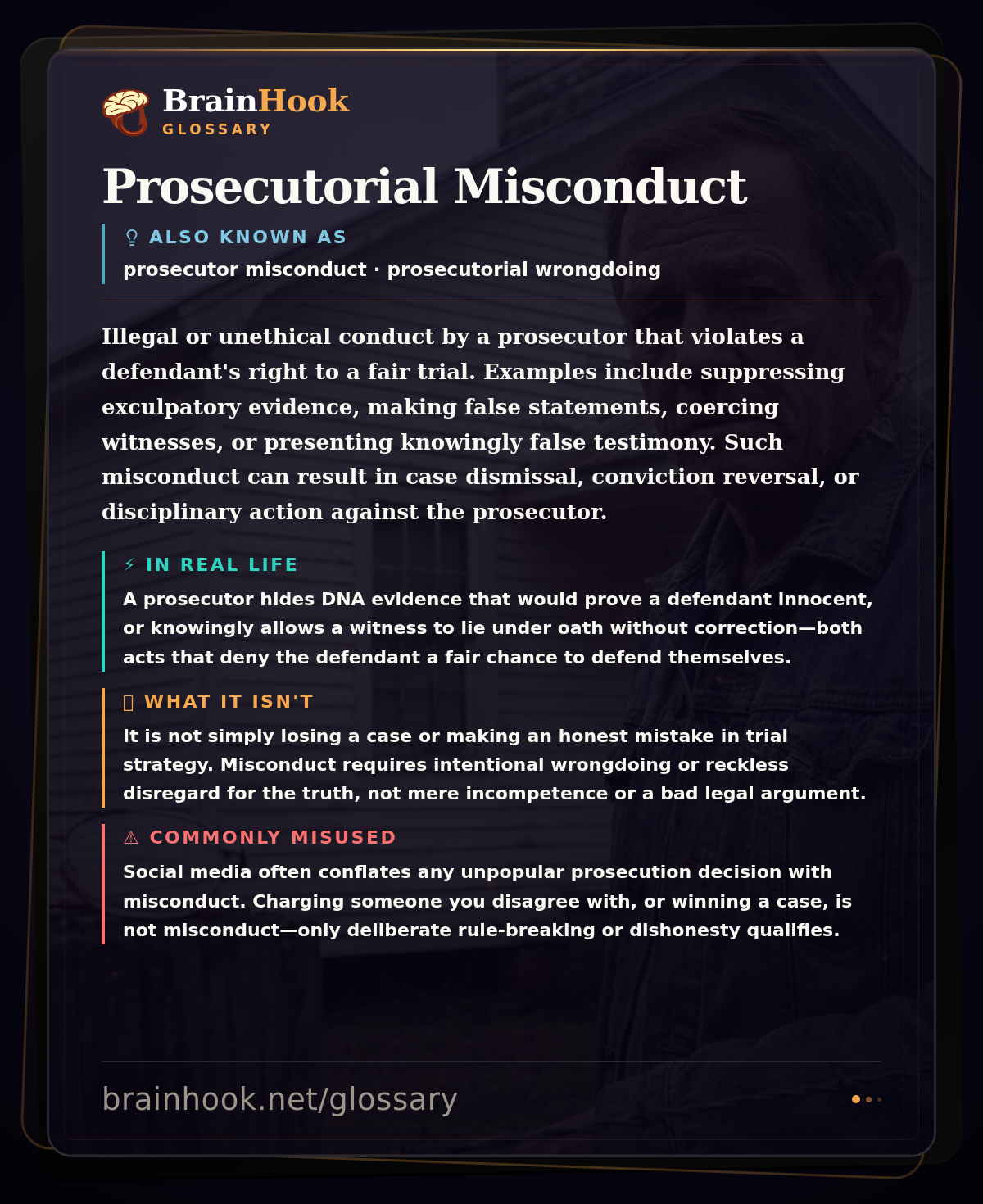
Illegal or unethical conduct by a prosecutor that violates a defendant's right to a fair trial. Examples include suppressing exculpatory evidence, making false statements, coercing witnesses, or presenting knowingly false testimony. Such misconduct can result in case dismissal, conviction reversal, or disciplinary action against the prosecutor.
What this means in real life
A prosecutor hides DNA evidence that would prove a defendant innocent, or knowingly allows a witness to lie under oath without correction—both acts that deny the defendant a fair chance to defend themselves.
What it isn’t
It is not simply losing a case or making an honest mistake in trial strategy. Misconduct requires intentional wrongdoing or reckless disregard for the truth, not mere incompetence or a bad legal argument.
Commonly misused online
Social media often conflates any unpopular prosecution decision with misconduct. Charging someone you disagree with, or winning a case, is not misconduct—only deliberate rule-breaking or dishonesty qualifies.