Processing Fluency
Processing fluency is how easily the brain processes information, making people feel something is more true or familiar when it's easy to read or understand. It creates a false sense of deep comprehension.
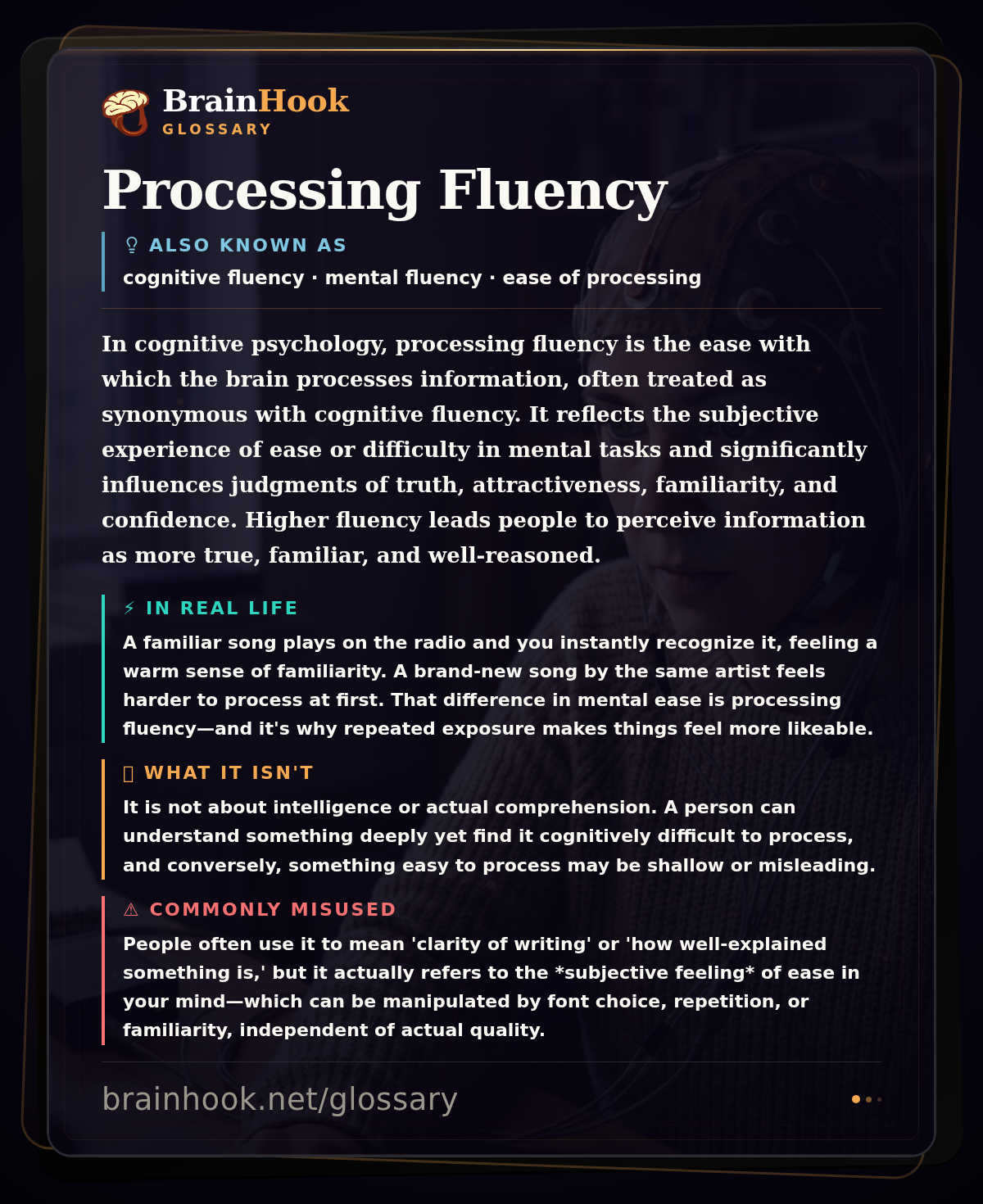
In cognitive psychology, processing fluency is the ease with which the brain processes information, often treated as synonymous with cognitive fluency. It reflects the subjective experience of ease or difficulty in mental tasks and significantly influences judgments of truth, attractiveness, familiarity, and confidence. Higher fluency leads people to perceive information as more true, familiar, and well-reasoned.
What this means in real life
A familiar song plays on the radio and you instantly recognize it, feeling a warm sense of familiarity. A brand-new song by the same artist feels harder to process at first. That difference in mental ease is processing fluency—and it's why repeated exposure makes things feel more likeable.
What it isn’t
It is not about intelligence or actual comprehension. A person can understand something deeply yet find it cognitively difficult to process, and conversely, something easy to process may be shallow or misleading.
Commonly misused online
People often use it to mean 'clarity of writing' or 'how well-explained something is,' but it actually refers to the *subjective feeling* of ease in your mind—which can be manipulated by font choice, repetition, or familiarity, independent of actual quality.