Polysaccharide
A polysaccharide is a massive chain of many simple sugar units linked together, functioning as a key energy source (like starch) or structural material (like cellulose) in living organisms.
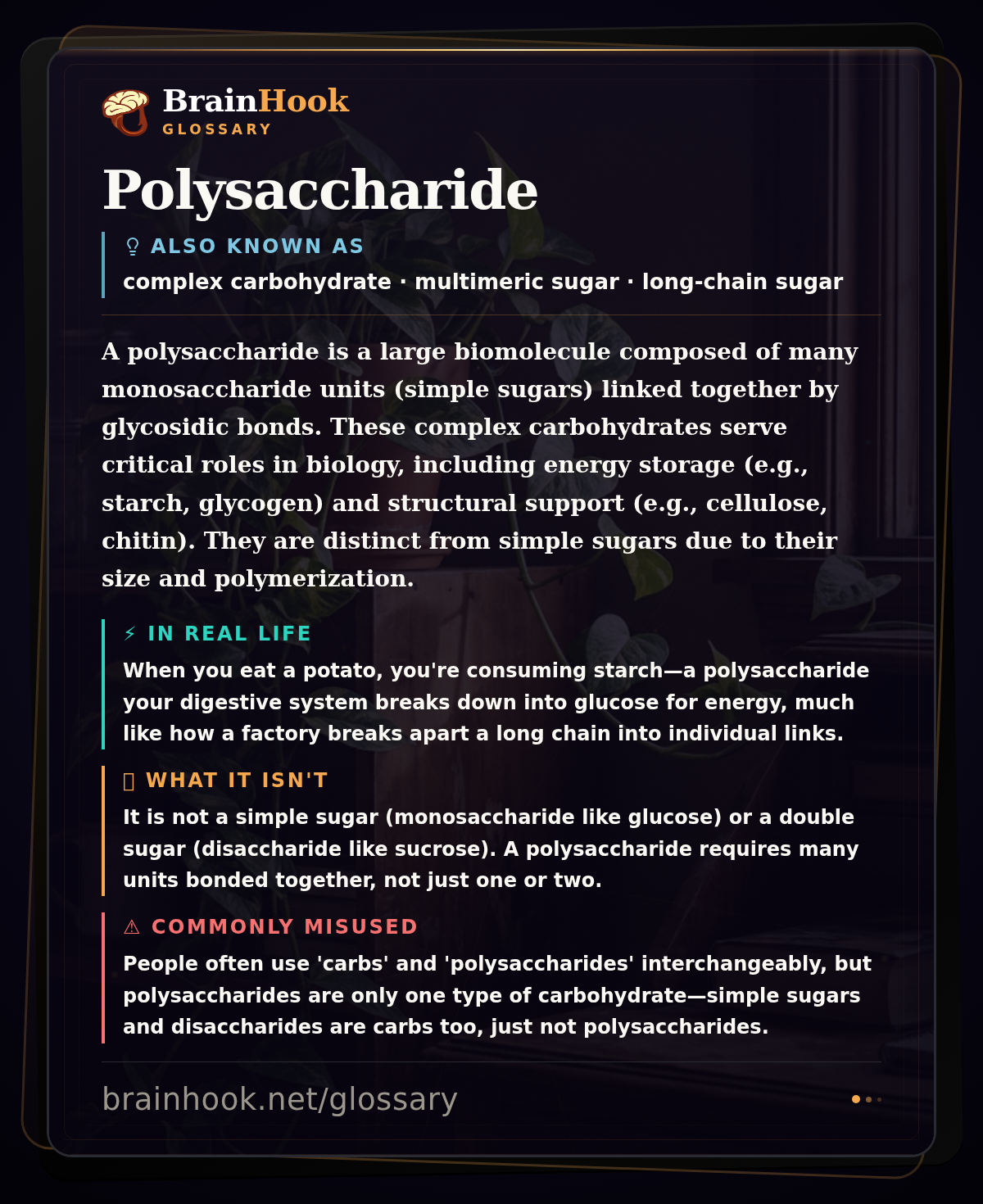
A polysaccharide is a large biomolecule composed of many monosaccharide units (simple sugars) linked together by glycosidic bonds. These complex carbohydrates serve critical roles in biology, including energy storage (e.g., starch, glycogen) and structural support (e.g., cellulose, chitin). They are distinct from simple sugars due to their size and polymerization.
What this means in real life
When you eat a potato, you're consuming starch—a polysaccharide your digestive system breaks down into glucose for energy, much like how a factory breaks apart a long chain into individual links.
What it isn’t
It is not a simple sugar (monosaccharide like glucose) or a double sugar (disaccharide like sucrose). A polysaccharide requires many units bonded together, not just one or two.
Commonly misused online
People often use 'carbs' and 'polysaccharides' interchangeably, but polysaccharides are only one type of carbohydrate—simple sugars and disaccharides are carbs too, just not polysaccharides.