Ocean Acidification
When the ocean absorbs too much carbon dioxide, the water becomes more acidic, harming shell-forming creatures like corals and oysters.
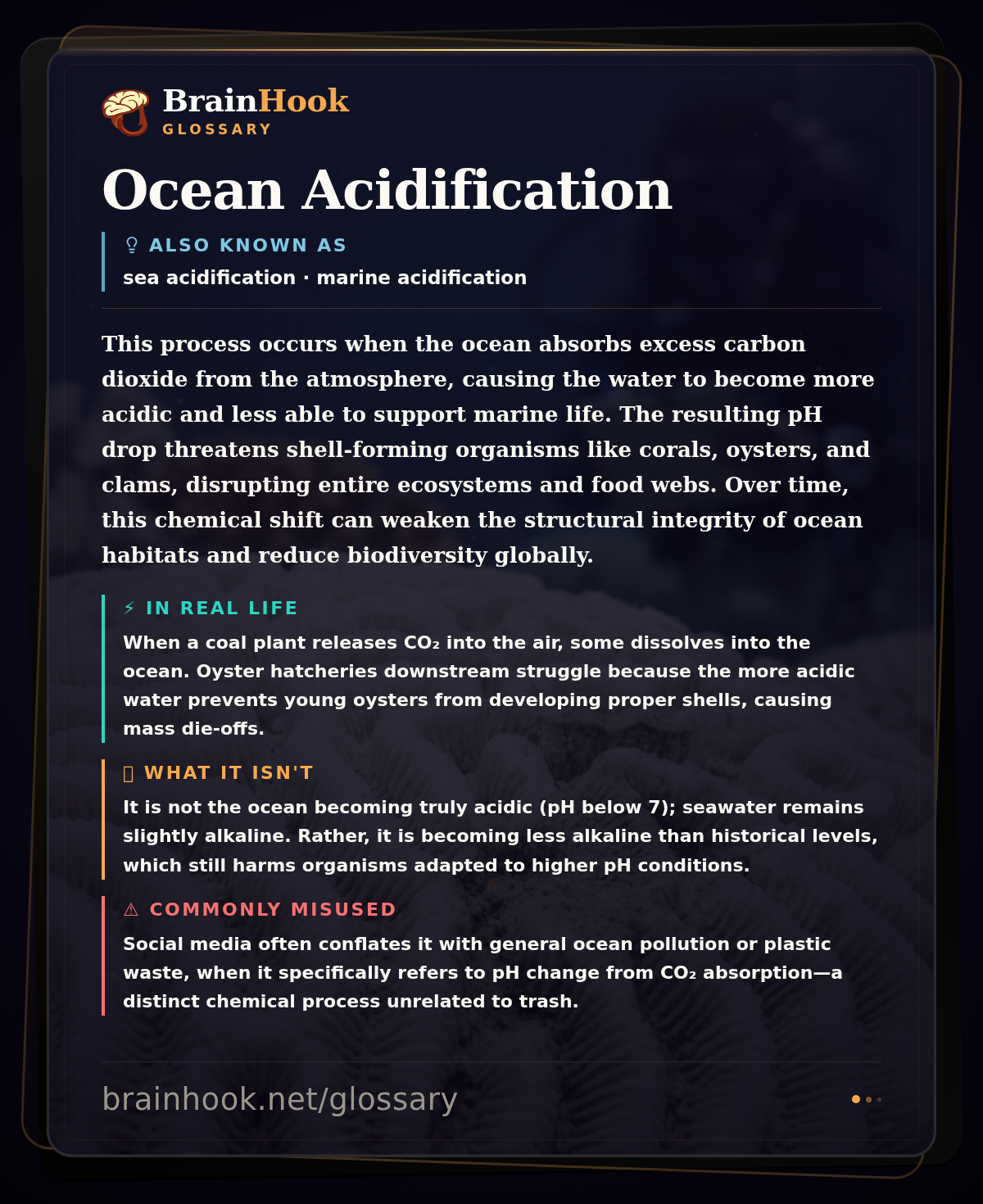
This process occurs when the ocean absorbs excess carbon dioxide from the atmosphere, causing the water to become more acidic and less able to support marine life. The resulting pH drop threatens shell-forming organisms like corals, oysters, and clams, disrupting entire ecosystems and food webs. Over time, this chemical shift can weaken the structural integrity of ocean habitats and reduce biodiversity globally.
What this means in real life
When a coal plant releases CO₂ into the air, some dissolves into the ocean. Oyster hatcheries downstream struggle because the more acidic water prevents young oysters from developing proper shells, causing mass die-offs.
What it isn’t
It is not the ocean becoming truly acidic (pH below 7); seawater remains slightly alkaline. Rather, it is becoming less alkaline than historical levels, which still harms organisms adapted to higher pH conditions.
Commonly misused online
Social media often conflates it with general ocean pollution or plastic waste, when it specifically refers to pH change from CO₂ absorption—a distinct chemical process unrelated to trash.
Based on 4 reference sources, including government sources. Last verified July 11, 2026.